

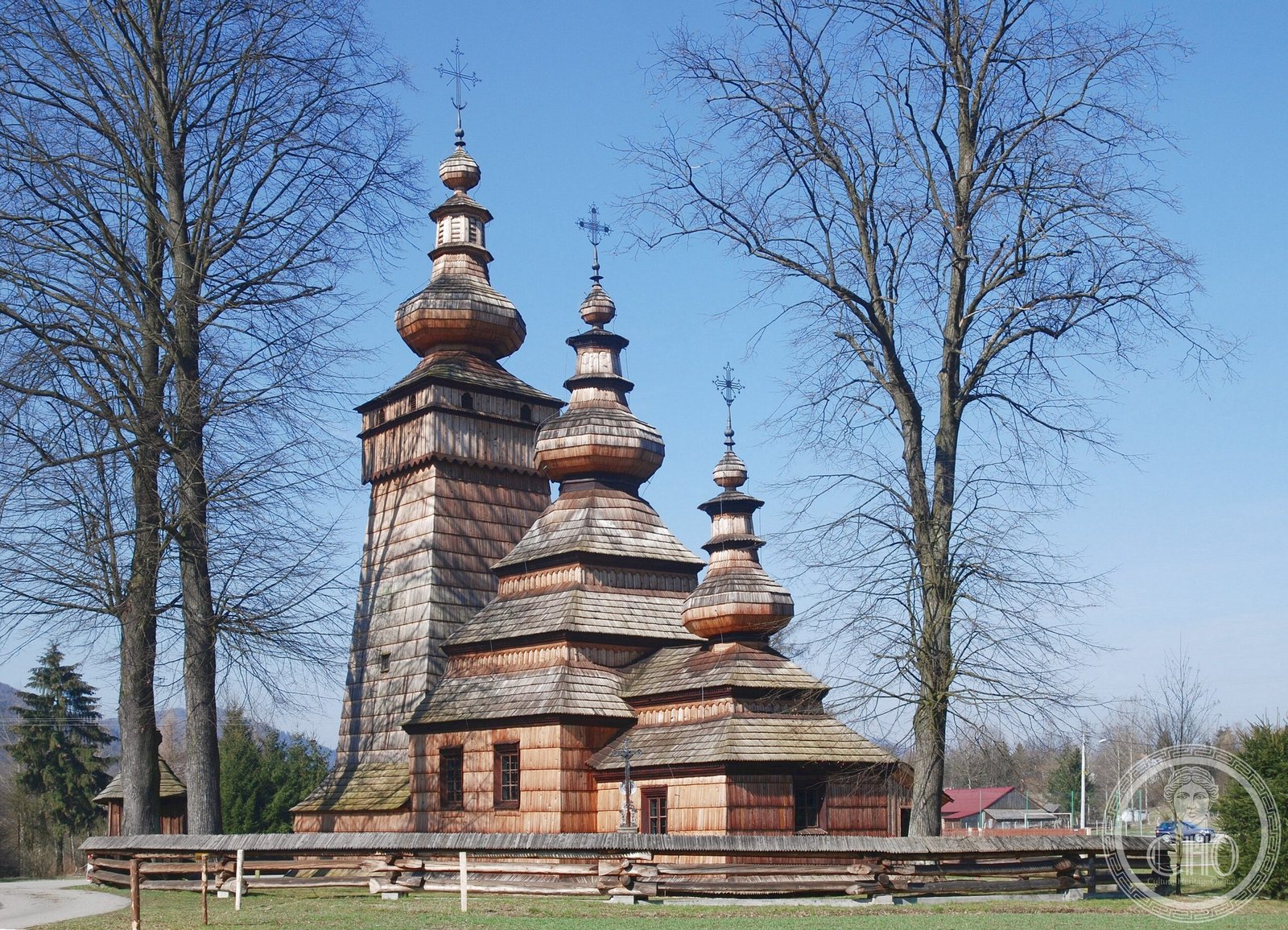
A timber-built Gothic church in southeastern Poland, standing as one of the Carpathian region’s finest examples of wooden Orthodox ecclesiastical architecture.
At a glance
St. Paraskevi Church represents the distinctive wooden construction tradition of Eastern European tserkvas—Orthodox places of worship built with timber rather than stone. Its nineteenth-century Gothic character reflects the architectural dialogue between Western and Eastern Christian building practices in this border region.
History
Constructed in the nineteenth century, the church emerged from a long tradition of wooden religious architecture in the Carpathian foothills. It stands as an enduring witness to the Orthodox communities who shaped the spiritual and cultural landscape of southeastern Poland.
What you see
The church exhibits Gothic sensibilities expressed through timber carpentry—a remarkable synthesis of style and material. Its wooden construction required sophisticated joinery and structural ingenuity to achieve the vertical emphasis and pointed forms characteristic of Gothic design, achieved through axes and plane rather than stone and vault.
Cultural significance
St. Paraskevi Church belongs to a rare category of wooden Orthodox architecture recognized internationally for its heritage value. Together with other tserkvas across the Carpathian Mountains, it forms part of a UNESCO World Heritage designation acknowledging these structures’ importance to Eastern European cultural identity and construction history.
Key facts
- Country: Poland
- Village: Kwiatoń
- Period: 19th century
- Architectural style: Gothic
- Construction material: Wood
- UNESCO status: Part of Wooden tserkvas of the Carpathian region in Poland and Ukraine World Heritage site
- Coordinates: 49.5009, 21.1737
Practical information & getting there
The church is located in Kwiatoń village in the Carpathian region of southeastern Poland. For current visiting hours, accessibility information, and travel directions, consult local tourism resources or contact the village directly.
Sources & resources
Find it on the map
See this place and what’s around it →📷 Become a Cultural Heritage Online photographer
Share your photos of places: they stay published under your name as the author. The more they're seen, the more you get noticed — and soon a contest will reward the most appreciated photos.
Log in or sign up free to add a photoIs this page about you?
This page is read by travellers and heritage enthusiasts who find it on Google. Tell us how you are connected to this place and we will take it from there.