

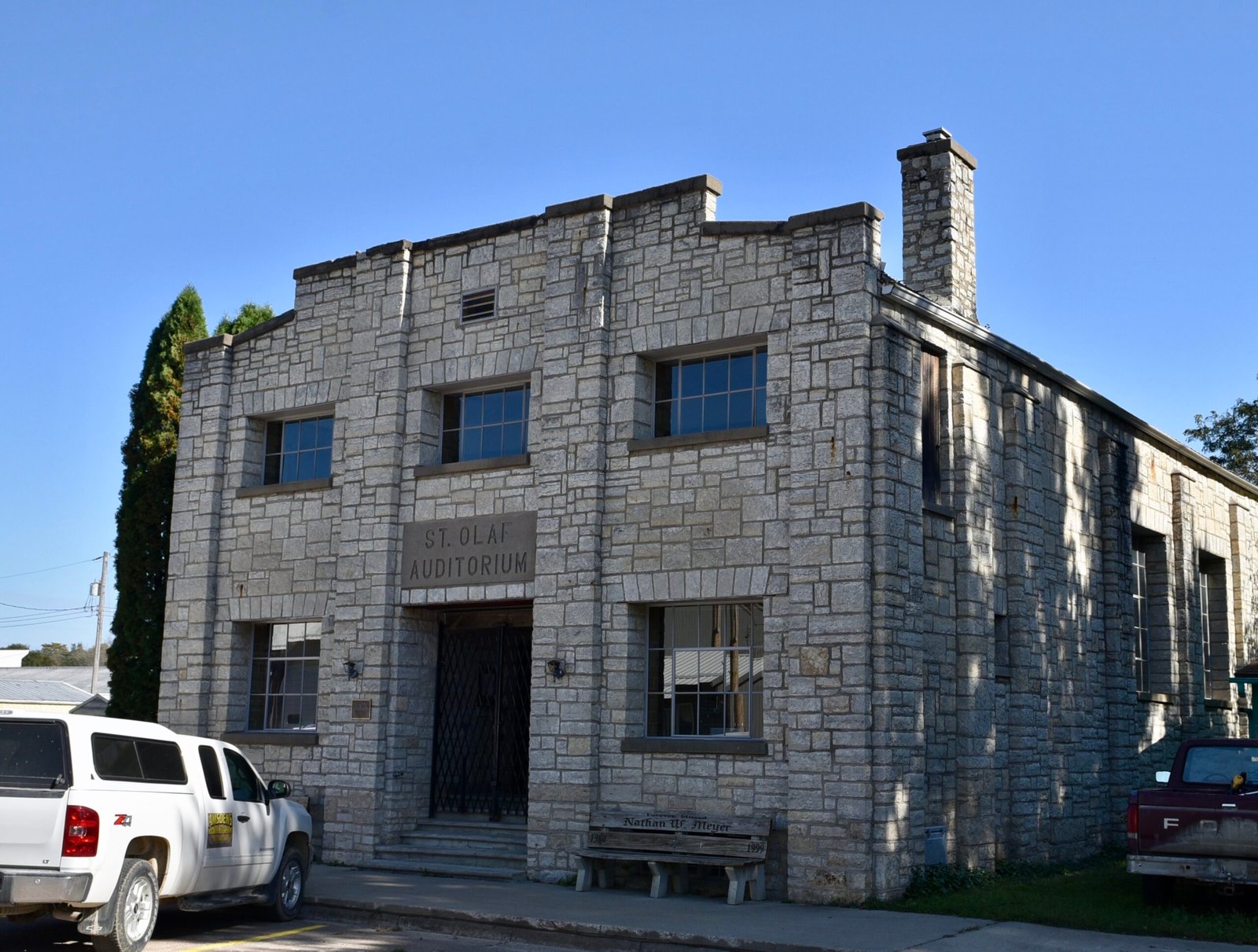
A Depression-era civic landmark built with New Deal support, this limestone auditorium has anchored community life in rural Iowa for over eight decades.
At a glance
St. Olaf Auditorium stands as a two-story structure of native rubble limestone, designed in the PWA Moderne style. Completed in 1939, it remains a focal point for the small town’s social and cultural activities.
History
The auditorium was built during the depths of the Great Depression, made possible through federal assistance from the Public Works Administration (PWA) and labor supplied by the Works Progress Administration (WPA). These New Deal programs aimed to provide both employment and lasting infrastructure to American communities. The building opened as St. Olaf completed this ambitious civic project with outside support.
What you see
The auditorium’s design reflects the PWA Moderne aesthetic, a streamlined modernist approach favored by Depression-era public buildings. Two stories of native rubble limestone form its solid, functional character. The structure was purpose-built to accommodate diverse uses, from theatrical performances to community gatherings.
Cultural significance
For over eight decades, the auditorium has served as St. Olaf’s cultural heart. It has hosted vaudeville and minstrel shows, alongside recreational, athletic, educational, and civic events. The building exemplifies how federal investment in public infrastructure during the 1930s left permanent marks on rural American towns, creating spaces that defined community identity.
Key facts
- Country: United States
- City: St. Olaf, Iowa
- Coordinates: 42.9276, −91.3863
- Completed: 1939
- National Register of Historic Places: Listed 1994
Practical information & getting there
St. Olaf is located in Fayette County in northeast Iowa. The auditorium remains an active community facility. Contact local tourism resources or the city of St. Olaf for current visiting information and event schedules.
Sources & resources
Find it on the map
See this place and what’s around it →📷 Become a Cultural Heritage Online photographer
Share your photos of places: they stay published under your name as the author. The more they're seen, the more you get noticed — and soon a contest will reward the most appreciated photos.
Log in or sign up free to add a photoIs this page about you?
This page is read by travellers and heritage enthusiasts who find it on Google. Tell us how you are connected to this place and we will take it from there.