
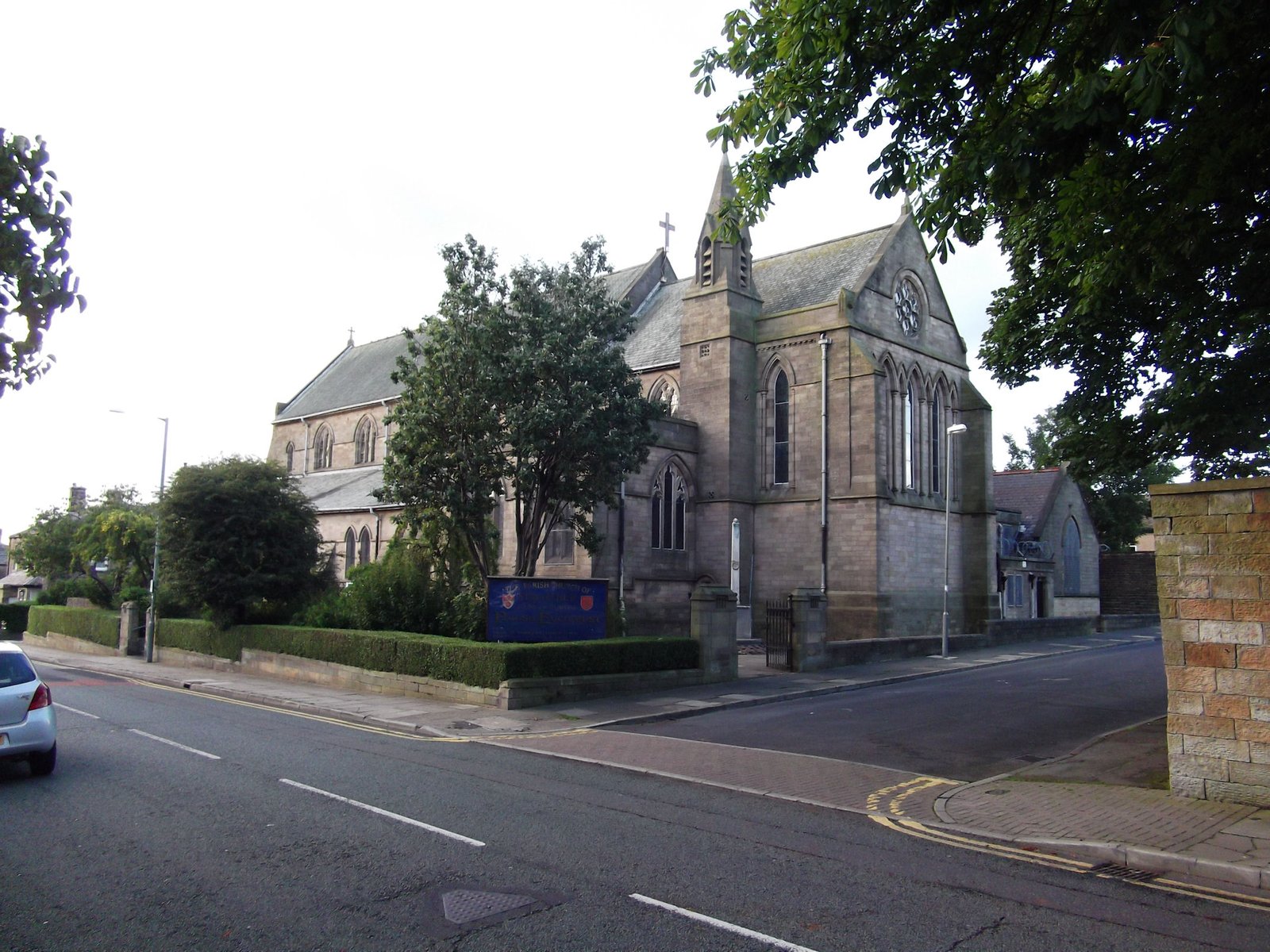
An Anglican parish church rebuilt after a devastating fire, now serving the Burnley community as part of a united benefice.
At a glance
St Matthew’s Church stands in the Lancashire town of Burnley as an active Anglican parish. The present building dates to the late 1920s, replacing an earlier Victorian structure lost to fire. Today it belongs to the Diocese of Blackburn and shares pastoral leadership with Holy Trinity Church.
History
The original church was constructed between 1876 and 1879 by the architectural firm William Waddington and Sons. The building served the parish for nearly five decades until a serious fire destroyed it in 1927. A new church was then built on the same site to restore the community’s place of worship. In the 1970s, St Matthew’s entered into a closer partnership with its neighbouring Holy Trinity Church, a merger reflecting changing patterns of urban ministry.
What you see
The present church building dates to the post-1927 reconstruction. Specific architectural details of the current structure are not widely documented in accessible sources.
Cultural significance
St Matthew’s represents the religious life of industrial Lancashire. Its survival through fire and its continued adaptation to serve the parish underlines the resilience of community institutions in 20th-century England.
Key facts
- Location: St Matthew’s Street, Burnley, Lancashire
- Country: United Kingdom
- Original church: 1876–1879, designed by William Waddington and Sons
- Destroyed by fire: 1927
- Current church: rebuilt after 1927
- Diocese: Blackburn
- Coordinates: 53.7837, -2.2546
Practical information & getting there
St Matthew’s Church is located on St Matthew’s Street in Burnley town centre. As an active parish church, visiting hours and service times can be confirmed through the Diocese of Blackburn or local church websites.
Sources & resources
Find it on the map
See this place and what’s around it →📷 Become a Cultural Heritage Online photographer
Share your photos of places: they stay published under your name as the author. The more they're seen, the more you get noticed — and soon a contest will reward the most appreciated photos.
Log in or sign up free to add a photoIs this page about you?
This page is read by travellers and heritage enthusiasts who find it on Google. Tell us how you are connected to this place and we will take it from there.