
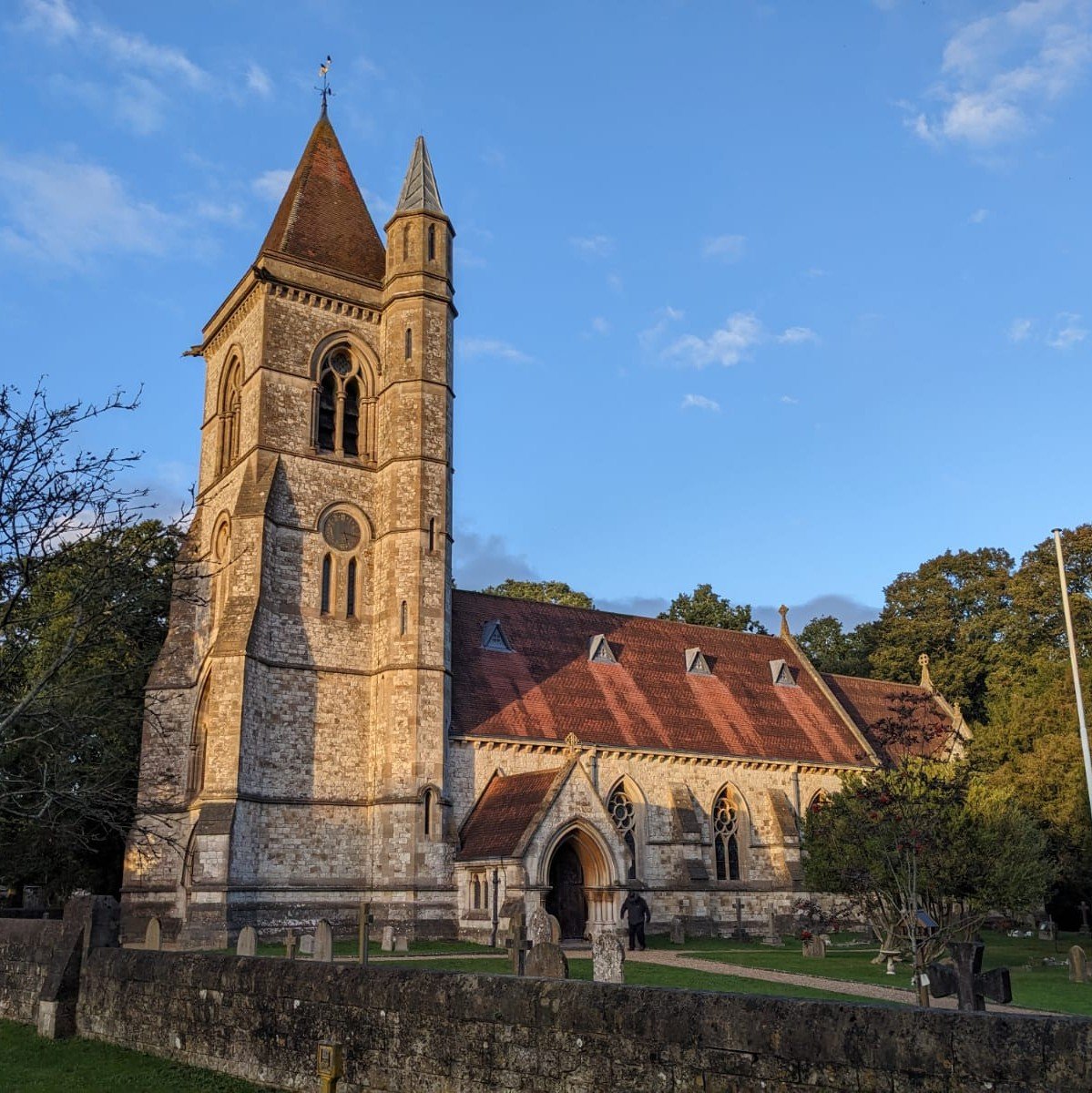
An Anglican parish church in Hampshire designed by Alfred Waterhouse for a prominent 19th-century statesman, blending Victorian architectural ambition with rural Hampshire character.
At a glance
St Matthew’s is a Grade II* listed Anglican parish church serving the village of Blackmoor. Completed in 1882, it represents a significant Victorian ecclesiastical commission by one of England’s most prolific architects of the era.
History
The church was commissioned by Roundell Palmer, who would become the 1st Earl of Selborne. Built in 1882, it stands as a testament to the architectural patronage of the Victorian gentry and the Church’s continued expansion during the period.
What you see
Alfred Waterhouse designed the building, bringing his characteristic Victorian Gothic sensibility to a parish church setting. The structure reflects Waterhouse’s approach to ecclesiastical architecture, which balanced functional design with aesthetic refinement appropriate to its rural Hampshire context.
Cultural significance
The church demonstrates the influence of wealthy patrons on Victorian religious architecture. Waterhouse’s involvement elevates St Matthew’s beyond a typical rural parish church, marking it as part of the broader architectural legacy of one of the 19th century’s most accomplished and prolific designers.
Key facts
- Country: United Kingdom
- Location: Selborne, Hampshire
- Coordinates: 51.0961, -0.8868
- Date: 1882
- Architect: Alfred Waterhouse
- Listed status: Grade II*
Practical information & getting there
St Matthew’s Church is located in the village of Blackmoor, Hampshire. The church is a functioning Anglican parish and Grade II* listed, making it of national architectural interest. Visitors should contact local parish offices for access information and service times.
Sources & resources
Find it on the map
See this place and what’s around it →📷 Become a Cultural Heritage Online photographer
Share your photos of places: they stay published under your name as the author. The more they're seen, the more you get noticed — and soon a contest will reward the most appreciated photos.
Log in or sign up free to add a photoIs this page about you?
This page is read by travellers and heritage enthusiasts who find it on Google. Tell us how you are connected to this place and we will take it from there.