
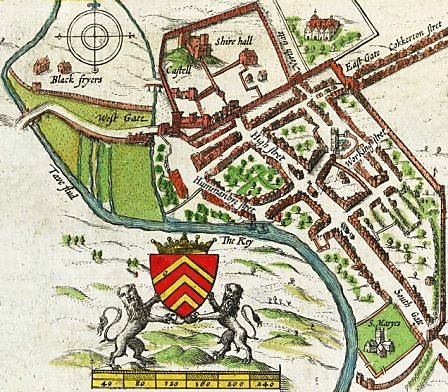
A medieval Anglican parish church that served Cardiff for over five centuries before abandonment and relocation, St Mary’s anchored religious life at the heart of the Welsh capital until flood damage and changing urban needs rendered it obsolete.
At a glance
St Mary’s Church (Eglwys Fair in Welsh) occupied a strategic position at the south end of the current St. Mary’s Street in Cardiff. Built in 1107, it functioned as a parish church for more than five hundred years before environmental catastrophe forced its abandonment and eventual replacement.
History
Founded in 1107, St Mary’s established itself as a cornerstone of Cardiff’s religious community during the High Middle Ages. The church endured for nearly six centuries, witnessing the city’s gradual growth and development. Severe flood damage in the early 18th century precipitated its abandonment in 1701. Rather than repair the waterlogged structure, the parish opted to relocate. A new St Mary’s Church was constructed at a different site in 1843, continuing the congregation’s continuity under changed circumstances.
What you see
No trace of the original medieval structure remains at its former location on St. Mary’s Street. The church’s architectural character and construction details are not documented in surviving records.
Cultural significance
St Mary’s Church represents a critical chapter in Cardiff’s urban and religious history. Its location and longevity shaped the street layout and civic identity of medieval and early modern Cardiff. The congregation’s decision to relocate rather than rebuild reflected pragmatic responses to environmental challenge and evolving urban priorities in 19th-century Wales.
Key facts
- Founded: 1107
- Abandoned: 1701
- Relocated: 1843
- Location: South end of St. Mary’s Street, Cardiff
- Country: United Kingdom
- Coordinates: 51.4775, -3.1779
Practical information & getting there
The original site of St Mary’s Church no longer preserves visible remains. Modern St. Mary’s Street in central Cardiff follows the medieval path once anchored by this church. The 1843 replacement building continues in use today at its distinct location.
Sources & resources
Find it on the map
See this place and what’s around it →📷 Become a Cultural Heritage Online photographer
Share your photos of places: they stay published under your name as the author. The more they're seen, the more you get noticed — and soon a contest will reward the most appreciated photos.
Log in or sign up free to add a photoIs this page about you?
This page is read by travellers and heritage enthusiasts who find it on Google. Tell us how you are connected to this place and we will take it from there.