
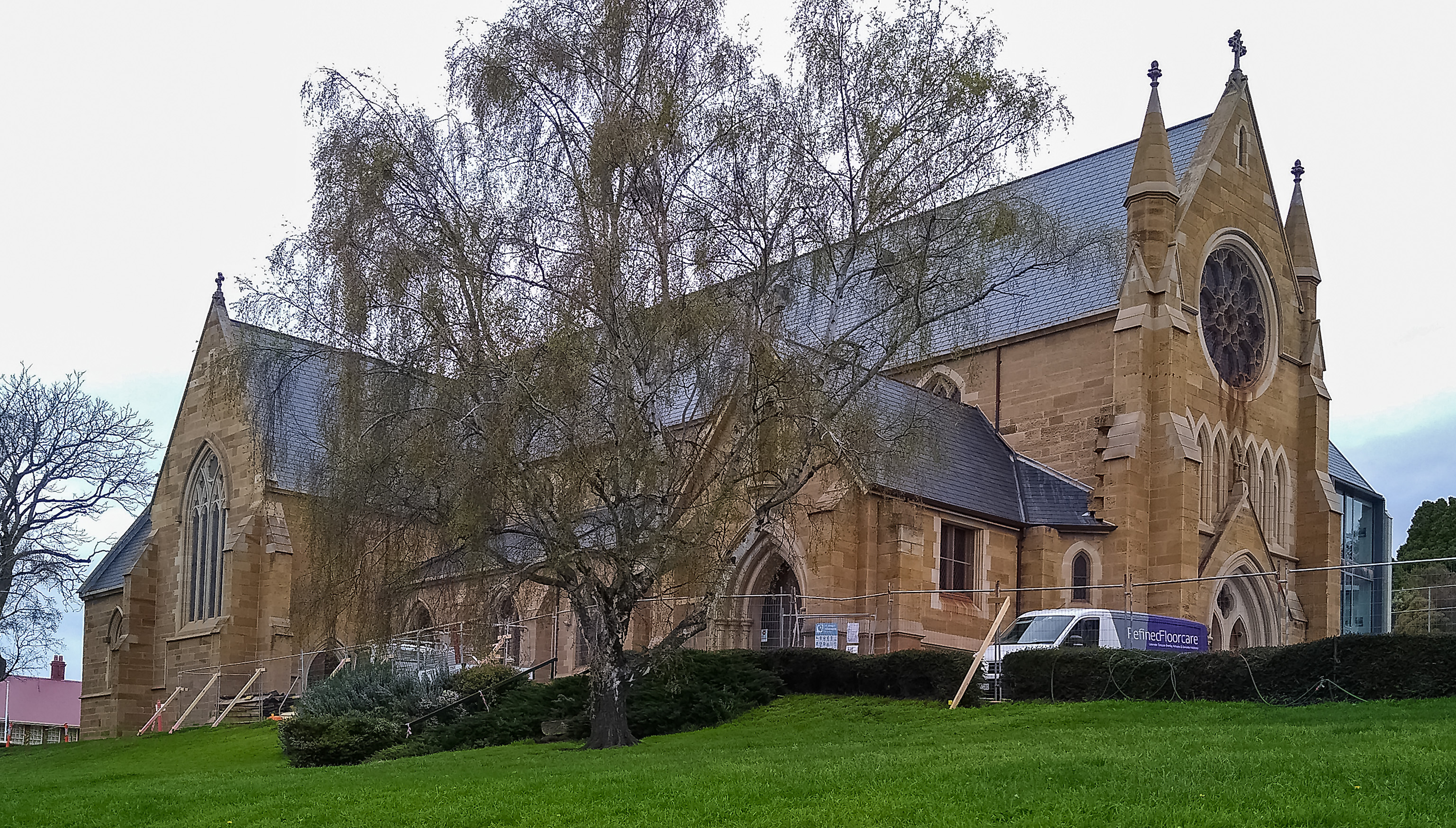
The seat of Tasmania’s Roman Catholic Archbishop, St Mary’s Cathedral evolved from a humble wooden chapel into one of Hobart’s significant religious landmarks.
At a glance
St Mary’s serves as the cathedral and administrative centre of the Roman Catholic Archdiocese of Hobart. The cathedral occupies a site first consecrated to religious worship in 1822, making it among Tasmania’s oldest continuously used places of Catholic worship.
History
The cathedral’s history begins with Philip Conolly, Tasmania’s first permanent Catholic priest. In 1822, Conolly constructed a temporary wooden chapel near the present cathedral site, dedicating it to St. Virgilius, an Irish saint. This modest structure marked the beginning of organised Catholic worship in the colony. Over subsequent decades, the wooden chapel evolved into the cathedral that stands today, serving the growing Catholic community of Hobart and southern Tasmania.
What you see
Details about the cathedral’s architectural design and surviving elements require further research.
Cultural significance
St Mary’s Cathedral represents the establishment and development of the Catholic faith in colonial Tasmania. The cathedral embodies the legacy of Father Philip Conolly, whose determination to serve Tasmania’s Catholic population shaped the religious landscape of the island. Its presence in central Hobart reflects the integration of Catholic institutions into Tasmanian civic life.
Key facts
- Country: Australia
- City: Hobart, Tasmania
- Founded: 1822 (original wooden chapel)
- Function: Seat of the Roman Catholic Archbishop of Hobart
- Coordinates: −42.88111, 147.31926
- Current Archbishop: Anthony Ireland
Practical information & getting there
St Mary’s Cathedral is located in central Hobart. For visiting hours, Mass times, and current service information, you are advised to contact the Archdiocese of Hobart or visit their official website.
Sources & resources
Find it on the map
See this place and what’s around it →📷 Become a Cultural Heritage Online photographer
Share your photos of places: they stay published under your name as the author. The more they're seen, the more you get noticed — and soon a contest will reward the most appreciated photos.
Log in or sign up free to add a photoIs this page about you?
This page is read by travellers and heritage enthusiasts who find it on Google. Tell us how you are connected to this place and we will take it from there.