

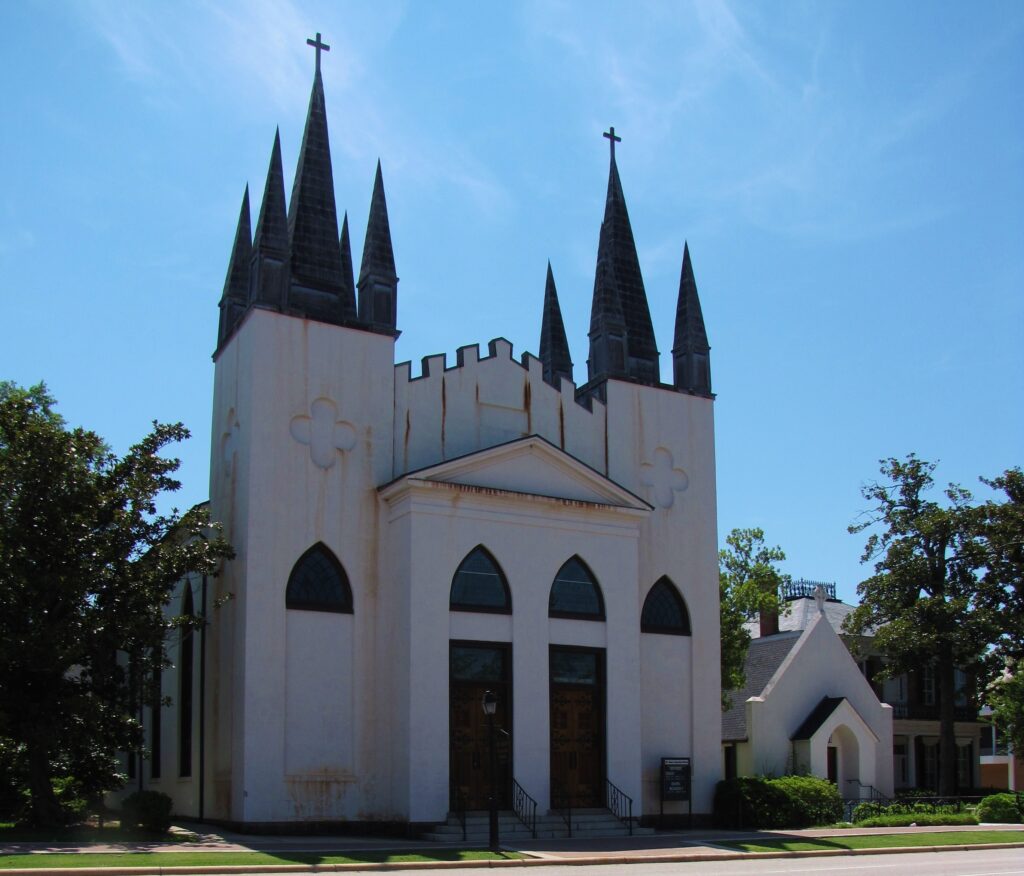
An Episcopal congregation on Green Street in historic downtown Fayetteville, North Carolina, organized in 1817 and listed in the National Register of Historic Places.
At a glance
St. John’s is a congregation of the Episcopal Diocese of East Carolina, part of the Episcopal Church in the United States of America. It was the first Episcopal church in Fayetteville, formally organized on April 7, 1817. Its location on Green Street places it in the city’s historic downtown district. Public tours are available by appointment.
History
The congregation dates to 1817. On April 7 of that year it was formally organized, becoming the first Episcopal church in the city of Fayetteville. That founding moment established an Episcopal presence in the downtown area which continues through the present congregation.
What you see
The church stands on Green Street in Fayetteville’s historic downtown. Its listing in the National Register of Historic Places recognizes the building’s place in the architectural and communal fabric of the city. The surrounding historic district reinforces the setting of this early nineteenth-century Episcopal congregation.
Cultural significance
As the first Episcopal church in Fayetteville, St. John’s marks the formal introduction of the Episcopal tradition to the city. Its National Register listing confirms the church’s enduring historical value within North Carolina. The congregation remains an active part of the Episcopal Diocese of East Carolina.
Key facts
- Country: United States
- City: Fayetteville, North Carolina
- Coordinates: 35.055, -78.8772
- Founded: April 7, 1817
- Denomination: Episcopal Church (Diocese of East Carolina)
- Status: National Register of Historic Places
Practical information & getting there
The church is located on Green Street in historic downtown Fayetteville. Public tours are available by appointment. You can arrange a visit through the congregation.
Sources & resources
Find it on the map
See this place and what’s around it →📷 Become a Cultural Heritage Online photographer
Share your photos of places: they stay published under your name as the author. The more they're seen, the more you get noticed — and soon a contest will reward the most appreciated photos.
Log in or sign up free to add a photoIs this page about you?
This page is read by travellers and heritage enthusiasts who find it on Google. Tell us how you are connected to this place and we will take it from there.