
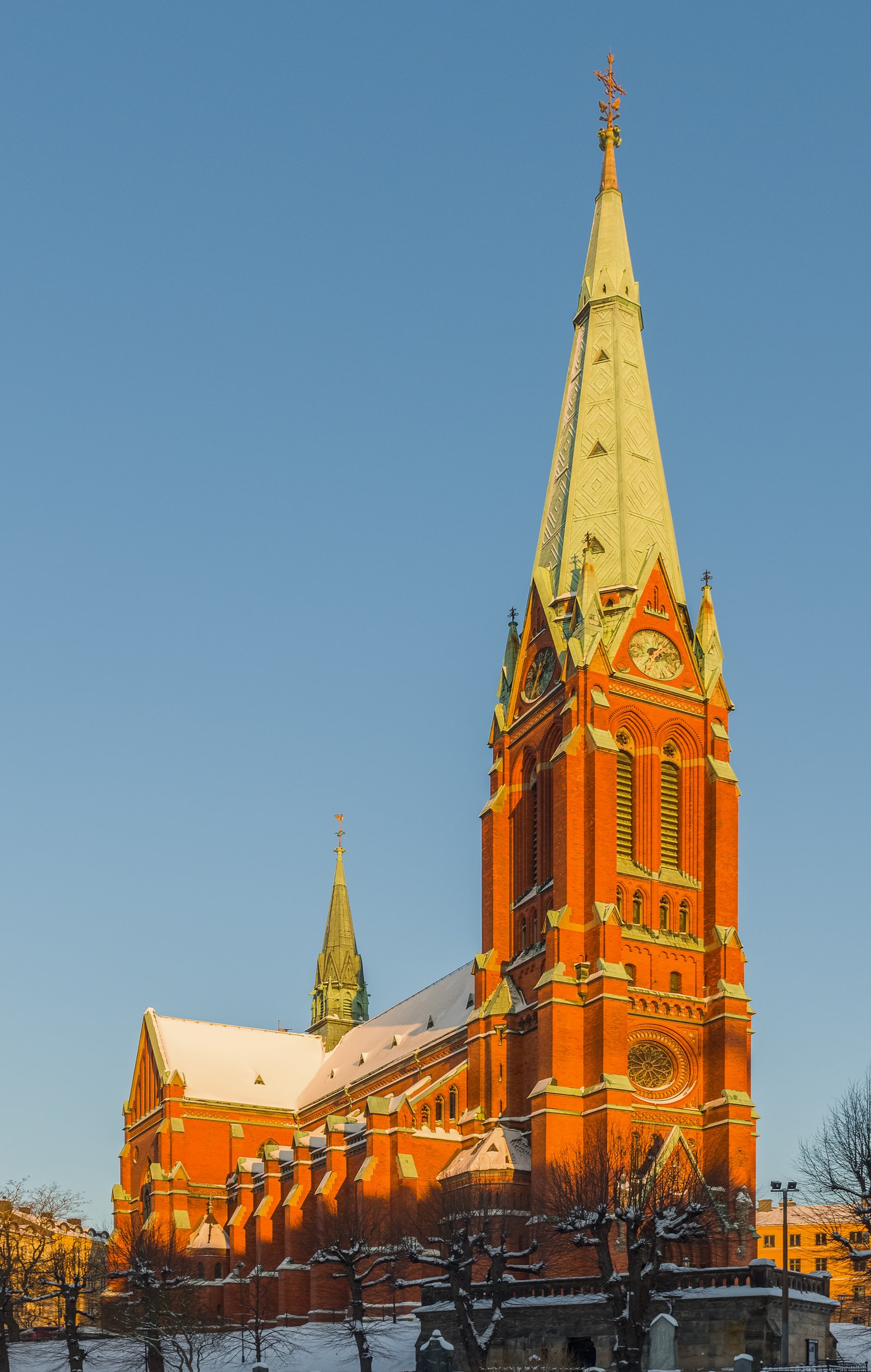
A Gothic Revival church in central Stockholm, completed in 1890 and designed by Carl Möller, now under the stewardship of the Catholic Diocese of Stockholm.
At a glance
St. John’s Church stands in the Norrmalm district, Stockholm’s historic core. Built in the Gothic Revival style, it represents 19th-century ecclesiastical architecture in Scandinavia. The building transitioned to Catholic administration in December 2024.
History
Carl Möller designed the church, which was completed in 1890. For over a century, it served the Swedish Church. In December 2024, the Church of Sweden announced the sale of the building to the Catholic Diocese of Stockholm, effective immediately, marking a significant change in the structure’s institutional identity and future use.
What you see
The church exemplifies Gothic Revival design principles. Möller’s approach drew on medieval ecclesiastical forms adapted for 19th-century Stockholm. The building’s proportions and details reflect the era’s fascination with historical architectural vocabularies, creating a landmark in the Norrmalm streetscape.
Cultural significance
St. John’s represents Swedish ecclesiastical patronage during an era of cultural and architectural renewal. Its Gothic Revival vocabulary connected Stockholm to European artistic movements. The recent transfer to Catholic administration adds a new chapter to its interfaith significance in contemporary Swedish society.
Key facts
- Country: Sweden
- City: Stockholm
- Coordinates: 59.3394, 18.0647
- Designed by: Carl Möller
- Style: Gothic Revival
- Completed: 1890
- District: Norrmalm
Practical information & getting there
St. John’s Church is located in central Stockholm’s Norrmalm district. For current visiting hours, services, and access information, contact the Catholic Diocese of Stockholm or check their website, as the church’s public visiting practices may evolve following the December 2024 transition.
Sources & resources
Find it on the map
See this place and what’s around it →📷 Become a Cultural Heritage Online photographer
Share your photos of places: they stay published under your name as the author. The more they're seen, the more you get noticed — and soon a contest will reward the most appreciated photos.
Log in or sign up free to add a photoIs this page about you?
This page is read by travellers and heritage enthusiasts who find it on Google. Tell us how you are connected to this place and we will take it from there.