
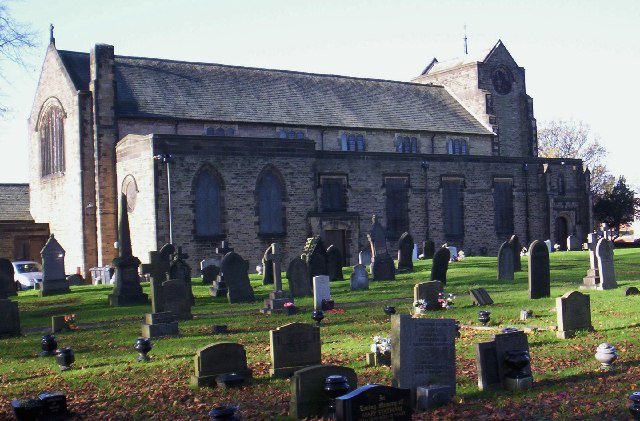
A twentieth-century Church of England parish church built to replace its mining-damaged predecessor, serving the community of Abram in Greater Manchester.
At a glance
St John the Evangelist’s Church stands on Warrington Road in Abram, a suburb of Wigan. The present structure dates to 1935–37 and represents a response to the challenges of industrial subsidence that had compromised its Victorian forerunner. Today it remains an active parish church within the Church of England.
History
The original church was constructed in 1838 to serve the growing community. As mining activity intensified across the Lancashire coalfield, subsidence damage threatened the building’s structural integrity. Rather than attempt costly repairs, the parish commissioned a new church on the same site, completed between 1935 and 1937. The replacement church has served continuously as the spiritual center of the Abram parish ever since.
What you see
Details of the church’s architectural character are not readily available in standard sources. The building reflects early twentieth-century ecclesiastical design practices of the Church of England.
Cultural significance
The church embodies the relationship between industrial history and religious life in industrial Lancashire. Its construction specifically addresses the consequences of coal mining on the built environment—a pattern repeated across the region. As an active parish church, it continues to function as both a historical landmark and living place of worship.
Key facts
- Location: Warrington Road, Abram, Wigan, Greater Manchester
- Country: United Kingdom
- Built: 1935–37
- Coordinates: 53.5096, −2.5938
- Denomination: Church of England (Diocese of Liverpool)
- Status: Active parish church
Practical information & getting there
The church is located in Abram, accessible via Warrington Road in Wigan. For visiting hours, services, and specific access information, contact the church directly or consult the Diocese of Liverpool website.
Sources & resources
Find it on the map
See this place and what’s around it →📷 Become a Cultural Heritage Online photographer
Share your photos of places: they stay published under your name as the author. The more they're seen, the more you get noticed — and soon a contest will reward the most appreciated photos.
Log in or sign up free to add a photoIs this page about you?
This page is read by travellers and heritage enthusiasts who find it on Google. Tell us how you are connected to this place and we will take it from there.