
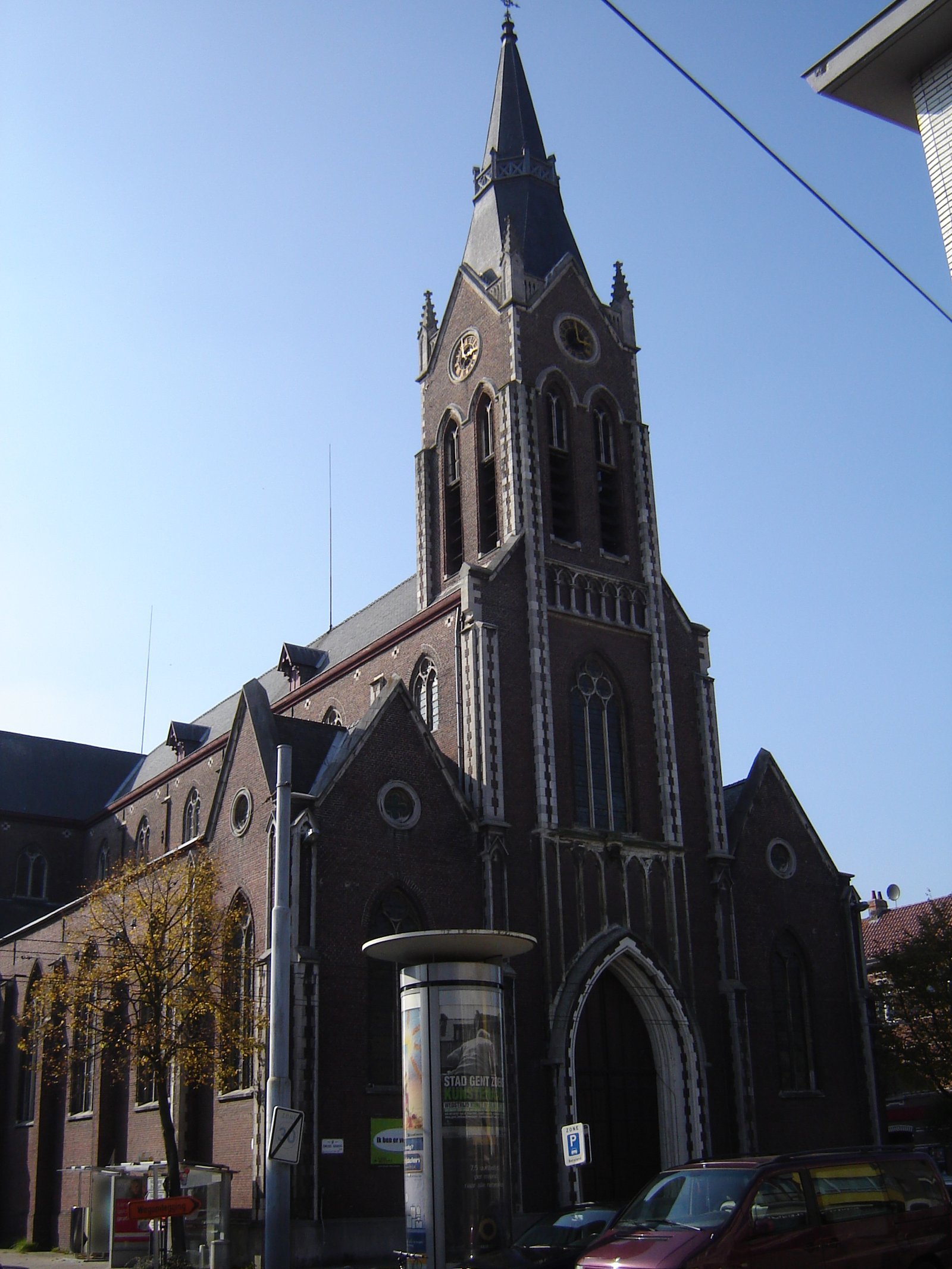
A Gothic Revival parish church in Ghent’s industrial Brugse Poort neighbourhood, rebuilt after its original 1860 structure collapsed within three years.
At a glance
This brick Gothic Revival church served as both a parish seat and deanery for Ghent’s 19th-century working communities. Its interior featured ornamental elements probably designed by Jean-Baptiste Bethune, though most original murals were removed decades later.
History
J. Van Hoecke designed the initial structure, completed in 1860. The building collapsed catastrophically in 1863—just three years after opening. Rebuilt to adapted designs, the church reopened in 1866 and was consecrated on 7 October that year. In April 1898, it became the administrative seat of a newly established deanery. The building was deconsecrated and sold in 2016.
What you see
The church exemplifies Gothic Revival principles with period-appropriate detailing. Interior furnishings—altars, choir stalls, confessionals, and communion rail—were probably designed by Bethune, a leading Belgian ecclesiastical architect. The removal of original murals in the 1970s altered the interior’s visual character.
Cultural significance
St John the Baptist represents 19th-century Ghent’s religious and social infrastructure as the city industrialised and expanded. Emilius Seghers, its parish priest from 1888 to 1917, later became the 25th bishop of Ghent. The adjacent Emilius Seghersplein commemorates his tenure and leadership.
Key facts
- Country: Belgium
- City: Ghent
- Coordinates: 51.05888889, 3.70361111
- Completed: 1866 (after collapse in 1863)
- Consecrated: 7 October 1866
- Architectural style: Gothic Revival
Practical information & getting there
The church stands in the Brugse Poort neighbourhood. The building was deconsecrated in 2016 and is no longer open for worship.
Sources & resources
Find it on the map
See this place and what’s around it →📷 Become a Cultural Heritage Online photographer
Share your photos of places: they stay published under your name as the author. The more they're seen, the more you get noticed — and soon a contest will reward the most appreciated photos.
Log in or sign up free to add a photoIs this page about you?
This page is read by travellers and heritage enthusiasts who find it on Google. Tell us how you are connected to this place and we will take it from there.