
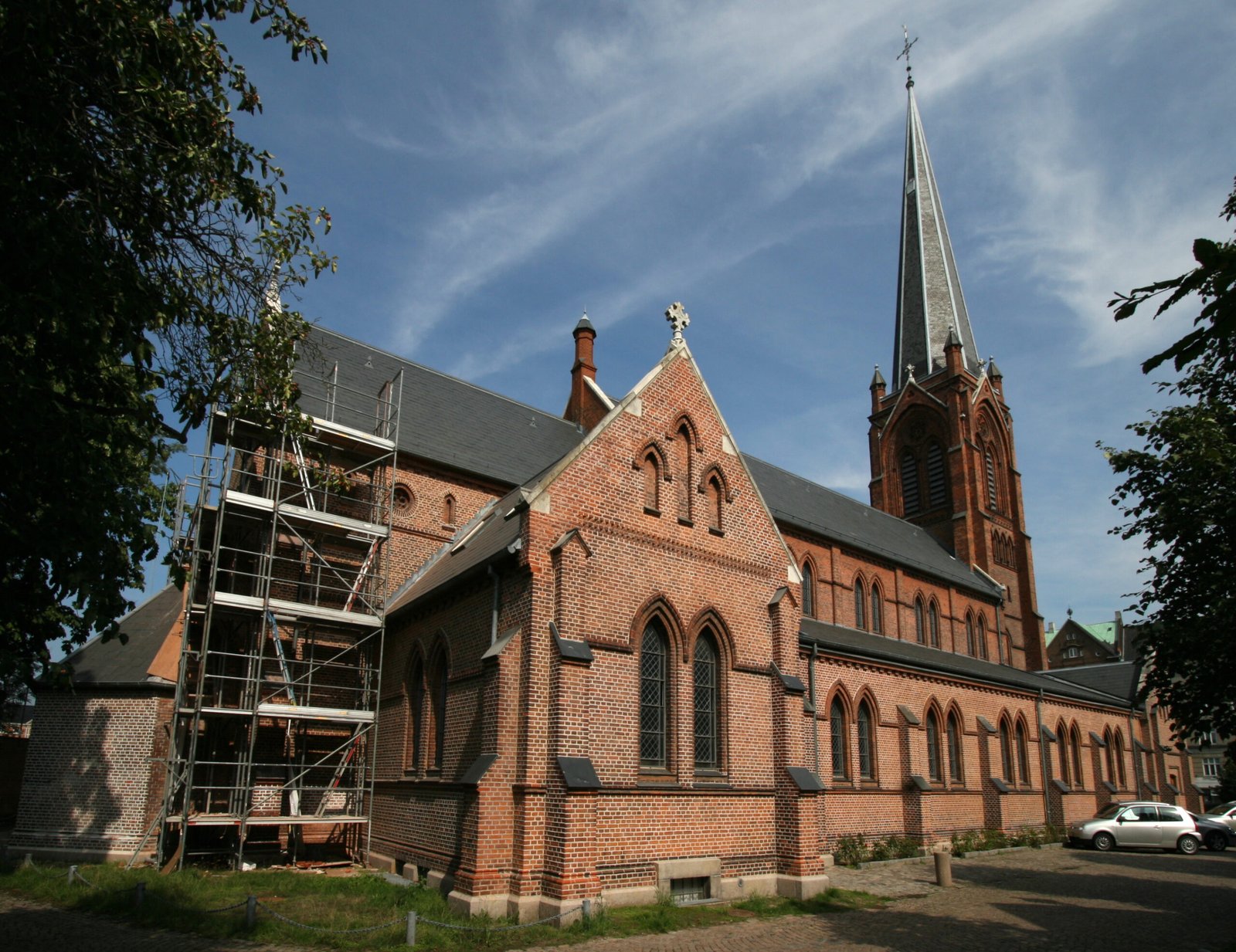
A Neo-Gothic landmark in Copenhagen’s Østerbro district, St. James’s Church was the first church built in this expanding residential area, designed by Ludvig Fenger at the height of the Gothic Revival.
At a glance
St. James’s Church stands as a defining monument of Østerbro’s emergence as a developed neighbourhood. Completed in 1878, it remains the district’s original ecclesiastical structure and exemplifies the Neo-Gothic aesthetic that dominated 19th-century Danish church architecture.
History
The church was designed by Ludvig Fenger and constructed between 1876 and 1878, serving the growing population of the Østerbro district during Copenhagen’s rapid urban expansion. As the first church built in the area, it played a formative role in establishing the neighbourhood’s cultural and spiritual identity.
What you see
The building embodies the Neo-Gothic style favoured by Fenger, with characteristic architectural vocabulary drawn from medieval precedents. The design reflects the 19th-century architectural revival that looked to the Gothic period for inspiration and moral authority.
Cultural significance
St. James’s Church represents both Østerbro’s transformation from rural land to urban district and the dominance of Neo-Gothic aesthetics in Danish ecclesiastical architecture. Its construction marked a turning point in the neighbourhood’s development and community life.
Key facts
- Country: Denmark
- City: Copenhagen Municipality
- Architect: Ludvig Fenger
- Style: Neo-Gothic
- Built: 1876–1878
- District: Østerbro
- Coordinates: 55.7035° N, 12.5764° E
Practical information & getting there
St. James’s Church is located in the Østerbro district of Copenhagen. For current opening hours, services, and visiting information, consult the church directly or local Copenhagen tourism resources.
Sources & resources
Find it on the map
See this place and what’s around it →📷 Become a Cultural Heritage Online photographer
Share your photos of places: they stay published under your name as the author. The more they're seen, the more you get noticed — and soon a contest will reward the most appreciated photos.
Log in or sign up free to add a photoIs this page about you?
This page is read by travellers and heritage enthusiasts who find it on Google. Tell us how you are connected to this place and we will take it from there.