
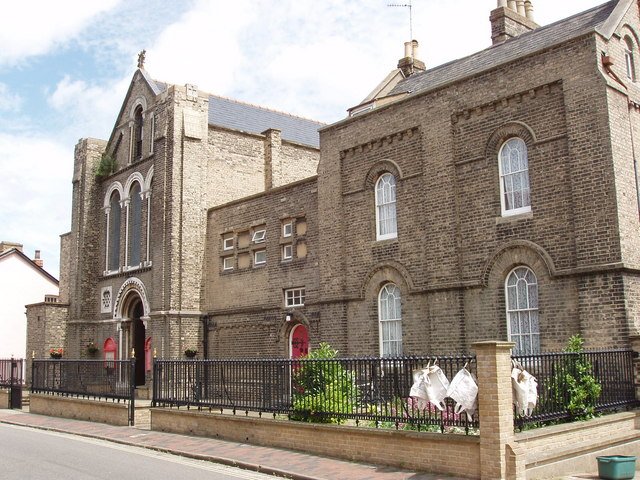
A mid-nineteenth-century Roman Catholic parish church in Colchester’s city centre, designed by architect Joseph John Scoles and completed in 1837.
At a glance
St James the Less and St Helen Church stands on Priory Street, a working Catholic parish church with original fabric dating to the 1830s. Its companion church hall, built in 1911, extends the site’s architectural legacy into the twentieth century.
History
The church was erected in 1837 to serve Colchester’s Catholic community. Joseph John Scoles, an architect active in the nineteenth century, designed the building. Nearly three-quarters of a century later, the parish commissioned a new hall in 1911, designed by Alexander Scoles—likely a family relation of the original architect.
What you see
The church occupies a prominent position between East Hill and St Thomas More Catholic Primary School in the town centre. Its 1911 hall stands immediately adjacent, creating a unified institutional campus on Priory Street.
Cultural significance
The church represents Victorian-era Catholic architecture in Essex and reflects the nineteenth-century expansion of Catholic worship in post-Reformation England. The two structures demonstrate continuity of religious patronage across two generations of the Scoles architectural family.
Key facts
- Built: 1837
- Architect: Joseph John Scoles
- Church hall: 1911 (designed by Alexander Scoles)
- Location: Priory Street, Colchester
- Denomination: Roman Catholic
- Coordinates: 51.8894, 0.9085
Practical information & getting there
The church is located in Colchester city centre on Priory Street, near the junction with East Hill. For current visiting hours, Mass times, and access information, consult the parish directly or visit the Catholic Diocese website for the region.
Sources & resources
Find it on the map
See this place and what’s around it →📷 Become a Cultural Heritage Online photographer
Share your photos of places: they stay published under your name as the author. The more they're seen, the more you get noticed — and soon a contest will reward the most appreciated photos.
Log in or sign up free to add a photoIs this page about you?
This page is read by travellers and heritage enthusiasts who find it on Google. Tell us how you are connected to this place and we will take it from there.