
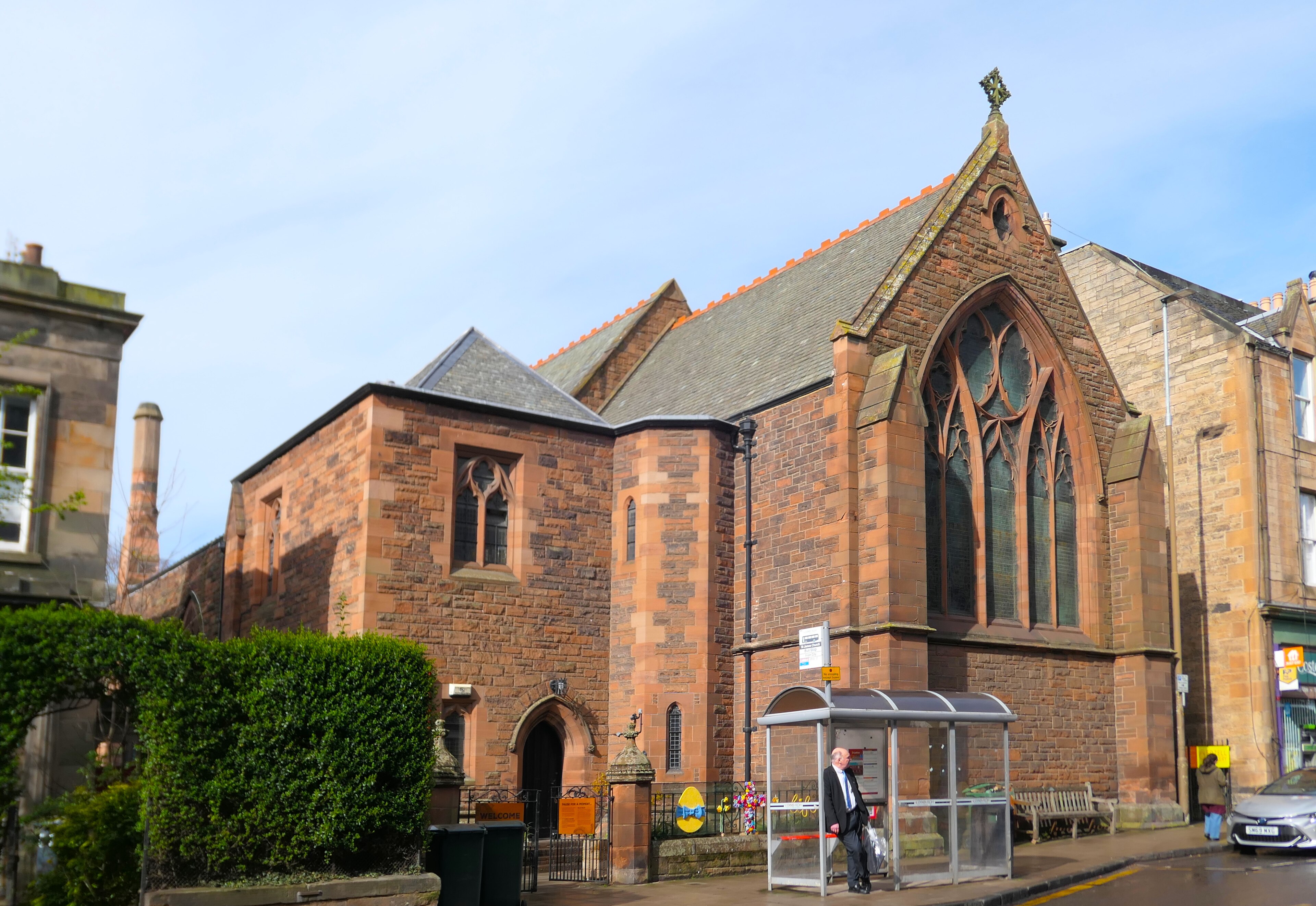
A Scottish Episcopal church whose refined interior showcases the finest decorative work of the Victorian and early modern era.
At a glance
St James stands in Edinburgh’s Goldenacre neighbourhood as a testament to late-nineteenth-century ecclesiastical design. Designed by Robert Rowand Anderson, one of Scotland’s most accomplished architects, the church opened its doors in 1888. Today it remains a Category B listed building, recognized for both its architectural merit and its exceptional interior embellishment.
History
Robert Rowand Anderson designed St James during a period of significant church building across Edinburgh. The church opened in 1888, serving the growing residential community of Goldenacre. Its construction reflects the Victorian era’s confidence in ecclesiastical patronage and artistic investment.
What you see
The church is distinguished by its interior decoration, which features contributions from distinguished artists working across the nineteenth and twentieth centuries. Rather than a single unified scheme, the interior represents layers of artistic vision and craftsmanship spanning generations. The decorative elements reflect Anderson’s commitment to integrating fine art within sacred space.
Cultural significance
St James exemplifies the Scottish Episcopal Church’s role in Edinburgh’s cultural landscape. As a Category B listed building, it is recognized as a structure of regional or more than special interest. The church stands as evidence of how commercial success and artistic ambition converged in late-Victorian Edinburgh.
Key facts
- Country: United Kingdom
- City: Edinburgh
- Architect: Robert Rowand Anderson
- Year opened: 1888
- Listed status: Category B
- Coordinates: 55.97058, -3.20881
Practical information & getting there
St James is located in the Goldenacre area of Edinburgh. For visiting hours, services, and current access information, contact the church directly or visit its website through the Scottish Episcopal Church directory.
Sources & resources
Find it on the map
See this place and what’s around it →📷 Become a Cultural Heritage Online photographer
Share your photos of places: they stay published under your name as the author. The more they're seen, the more you get noticed — and soon a contest will reward the most appreciated photos.
Log in or sign up free to add a photoIs this page about you?
This page is read by travellers and heritage enthusiasts who find it on Google. Tell us how you are connected to this place and we will take it from there.