
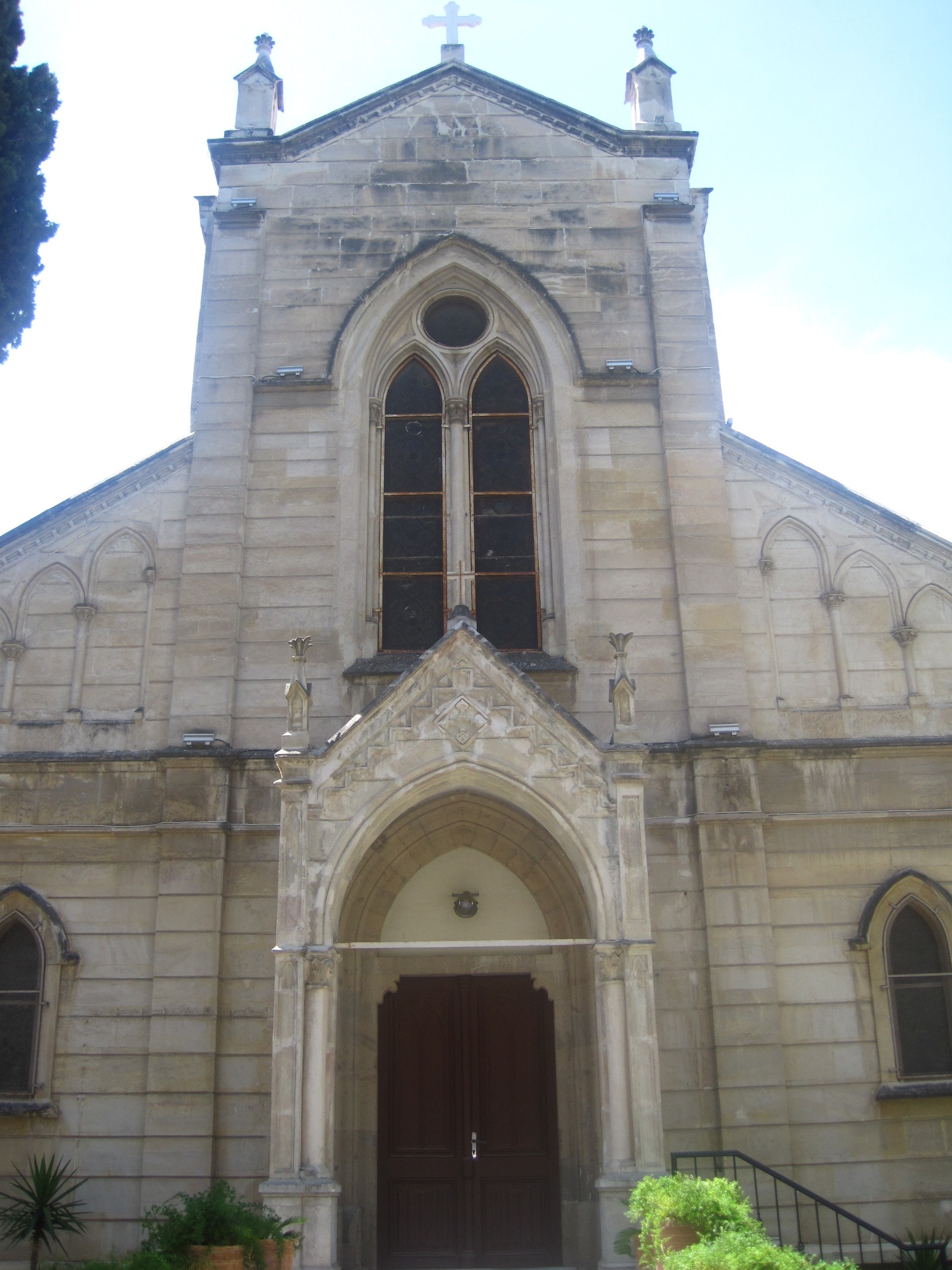
A Catholic church dedicated to the mother of Constantine the Great, built in early twentieth-century Karşıyaka.
At a glance
St. Helena Church stands in the Karşıyaka district as a Catholic place of worship. Completed in 1904, it honours Saint Helena of Constantinople, venerated for her role in identifying and preserving the True Cross and other Christian relics.
History
The church was constructed in 1904 in Karşıyaka, a district with a significant Christian heritage during the late Ottoman period. It was designed by architect Raymond Charles Péré. The building commemorates Saint Helena, the wife of Roman Emperor Constantius Chlorus and mother of Constantine the Great, whose legendary discovery of the True Cross shaped Christian devotion for centuries.
What you see
Raymond Charles Péré’s design reflects early twentieth-century Catholic ecclesiastical architecture. The church embodies the period’s approach to sacred space within the Ottoman context, where religious minorities maintained their houses of worship alongside the dominant Islamic architecture of the city.
Cultural significance
The church represents the Catholic presence in Karşıyaka and Turkey more broadly during a pivotal era. Its dedication to Saint Helena, traditionally credited with discovering Christianity’s most sacred relic, underscores the persistence of Christian pilgrimage and relic veneration into the modern age.
Key facts
- Built: 1904
- Architect: Raymond Charles Péré
- Location: Karşıyaka district, Turkey
- Coordinates: 38.45475, 27.11446
- Denomination: Catholic
Practical information & getting there
St. Helena Church is located in Karşıyaka, a district in the Izmir metropolitan area. Detailed visiting hours and access information are best confirmed locally before your visit.
Sources & resources
Find it on the map
See this place and what’s around it →📷 Become a Cultural Heritage Online photographer
Share your photos of places: they stay published under your name as the author. The more they're seen, the more you get noticed — and soon a contest will reward the most appreciated photos.
Log in or sign up free to add a photoIs this page about you?
This page is read by travellers and heritage enthusiasts who find it on Google. Tell us how you are connected to this place and we will take it from there.