
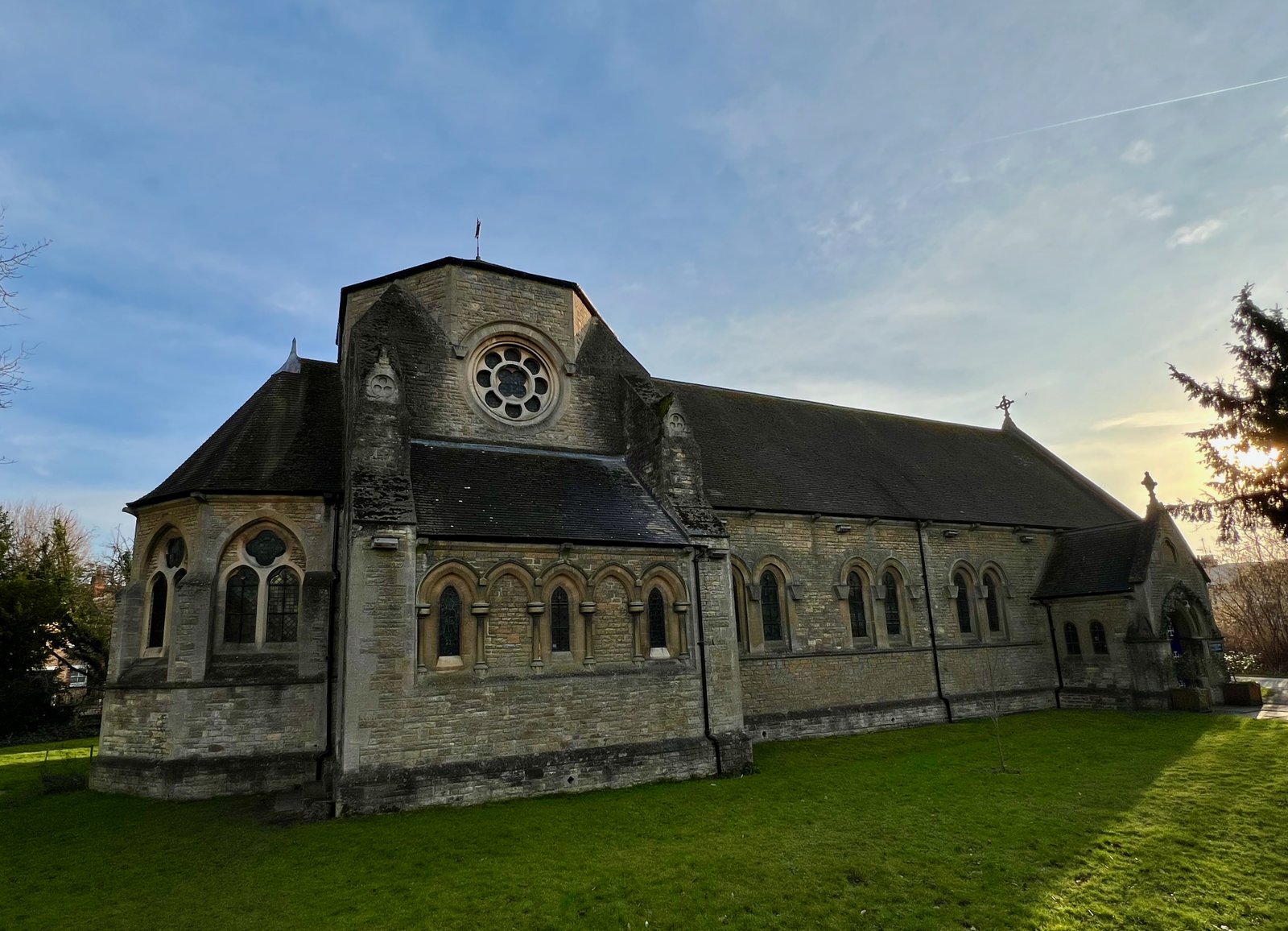
A Victorian parish church in Oxford’s New Osney district, dedicated to the city’s patron saint and celebrated for its striking architectural presence.
At a glance
St Frideswide’s Church stands on the south side of Botley Road, a Grade II* listed building that commands attention through its unusually powerful design. Built during the Victorian era’s architectural ambitions, it remains a significant example of 19th-century ecclesiastical construction in Oxford.
History
The church was constructed between 1870 and 1872 in the expanding New Osney area of Oxford. Its dedication to St Frideswide, the patron saint of Oxford, connected the new parish church to the city’s medieval religious heritage and identity.
What you see
The building’s design is noted for its unusual power—a quality that sets it apart from conventional Victorian ecclesiastical architecture. The church’s Grade II* listing reflects the significance of its architectural achievement.
Cultural significance
St Frideswide’s Church represents the Victorian expansion of Oxford’s religious infrastructure during a period of urban growth. Its dedication honours the saint most closely associated with Oxford’s spiritual identity and medieval foundation.
Key facts
- Country: United Kingdom
- City: Oxford
- Built: 1870–72
- Grade II* listed building
- Coordinates: 51.752131, −1.274865
Practical information & getting there
St Frideswide’s Church is located on Botley Road in the New Osney district of Oxford. As a Grade II* listed building, it remains an accessible landmark for visitors exploring Oxford’s Victorian ecclesiastical architecture.
Sources & resources
Find it on the map
See this place and what’s around it →📷 Become a Cultural Heritage Online photographer
Share your photos of places: they stay published under your name as the author. The more they're seen, the more you get noticed — and soon a contest will reward the most appreciated photos.
Log in or sign up free to add a photoIs this page about you?
This page is read by travellers and heritage enthusiasts who find it on Google. Tell us how you are connected to this place and we will take it from there.