
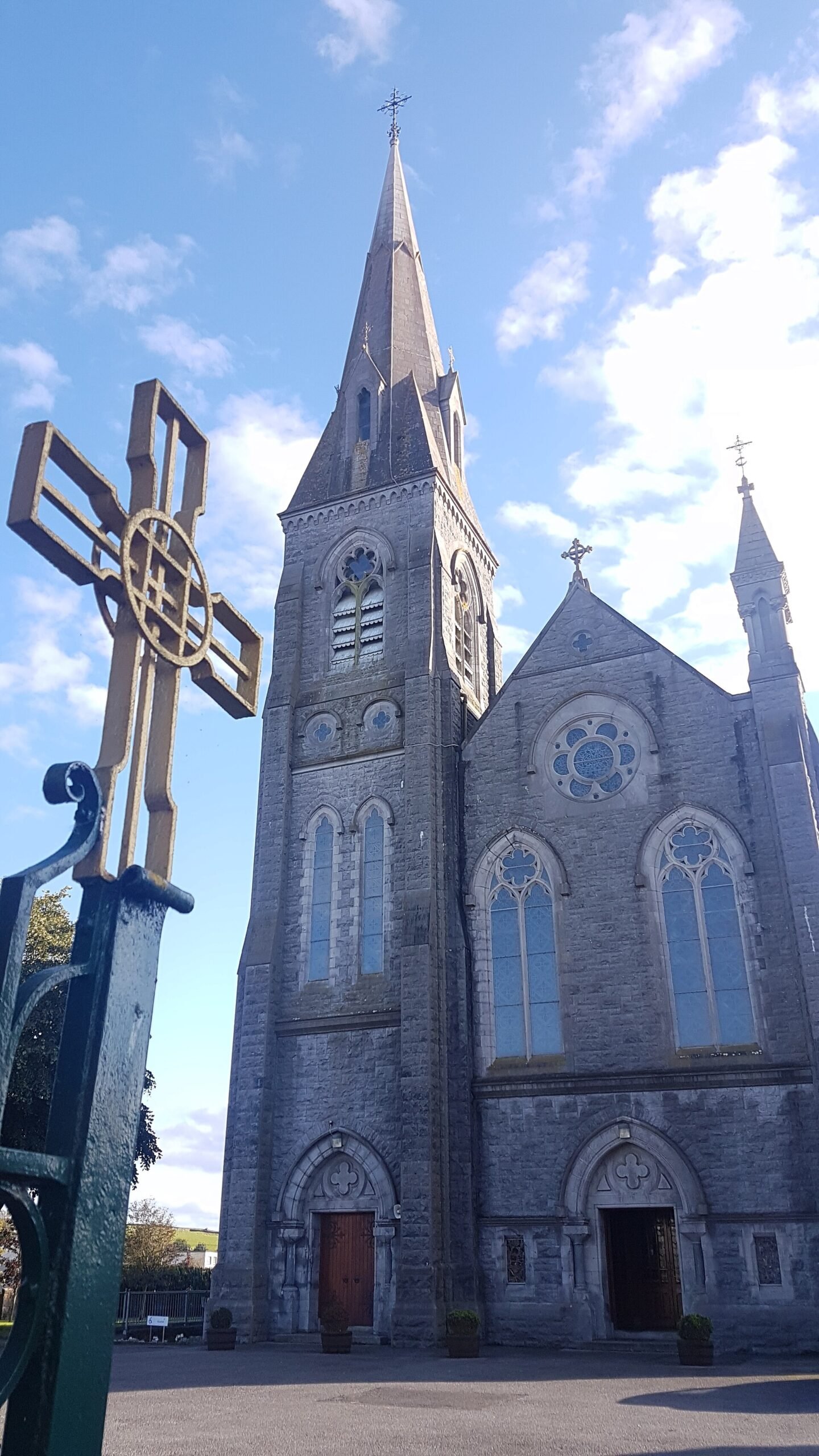
A Neo-Gothic cathedral housing one of Ireland’s most significant collections of Celtic Revival art, featuring stained glass by the pioneering An Túr Gloine studio and works by leading early twentieth-century Irish craftspeople.
At a glance
The cathedral serves as the cathedral church of the Roman Catholic Diocese of Clonfert. Its interior is an exceptional repository of Irish artistic achievement, spanning stained glass, embroidered banners, sculpture, metalwork and woodwork by leading studio artists and craftspeople.
History
The foundation stone was laid on 10 October 1897, with the structure completed in 1902. Most interior features date from the first decade of the twentieth century, though stained glass commissions continued until the 1950s.
The cathedral’s decorative scheme is inextricably connected to the origins of An Túr Gloine, the Dublin-based studio. Among the studio’s first orders were three apse windows in 1903 for the new cathedral. In 2003, a copy of the weeping “Irish Madonna of Hungary”—originally removed by Bishop Walter Lynch during the Cromwellian conquest to prevent desecration—was presented to the diocese by Bishop Pápai Janos of Győr and now hangs in the cathedral in honour of Irish Catholic martyrs.
What you see
The cathedral’s Neo-Gothic design frames an interior rich with artistic collaboration. Virtually all of An Túr Gloine’s artists are represented in the stained glass collection, including Michael Healy, Alfred E. Child, Sarah Purser, Beatrice Elvery, Ethel Rhind, Hubert McGoldrick, Catherine Amelia O’Brien and Evie Hone.
Healy’s ten windows include St Simeon, the first window he both designed and executed, and The Last Judgement (1940), completed a year before his death. Twenty-four embroidered banners, mostly depicting Irish saints, were created by the Dun Emer Guild. Sculptors John Hughes and Michael Shortall contributed works; architect William Alphonsus Scott designed metalwork and woodwork.
Cultural significance
St Brendan’s Cathedral stands as a monument to the Celtic Revival and the emergence of modern Irish artistic practice in the early twentieth century. The building preserves an unusually comprehensive record of collaboration between architects, glass artists, embroiderers, sculptors and metalworkers during a defining moment in Irish cultural life.
Key facts
- Location: Loughrea, County Galway, Ireland
- Coordinates: 53.197°N, 8.567°W
- Completed: 1902
- Architectural style: Neo-Gothic
- Denomination: Roman Catholic (Cathedral of the Diocese of Clonfert)
Practical information & getting there
St Brendan’s Cathedral is located in Loughrea, a market town in County Galway in the west of Ireland. The cathedral remains an active place of worship. You can visit during standard opening hours; check locally for specific visiting times and any restrictions.
Sources & resources
Find it on the map
See this place and what’s around it →📷 Become a Cultural Heritage Online photographer
Share your photos of places: they stay published under your name as the author. The more they're seen, the more you get noticed — and soon a contest will reward the most appreciated photos.
Log in or sign up free to add a photoIs this page about you?
This page is read by travellers and heritage enthusiasts who find it on Google. Tell us how you are connected to this place and we will take it from there.