
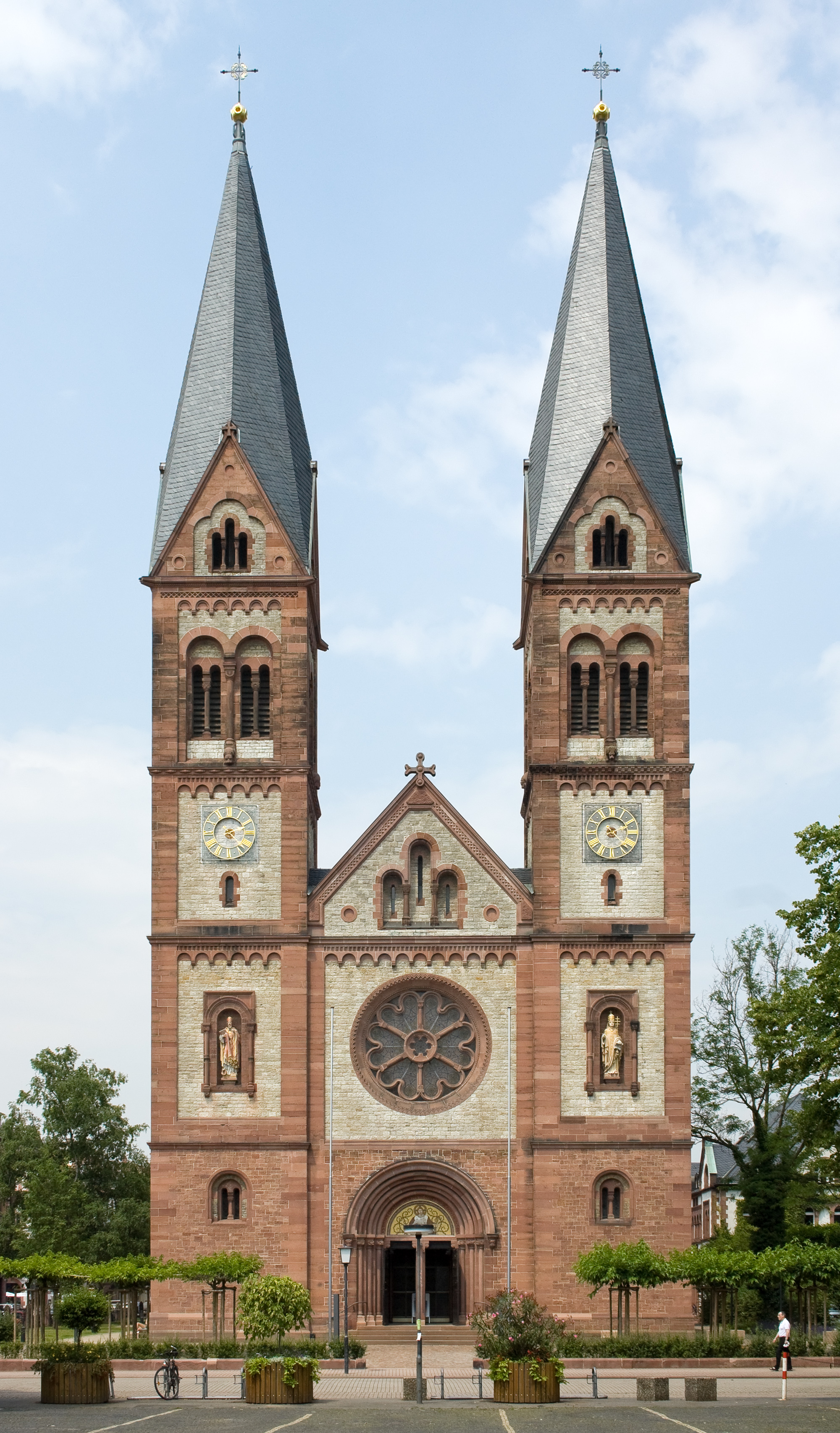
A Romanesque Revival basilica in Heidelberg’s Weststadt, designed by Ludwig Maier and completed at the turn of the twentieth century.
At a glance
St. Bonifatius stands as a confident statement of late nineteenth-century Catholic architecture in southwestern Germany. The church’s double-towered facade and formal basilica plan anchor the Weststadt district with solidity and grace.
History
Designed by architect Ludwig Maier, St. Bonifatius was built between 1899 and 1903, a period of Catholic expansion in German cities. The church serves as part of the parish of Philipp Neri within the Archdiocese of Freiburg.
What you see
The basilica displays characteristic Romanesque Revival features: a transept that creates a traditional Latin cross plan and a prominent western facade crowned by twin towers. The symmetrical composition reflects nineteenth-century ideals of ecclesiastical order and permanence.
Cultural significance
St. Bonifatius represents the confidence of organized Catholicism in the Wilhelmine era, a time of rapid urbanization and religious institution-building across German industrial cities. Its architectural language connects medieval piety with modern construction.
Key facts
- Country: Germany
- City: Heidelberg
- Architect: Ludwig Maier
- Built: 1899–1903
- Style: Romanesque Revival basilica with transept
- Coordinates: 49.40395, 8.68749
Practical information & getting there
St. Bonifatius is located in Heidelberg’s Weststadt district. For current visiting hours and local travel information, consult tourism resources for Heidelberg or contact the Archdiocese of Freiburg.
Sources & resources
Find it on the map
See this place and what’s around it →📷 Become a Cultural Heritage Online photographer
Share your photos of places: they stay published under your name as the author. The more they're seen, the more you get noticed — and soon a contest will reward the most appreciated photos.
Log in or sign up free to add a photoIs this page about you?
This page is read by travellers and heritage enthusiasts who find it on Google. Tell us how you are connected to this place and we will take it from there.