

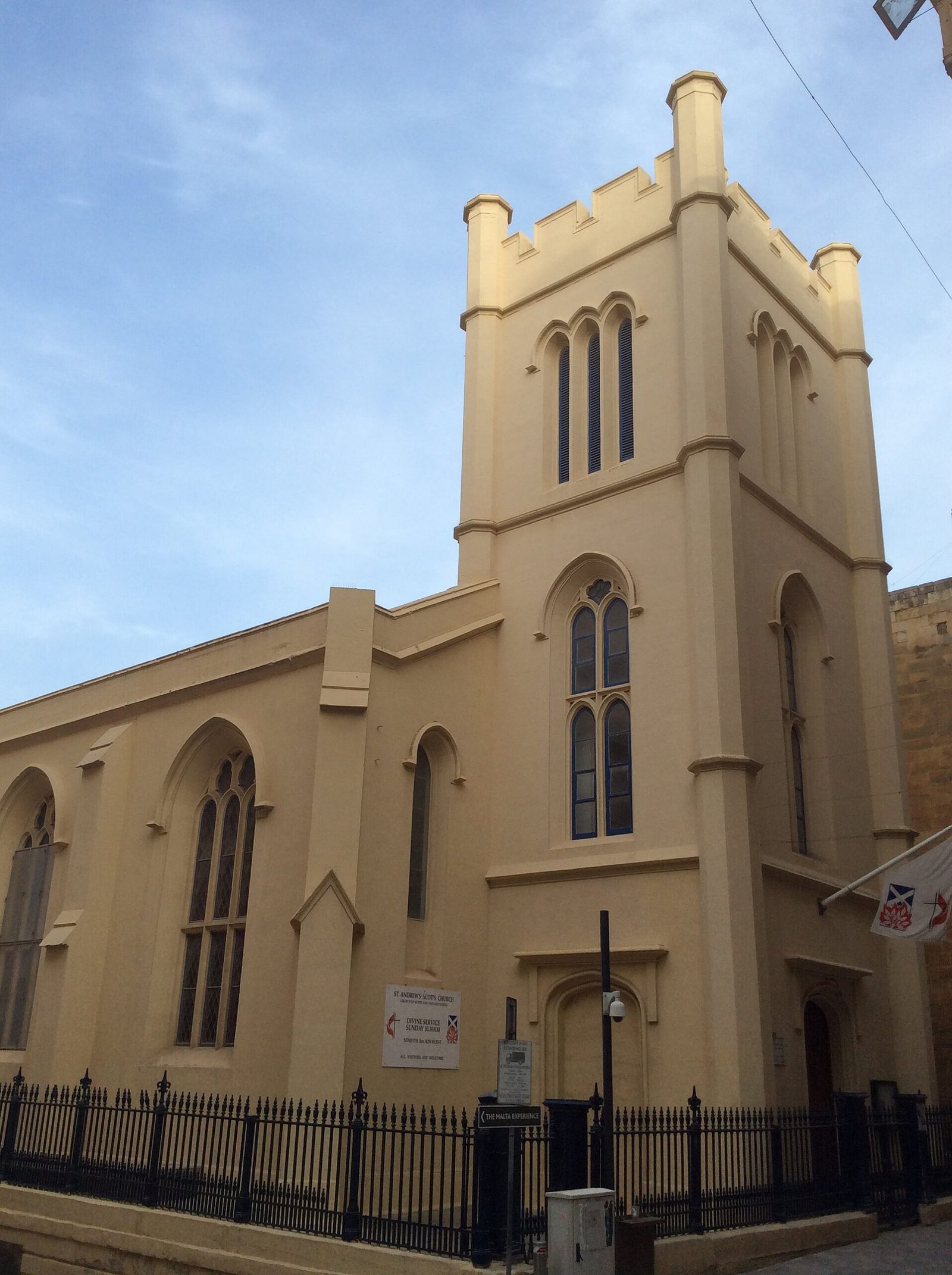
A neo-Gothic church in Malta’s capital, designed by architect Giuseppe Bonavia and serving Scottish Presbyterian and Methodist congregations.
At a glance
St Andrew’s Scots Church stands as a 19th-century expression of Protestant faith in predominantly Catholic Malta. Built in the neo-Gothic style, it serves as a joint place of worship for the Church of Scotland and the British Methodist Church South-East District, operating as part of the Presbytery of Europe.
History
Constructed during the 19th century, the church was designed by Maltese architect Giuseppe Bonavia. It emerged from Malta’s unique religious landscape, where a significant British expatriate community and Scottish diaspora required dedicated places of worship. The church remains actively used today by its original congregations.
What you see
The building exemplifies neo-Gothic design, a style that dominated 19th-century European church architecture. Bonavia’s design balances this European aesthetic with Malta’s Mediterranean context, creating a distinctive landmark in Valletta’s historic townscape.
Cultural significance
St Andrew’s represents Malta’s religious diversity and historical ties to Britain and Scotland. It stands as a testament to the communities who settled in Malta during the British colonial period and their enduring spiritual traditions. The church continues to serve as a cultural bridge between Scotland, Britain, and Malta.
Key facts
- Country: Malta
- City: Valletta
- Period: 19th century
- Architect: Giuseppe Bonavia
- Architectural style: Neo-Gothic
- Coordinates: 35.8976, 14.5098
- Active congregation: Church of Scotland (Presbytery of Europe) and British Methodist Church South-East District
Practical information & getting there
The church is located in Valletta, Malta’s capital city. As an active place of worship, visitors are welcome to attend services or visit during public hours. For specific visiting times and service schedules, contact the church directly or consult local tourism information in Valletta.
Sources & resources
Find it on the map
See this place and what’s around it →📷 Become a Cultural Heritage Online photographer
Share your photos of places: they stay published under your name as the author. The more they're seen, the more you get noticed — and soon a contest will reward the most appreciated photos.
Log in or sign up free to add a photoIs this page about you?
This page is read by travellers and heritage enthusiasts who find it on Google. Tell us how you are connected to this place and we will take it from there.