

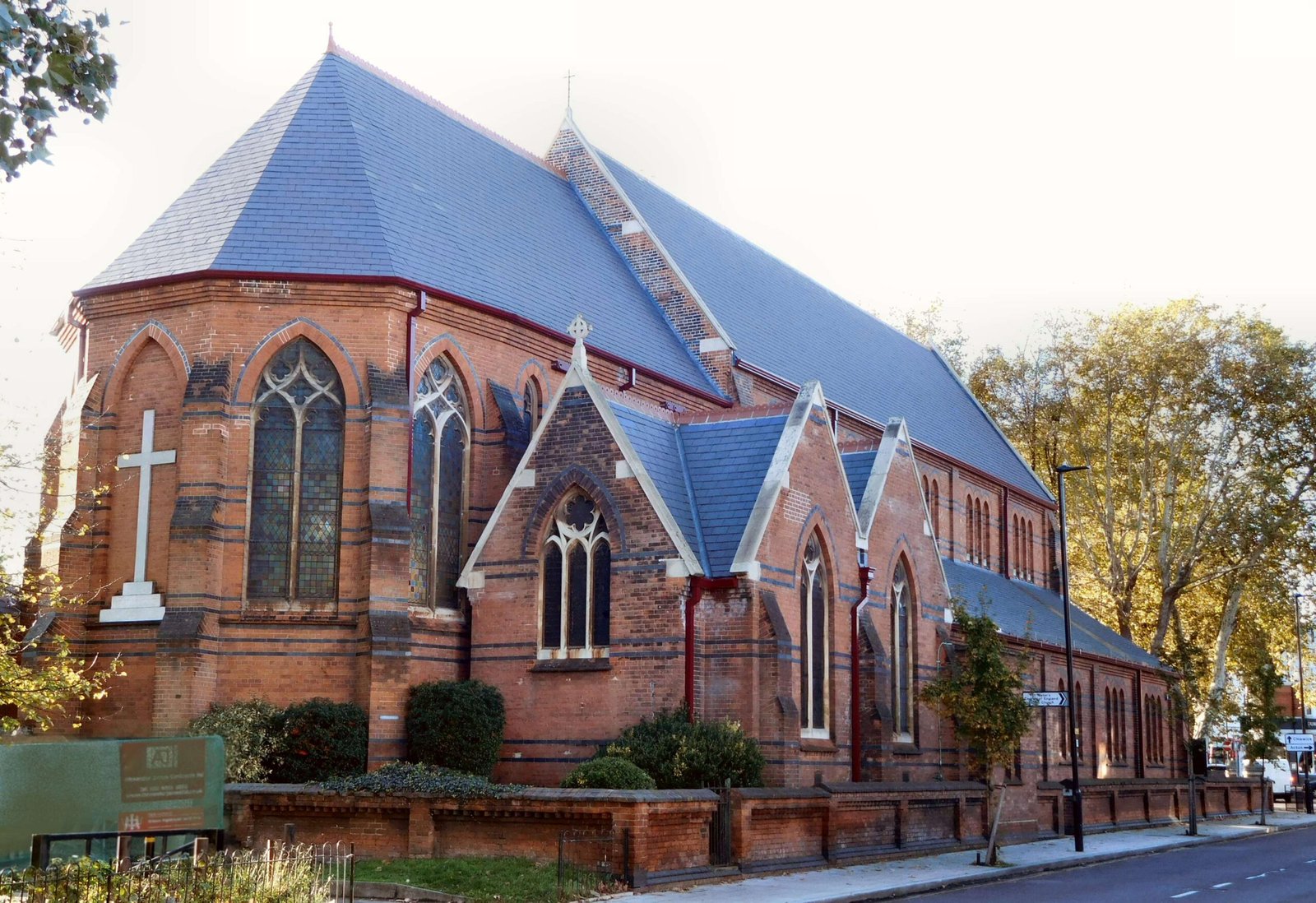
A Victorian parish church on South Parade, Acton Green, designed by Edward Monson Jr. and dedicated to St Alban the Martyr.
At a glance
St Alban’s Church stands as a significant religious landmark in west London, serving the Acton Green community since the late 19th century. The church bears the name of St Alban the Martyr, revered in Christian tradition as Britain’s first saint.
History
The church opened in 1888, a period of rapid urban expansion in west London. It was designed by architect Edward Monson Jr., who shaped the building to meet the spiritual and social needs of the growing residential area. The Victorian era saw such parish churches become focal points for their communities.
What you see
The church is located on South Parade in Acton Green, Chiswick. Details of its architectural style and specific design features reflect the Victorian ecclesiastical practice of the 1880s.
Cultural significance
As a Victorian parish church, St Alban’s represents the religious infrastructure developed during London’s suburban growth. Its dedication to St Alban the Martyr connects the local community to centuries of Christian devotion and British ecclesiastical history.
Key facts
- Location: South Parade, Acton Green, Chiswick, London
- Architect: Edward Monson Jr.
- Opened: 1888
- Country: United Kingdom
- Coordinates: 51.496°N, 0.263°W
Practical information & getting there
St Alban’s Church is situated on South Parade in Acton Green, accessible via public transport in west London. For current opening hours and service times, visitors should contact the church directly or check local parish resources.
Sources & resources
Find it on the map
See this place and what’s around it →📷 Become a Cultural Heritage Online photographer
Share your photos of places: they stay published under your name as the author. The more they're seen, the more you get noticed — and soon a contest will reward the most appreciated photos.
Log in or sign up free to add a photoIs this page about you?
This page is read by travellers and heritage enthusiasts who find it on Google. Tell us how you are connected to this place and we will take it from there.