

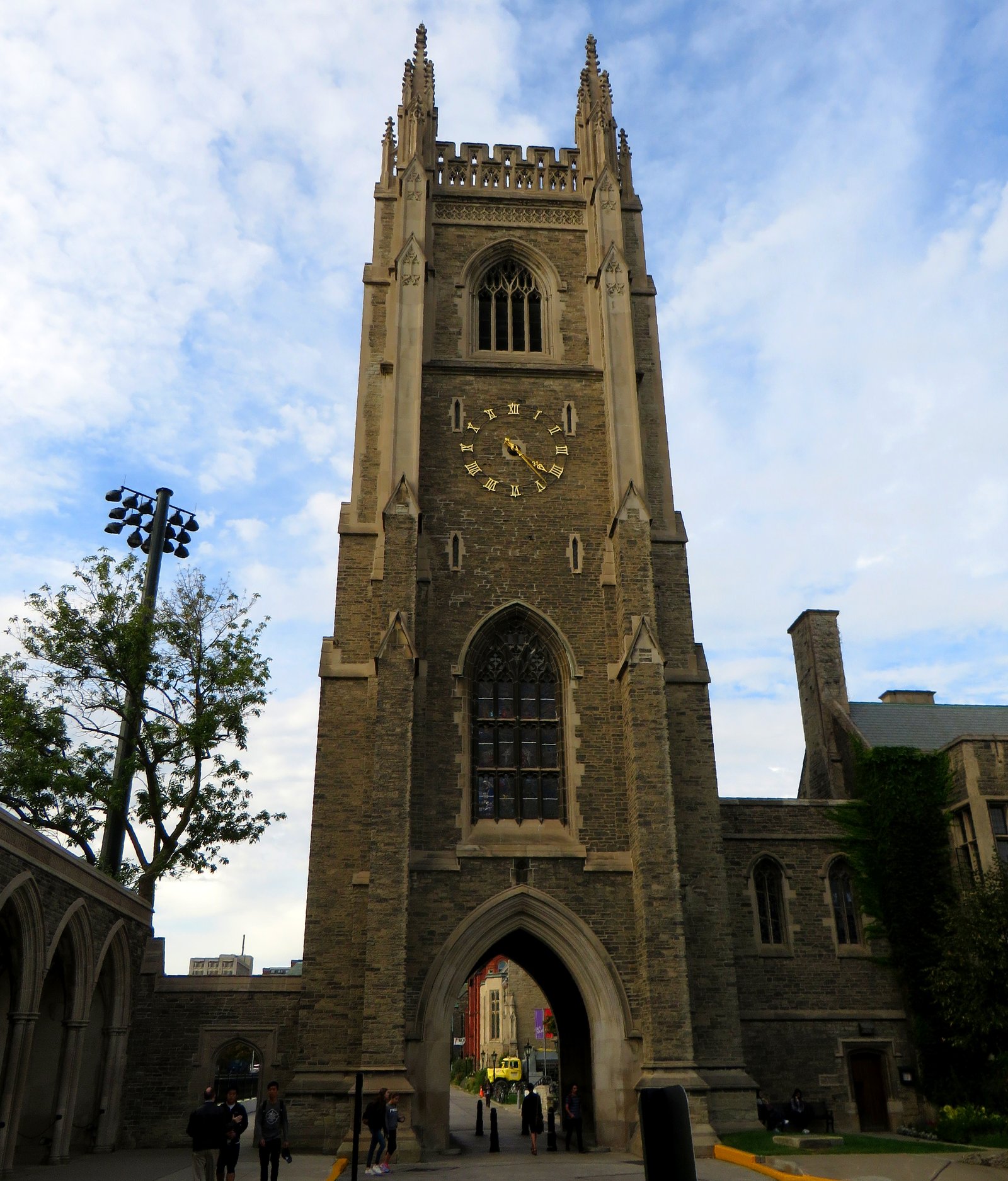
A Gothic Revival bell tower at the University of Toronto, designed to honor the university’s members who served in the World Wars, with a carillon of 51 bells.
At a glance
The Soldiers’ Tower stands 143 feet tall on the St. George campus of the University of Toronto. Designed by architects Henry Sproatt and Ernest Ross Rolph, this Gothic Revival structure combines commemorative purpose with functional architecture. The tower is attached to Hart House and remains a focal point of campus life.
History
The tower was built to commemorate members of the University of Toronto who served in the First and Second World Wars. Its creation represents a broader institutional commitment to honoring the sacrifice of students and staff whose lives were shaped or ended by global conflict.
What you see
The tower’s Gothic Revival design draws on medieval ecclesiastical tradition, appropriate for a commemorative structure. Its height of 143 feet (43.6 meters) makes it a distinctive landmark visible across the campus. The carillon of 51 bells housed within the tower allows for musical performance and ceremonial tolling that mark significant moments throughout the academic year.
Cultural significance
The Soldiers’ Tower embodies the university’s institutional memory and connection to national history. It serves as a reminder of the human cost of war and the role of educational institutions in cultivating citizens who respond to calls for service. The tower’s presence on campus shapes daily experience for students and staff.
Key facts
- Country: Canada
- City: Toronto, Ontario
- Coordinates: 43.6635, -79.3951
- Height: 143 feet (43.6 m)
- Architects: Henry Sproatt and Ernest Ross Rolph
- Carillon: 51 bells
- Attached to: Hart House
Practical information & getting there
The Soldiers’ Tower is located on the St. George campus of the University of Toronto in downtown Toronto. You can visit the campus grounds year-round. The carillon performs at set times throughout the day. For current visiting hours and bell tower tour availability, consult the University of Toronto’s official website.
Sources & resources
Find it on the map
See this place and what’s around it →📷 Become a Cultural Heritage Online photographer
Share your photos of places: they stay published under your name as the author. The more they're seen, the more you get noticed — and soon a contest will reward the most appreciated photos.
Log in or sign up free to add a photoIs this page about you?
This page is read by travellers and heritage enthusiasts who find it on Google. Tell us how you are connected to this place and we will take it from there.