
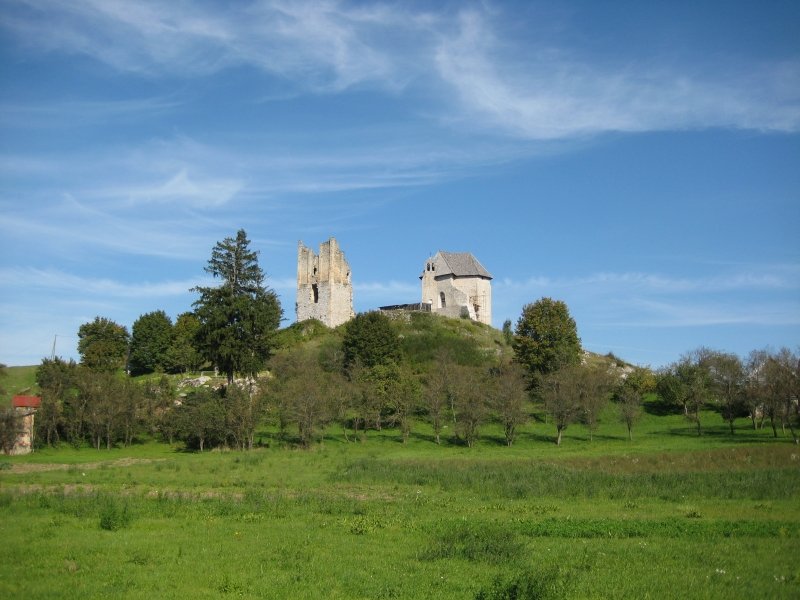
A medieval fortress in central Croatia, Sokolac takes its name from the falcon that graces the town’s heraldry, embodying the region’s martial heritage.
At a glance
Sokolac (Gradina Sokolac in Croatian) is a fortified site located in Brinje, in the Karlovac County region of Croatia. The fortress’s name derives from sokol, the Croatian word for falcon, a symbol that appears prominently on the town’s coat of arms.
History
The fortress dates to the medieval period, reflecting the strategic importance of the Brinje area during Central Europe’s tumultuous Middle Ages. Few specific details about its construction or early history are documented in widely available sources.
What you see
As a medieval fortification, Sokolac represents the defensive architecture typical of its era. The site’s layout and surviving structures—if any—would have served both protective and symbolic functions for the community.
Cultural significance
Sokolac embodies the heraldic traditions of medieval Croatia, where animal symbols—particularly the falcon—held deep cultural meaning. The fortress remains a tangible link to the region’s layered history of settlement and defense.
Key facts
- Location: Brinje, Karlovac County, Croatia
- Period: Medieval
- Coordinates: 44.99833333°N, 15.13161111°E
- Name meaning: From sokol (falcon), reflected in Brinje’s coat of arms
Practical information & getting there
Sokolac is situated in Brinje, accessible via road from Karlovac. For current visiting conditions, accessibility details, and nearby amenities, contact local tourism information for Brinje or Karlovac County.
Sources & resources
Find it on the map
See this place and what’s around it →📷 Become a Cultural Heritage Online photographer
Share your photos of places: they stay published under your name as the author. The more they're seen, the more you get noticed — and soon a contest will reward the most appreciated photos.
Log in or sign up free to add a photoIs this page about you?
This page is read by travellers and heritage enthusiasts who find it on Google. Tell us how you are connected to this place and we will take it from there.