
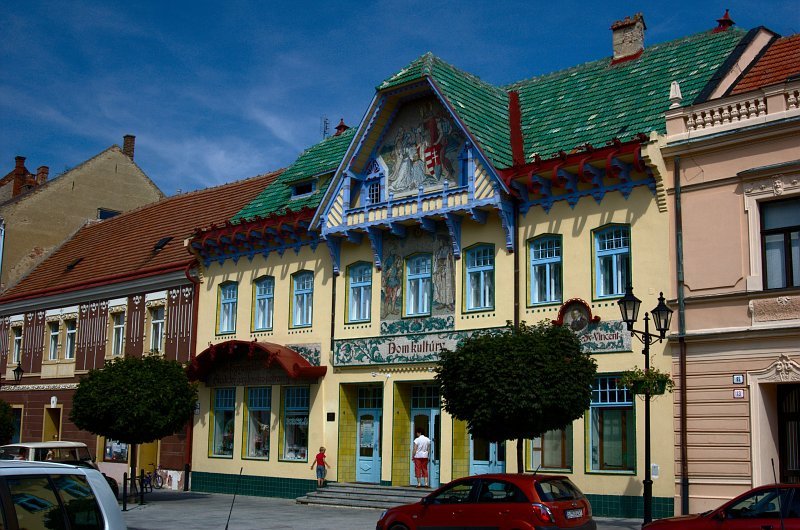
A masterwork of Slovak Secession architecture, this cultural venue was designed by Dušan Jurkovič at the height of Art Nouveau’s influence across Central Europe.
At a glance
The Skalica Culture House stands as a significant example of early 20th-century Secession design in Slovakia. Completed in 1905, the building reflects the artistic ambitions of its era while serving as a functional centre for civic and cultural life in the northwestern Slovak town of Skalica.
History
Built in 1905, the Culture House emerged during a period of cultural flourishing in Slovakia. The commission to design the building went to Dušan Jurkovič, one of Slovakia’s most accomplished architects of the period. The structure was conceived as a modern gathering place for the community.
What you see
The building exemplifies Secession style, the Central European variant of Art Nouveau. Jurkovič’s design integrates elegant linear forms, refined ornamentation, and spatial planning characteristic of the movement. The façade and interior spaces reflect the era’s commitment to elevating everyday civic buildings into works of artistic merit.
Cultural significance
The Culture House represents an important moment in Slovak architectural history, when modern design principles began reshaping urban centres. Jurkovič’s work helped establish Secession as a dominant aesthetic in Slovakia during the early 1900s. The building continues to function as a cultural venue, maintaining its original civic purpose.
Key facts
- Country: Slovakia
- City: Skalica
- Architect: Dušan Jurkovič
- Completed: 1905
- Style: Secession
- Coordinates: 48.8463°N, 17.2296°E
Practical information & getting there
Skalica is located in northwestern Slovakia, approximately 90 kilometres from Bratislava. The Culture House remains an active cultural institution; visiting hours and event schedules are available through local tourism information. The town centre is easily navigable on foot.
Sources & resources
- Skalica Culture House – Wikipedia
- Cultural Heritage Online
Find it on the map
See this place and what’s around it →📷 Become a Cultural Heritage Online photographer
Share your photos of places: they stay published under your name as the author. The more they're seen, the more you get noticed — and soon a contest will reward the most appreciated photos.
Log in or sign up free to add a photoIs this page about you?
This page is read by travellers and heritage enthusiasts who find it on Google. Tell us how you are connected to this place and we will take it from there.