
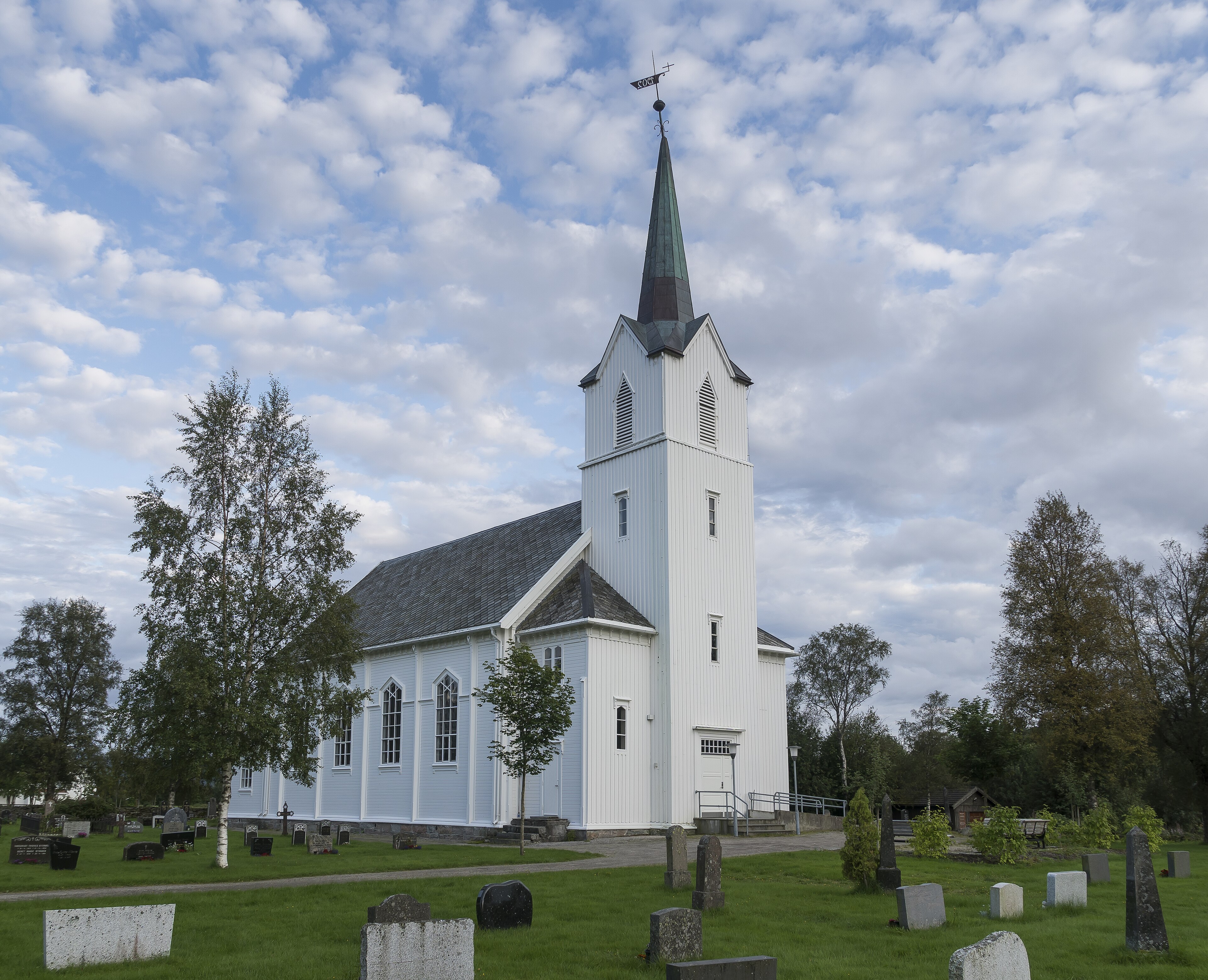
A white wooden Neo-Gothic parish church in the village of Hunn, built in the early 20th century to serve the Skage parish in Trøndelag.
At a glance
Skage Church is a working parish church of the Church of Norway, part of the Namdal deanery in the Diocese of Nidaros. Its clean lines and simple wooden construction reflect the modest architectural ambitions of rural Norwegian chapel-building in the early 1900s.
History
The church was constructed in 1903 according to designs by architect Ole Scheistrøen. It was built to serve the spiritual needs of the Skage parish community in what is now Overhalla Municipality, in the Trøndelag region of central Norway.
What you see
The structure exemplifies the long church style common in Scandinavian ecclesiastical design. Its white wooden exterior and Neo-Gothic detailing give it a modest dignity. The church accommodates approximately 330 worshippers, making it a reasonably sized venue for its rural setting.
Cultural significance
Skage Church represents early 20th-century Norwegian parish architecture, a period when communities invested in permanent, well-designed places of worship. Its continued function as an active church underscores the enduring role of such buildings in Norwegian village life.
Key facts
- Country: Norway
- Municipality: Overhalla
- Village: Hunn
- Built: 1903
- Architect: Ole Scheistrøen
- Style: Neo-Gothic, long church
- Material: White wood
- Capacity: c. 330 people
- Coordinates: 64.464°N, 11.756°E
Practical information & getting there
Skage Church is located in the village of Hunn within Overhalla Municipality in Trøndelag. As an active parish church, visiting hours and access may be subject to services and local practices. Contact the Diocese of Nidaros or the Namdal deanery for current information on visiting.
Sources & resources
Find it on the map
See this place and what’s around it →📷 Become a Cultural Heritage Online photographer
Share your photos of places: they stay published under your name as the author. The more they're seen, the more you get noticed — and soon a contest will reward the most appreciated photos.
Log in or sign up free to add a photoIs this page about you?
This page is read by travellers and heritage enthusiasts who find it on Google. Tell us how you are connected to this place and we will take it from there.