
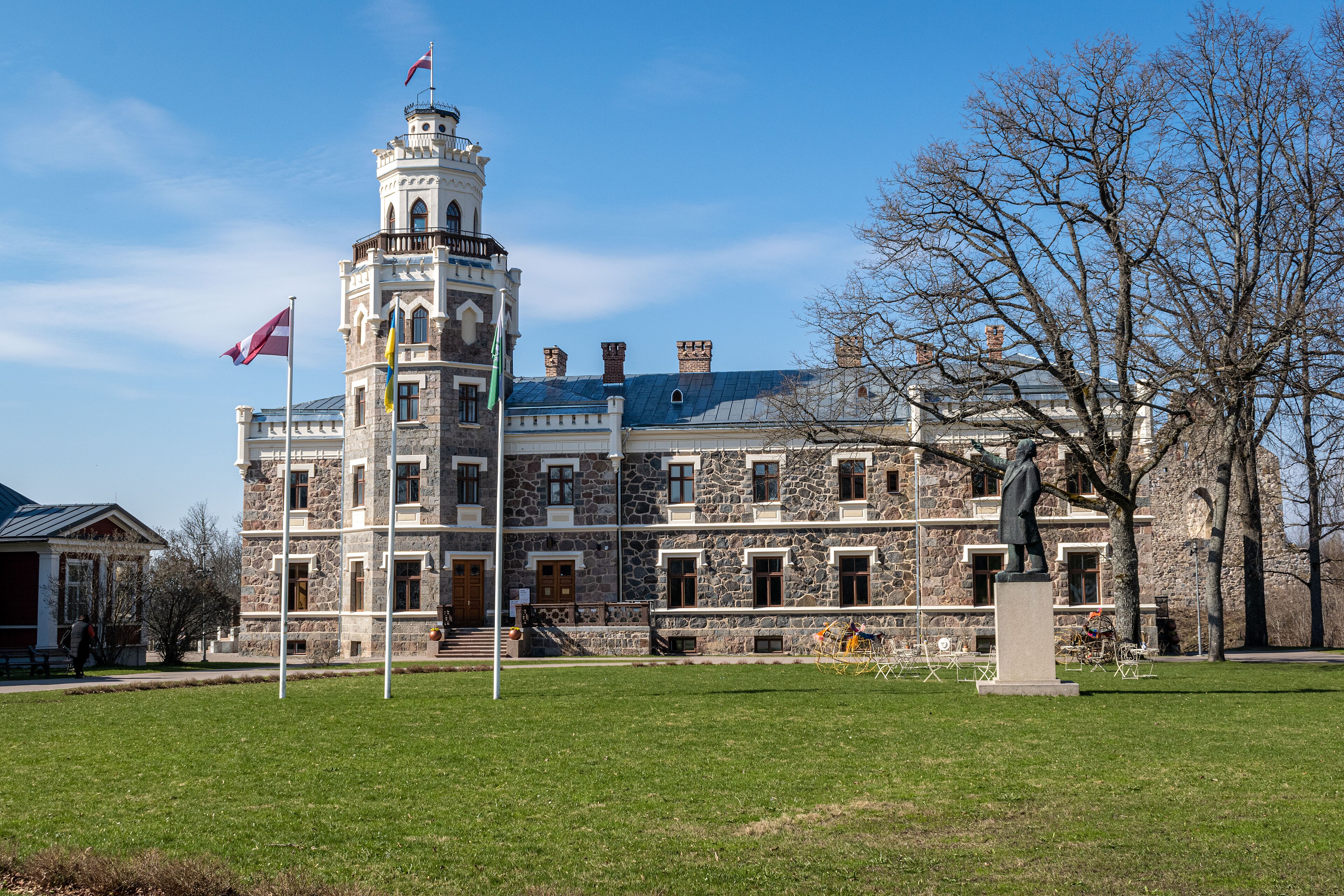
A spirited Neo-Gothic mansion built for the Kropotkin family, Sigulda Castle stands as a symbol of 19th-century ambition in Latvia’s Vidzeme region.
At a glance
Sigulda Castle, or Siguldas jaunā pils in Latvian, rose in 1878 as a private residence for the aristocratic Kropotkin family. The castle exemplifies the Neo-Gothic revival favored by European landowners of the industrial age. Today it serves as the seat of the Sigulda Region Council.
History
Commissioned in 1878, the castle was designed to reflect the wealth and cultural aspirations of its owners, the Kropotkin family. The 19th century saw such estates proliferate across the Baltic as symbols of power and refinement. Over the decades, ownership and function shifted repeatedly. Since 1993, the building has housed the Sigulda Region Council, securing its continued use and preservation.
What you see
The castle embodies Neo-Gothic design with its characteristic pointed arches, ornamental detailing, and romantic silhouette. Built as a residence, its architectural language speaks to the tastes of late-19th-century Baltic nobility—a blend of medieval revivalism and contemporary comfort.
Cultural significance
Sigulda Castle represents an important chapter in Latvia’s manor-house heritage. As one of the region’s notable Neo-Gothic structures, it reflects the historical presence of German and Russian aristocratic families in the Baltics and their influence on local architecture and society.
Key facts
- Built: 1878
- Style: Neo-Gothic
- Location: Sigulda, Vidzeme region, Latvia
- Coordinates: 57.16565833, 24.84971111
- Current use: Sigulda Region Council (since 1993)
Practical information & getting there
Sigulda lies in central Latvia, approximately 40 kilometers east of Riga. The castle serves as a municipal office; opening hours and visitor access may be limited. Check ahead with local tourism authorities for current visiting conditions.
Sources & resources
Find it on the map
See this place and what’s around it →📷 Become a Cultural Heritage Online photographer
Share your photos of places: they stay published under your name as the author. The more they're seen, the more you get noticed — and soon a contest will reward the most appreciated photos.
Log in or sign up free to add a photoIs this page about you?
This page is read by travellers and heritage enthusiasts who find it on Google. Tell us how you are connected to this place and we will take it from there.