

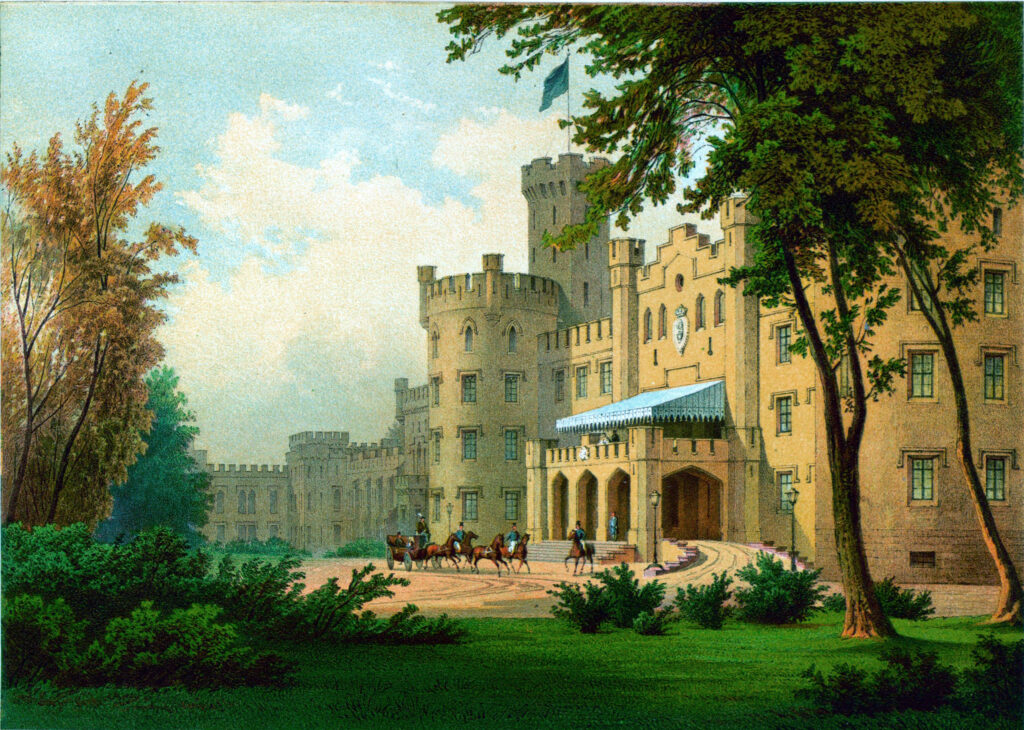
A Tudor-style palace in Silesia, once seat of dukes and later a royal Saxon retreat, reduced to fragments by wartime destruction.
At a glance
Sibyllenort Palace stood 12 kilometres north-east of Wrocław as one of Silesia’s most distinctive aristocratic residences. Its Tudor styling earned it the epithet “the Silesian Windsor.” The complex has survived only as architectural fragments and landscaped grounds.
History
The palace was originally constructed as the seat of the dukes of Oels. In later centuries it became private property of the royal Saxon family, reflecting its prestige as a dynastic stronghold across German and Polish territories. In the final days of the Second World War, the palace was destroyed—the source of the destruction attributed to soldiers of either the retreating SS or the Red Army, or both.
What you see
The palace’s most notable feature was its Tudor architectural style, a conscious evocation of English royal aesthetics that distinguished it from typical Central European palace design. Today, visitors encounter only individual remnants of buildings and the surviving park landscape that once framed the grand residence.
Cultural significance
Sibyllenort exemplified the cosmopolitan tastes of Silesian nobility, blending English architectural traditions with Central European aristocratic aspirations. Its destruction represents one of countless losses of heritage during the Second World War’s final convulsion across Eastern Europe.
Key facts
- Location: Szczodre, Wrocław County, Poland
- Coordinates: 51.1955, 17.1928
- Distance from Wrocław: 12 kilometres north-east
- Former functions: Ducal seat; royal private residence
- Architectural style: Tudor
- Status: Partially ruined; fragments and park remain
Practical information & getting there
Szczodre is accessible from Wrocław by road heading north-east. The site today offers views of the palace grounds and surviving architectural elements. Local tourism offices in Wrocław can provide current information on access and any interpretive facilities at the site.
Its state rooms included a hall with seven chandeliers and a cabinet lined with mirrors, while the dining room held melons and cherry trees growing indoors and a table made of 205 kinds of Italian marble.
Sources & resources
Find it on the map
See this place and what’s around it →
Advertisement. Pictured, from the Cleveland Museum of Art (CC0) and not for sale: Latz commode, Meissen group, Paul Storr tureen. How we handle this
📷 Become a Cultural Heritage Online photographer
Share your photos of places: they stay published under your name as the author. The more they're seen, the more you get noticed — and soon a contest will reward the most appreciated photos.
Log in or sign up free to add a photoIs this page about you?
This page is read by travellers and heritage enthusiasts who find it on Google. Tell us how you are connected to this place and we will take it from there.
This entry stays online and free either way — and a free account lets you add to it yourself.