
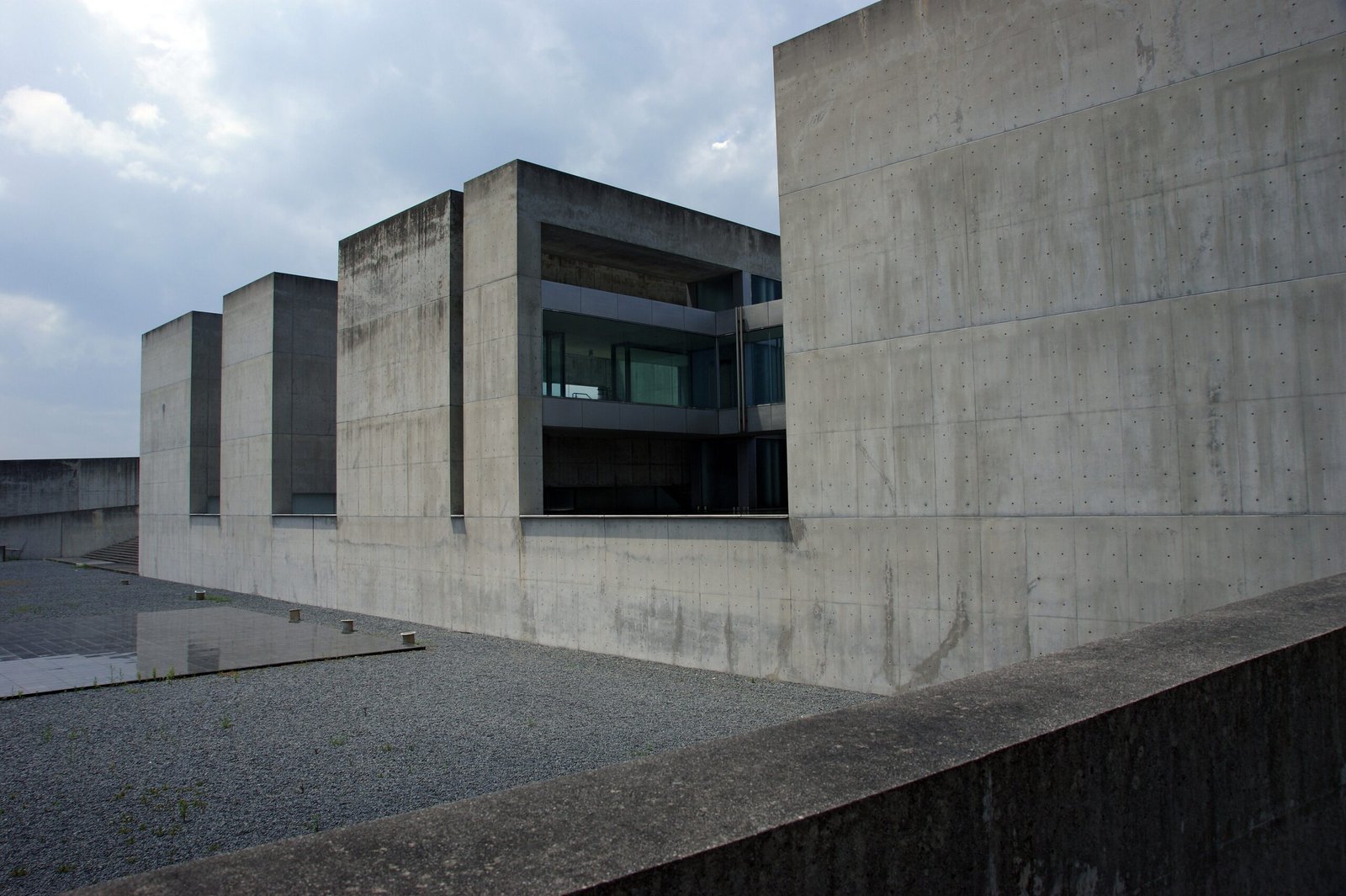
A purpose-built archive devoted entirely to one of Japan’s most distinctive photographers, the museum channels the landscape through carefully composed voids and solids.
At a glance
Dedicated exclusively to Shoji Ueda, a photographer celebrated for his conceptual approach to landscape and human form, this museum houses over 12,000 works in a building that itself becomes an instrument of composition. Architect Shin Takamatsu designed the structure so that its negative spaces frame the distant Mount Daisen, extending Ueda’s artistic vision into the museum’s relationship with the natural world.
History
The museum opened in 1995, establishing a permanent home for Ueda’s extensive archive. By concentrating an entire institution around a single artist’s practice, the museum reflects the significance of Ueda’s contribution to twentieth-century photography and provides scholars and visitors with unmediated access to his creative development across decades.
What you see
Takamatsu’s design treats the building as a photographic instrument. Volumetric solids are interrupted by carefully scaled incisions—voids that function as framing devices. These apertures orchestrate views of Mount Daisen, creating a dialogue between the photographer’s work and the landscape that inspired much of it. The architecture itself becomes a three-dimensional essay on composition and perspective.
Cultural significance
Shoji Ueda (1913–2000) was a pioneering figure in Japanese modernist photography. His work often combined abstraction, surrealism, and landscape in ways that challenged Western photographic conventions. The museum preserves and presents this legacy while demonstrating how architectural design can extend and honor an artist’s philosophical approach to seeing.
Key facts
- Location: Hōki, Tottori Prefecture, Japan
- Coordinates: 35.3899°N, 133.4358°E
- Founded: 1995
- Architect: Shin Takamatsu
- Collection: Over 12,000 works by Shoji Ueda
Practical information & getting there
The museum is located in rural Tottori Prefecture in western Honshu. Contact the museum directly or check its official website for current hours, admission fees, and transportation options from nearby cities. The remote setting rewards visitors seeking a contemplative encounter with photography in a landscape-responsive setting.
Sources & resources
Find it on the map
See this place and what’s around it →📷 Become a Cultural Heritage Online photographer
Share your photos of places: they stay published under your name as the author. The more they're seen, the more you get noticed — and soon a contest will reward the most appreciated photos.
Log in or sign up free to add a photoIs this page about you?
This page is read by travellers and heritage enthusiasts who find it on Google. Tell us how you are connected to this place and we will take it from there.