
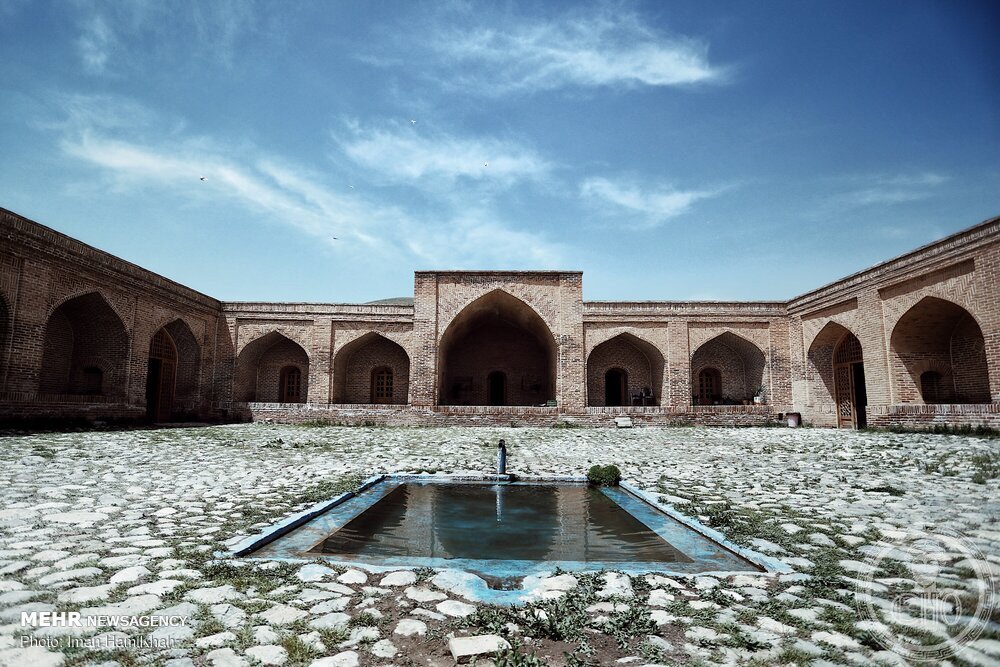
A surviving monument to the Safavid dynasty’s vast network of trading routes, this caravanserai once sheltered merchants, pilgrims, and caravans crossing the Iranian plateau.
At a glance
The Shah Abbasi Caravanserai stands in Farasfaj as a testament to Safavid-era infrastructure and hospitality. Built to facilitate commerce and travel along established trade corridors, caravanserais served as fortified rest stops, storehouses, and social hubs for those traversing long distances by land.
History
Constructed during the Safavid period—a golden age of Persian culture, art, and urban planning—the Shah Abbasi Caravanserai reflects the dynasty’s investment in infrastructure. Named for Shah Abbas I, the caravanserai exemplifies the systematic approach to supporting merchants and travelers that characterized Safavid governance and regional prominence.
What you see
The caravanserai embodies the functional elegance typical of its era. Detailed architectural descriptions specific to this structure require on-site study, but the building’s layout, materials, and ornamentation reveal the craftsmanship and planning devoted to accommodating travelers and protecting valuable goods.
Cultural significance
This caravanserai occupies an important place in Iran’s cultural heritage as a surviving example of Safavid infrastructure. It represents the economic dynamism and organizational sophistication of the Persian empire during one of its most prosperous periods, when control of trade routes brought wealth and cultural exchange across continents.
Key facts
- Location: Farasfaj, Iran
- Period: Safavid era
- Coordinates: 34.487944°N, 48.282972°E
- Type: Historic caravanserai
Practical information & getting there
The Shah Abbasi Caravanserai is located in Farasfaj. For current visiting information, directions, and accessibility details, consult local tourism authorities or guides familiar with the site.
Sources & resources
Find it on the map
See this place and what’s around it →📷 Become a Cultural Heritage Online photographer
Share your photos of places: they stay published under your name as the author. The more they're seen, the more you get noticed — and soon a contest will reward the most appreciated photos.
Log in or sign up free to add a photoIs this page about you?
This page is read by travellers and heritage enthusiasts who find it on Google. Tell us how you are connected to this place and we will take it from there.