
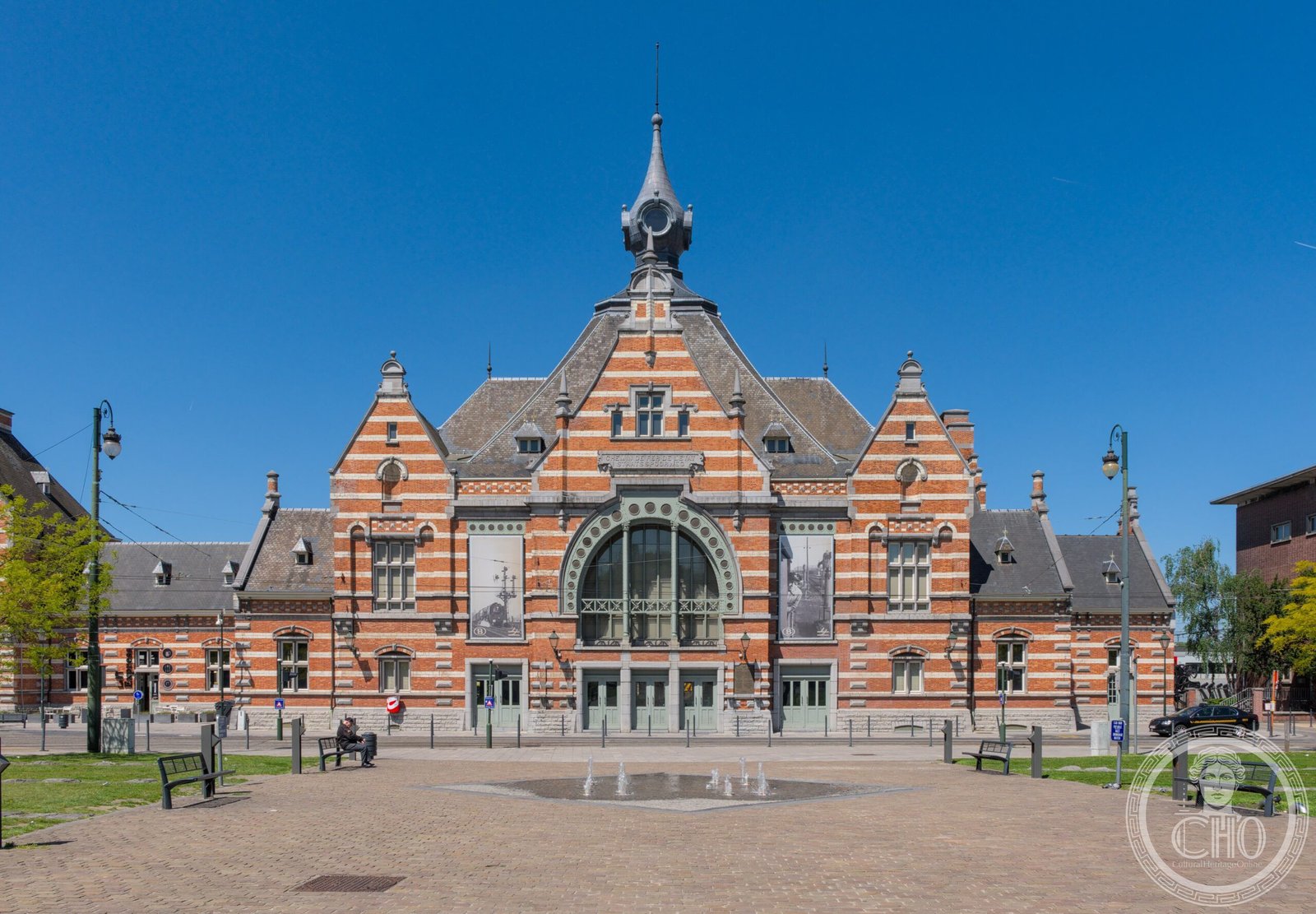
A vital transit hub in Brussels’s rail network, this 1887 station connects the capital’s central lines to routes serving Leuven, Antwerp, and the airport.
At a glance
Schaerbeek railway station stands northeast of Brussels’s city centre, serving as a crucial interchange on Belgium’s national rail network. Built in 1887, it handles both local and interregional services, operated by the National Railway Company of Belgium (NMBS/SNCB).
History
Opened in 1887, the station emerged during Belgium’s era of railway expansion. It was strategically positioned to integrate the developing Schaerbeek municipality into Brussels’s growing transport infrastructure, becoming the first station trains encounter after departing from the city’s three central stations.
What you see
The station building reflects late 19th-century railway architecture typical of the period. Its forecourt functions as a public transport hub, serving trams and buses that connect the broader Brussels metropolitan area.
Cultural significance
Schaerbeek station exemplifies the municipal infrastructure that shaped Brussels’s suburban development. As a pivotal routing point where trains reverse direction between the North–South connection and line 28, it demonstrates the engineering and planning that underpins modern urban rail networks.
Key facts
- Country: Belgium
- City: Brussels
- Opened: 1887
- Operator: National Railway Company of Belgium (NMBS/SNCB)
- Coordinates: 50.8781, 4.3794
- Tram terminus: Brussels tram route 92
- Bus routes: 58, 59, 69
Practical information & getting there
The station is accessible by Brussels tram route 92, which terminates at the forecourt, and by bus routes 58, 59, and 69. Train services connect to central Brussels, Leuven, Antwerp, and Brussels Airport-Zaventem. For current schedules and fares, consult NMBS/SNCB.
Sources & resources
Find it on the map
See this place and what’s around it →📷 Become a Cultural Heritage Online photographer
Share your photos of places: they stay published under your name as the author. The more they're seen, the more you get noticed — and soon a contest will reward the most appreciated photos.
Log in or sign up free to add a photoIs this page about you?
This page is read by travellers and heritage enthusiasts who find it on Google. Tell us how you are connected to this place and we will take it from there.