
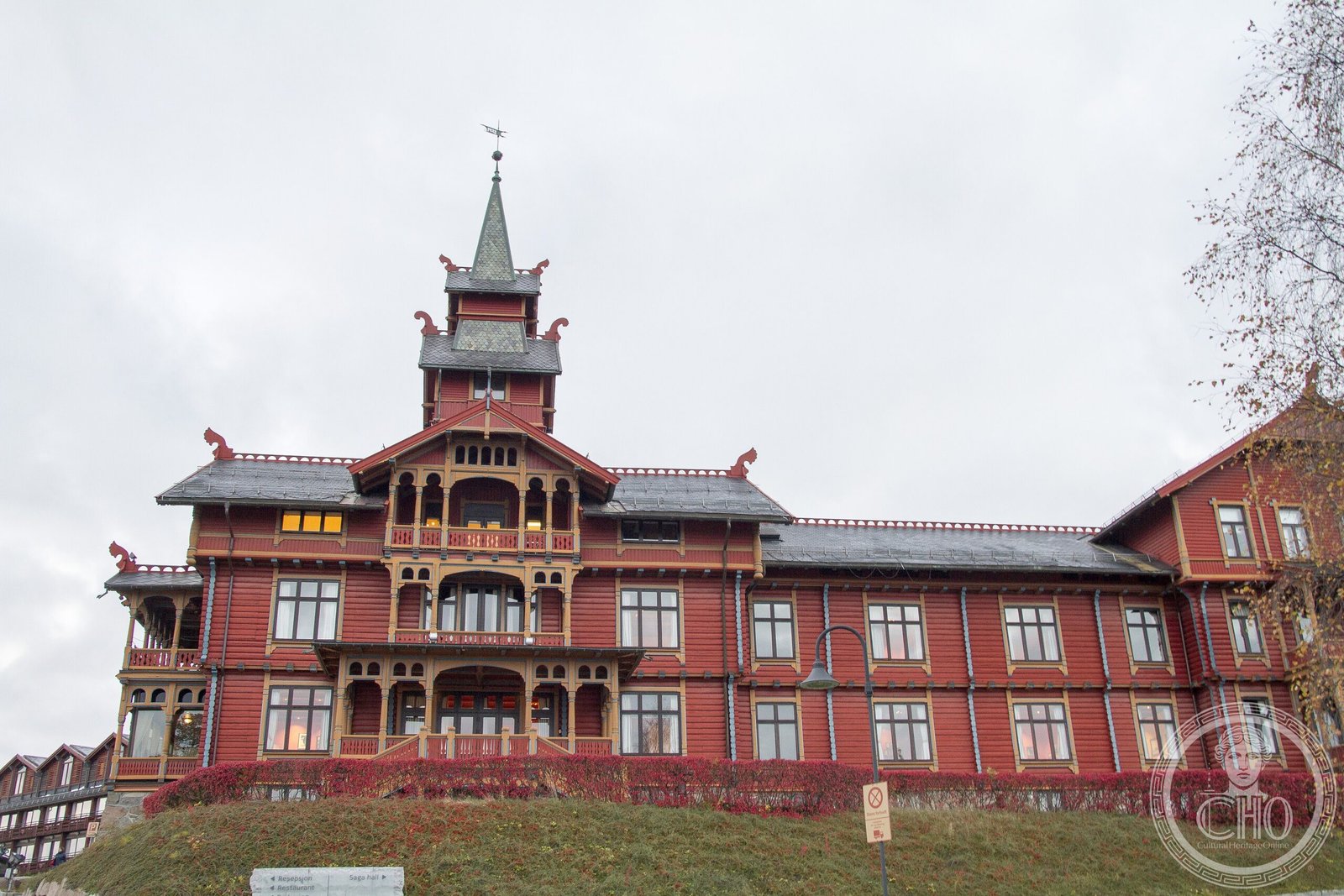
A landmark hotel in Oslo’s Holmenkollen district, designed by Balthazar Lange and celebrated as a defining example of Dragestil architecture in Norway.
At a glance
This seminar and conference hotel opened its doors in 1894, establishing itself as an architectural statement in the elevated Holmenkollen neighborhood. It stands near the Holmenkollen National Arena and the Holmenkollen Metro station, commanding views across Oslo’s fjords.
History
Opened in 1894, the hotel was designed by architect Balthazar Lange during a period of flourishing Norwegian architectural identity. The building quickly became recognized as a prime exemplar of Dragestil—a distinctly Norwegian design movement that blended modernist principles with Nordic decorative traditions.
What you see
The hotel embodies Dragestil through its thoughtful proportions and distinctive ornamentation. Interior spaces are enriched by paintings from two prominent Norwegian artists: Gerhard Munthe and Theodor Kittelsen, whose works enhance the building’s cultural atmosphere. The restaurant, De Fem Stuer, remains a focal point, framing panoramic views of Oslo’s surrounding fjords.
Cultural significance
The Scandic Holmenkollen Park Hotel represents a pivotal moment in Norwegian design history. Its recognition as one of the finest Dragestil examples underscores the country’s distinctive architectural contributions to European modernism in the late nineteenth century.
Key facts
- Country: Norway
- City: Oslo Municipality
- Opened: 1894
- Architect: Balthazar Lange
- Style: Dragestil
- Coordinates: 59.9628, 10.6632
Practical information & getting there
The hotel is accessible via the Holmenkollen station of the Oslo Metro. Its location near Holmenkollen National Arena and Holmenkollbakken makes it easily reached from central Oslo. Today it operates as a seminar and conference venue open to public guests.
Sources & resources
Find it on the map
See this place and what’s around it →📷 Become a Cultural Heritage Online photographer
Share your photos of places: they stay published under your name as the author. The more they're seen, the more you get noticed — and soon a contest will reward the most appreciated photos.
Log in or sign up free to add a photoIs this page about you?
This page is read by travellers and heritage enthusiasts who find it on Google. Tell us how you are connected to this place and we will take it from there.