

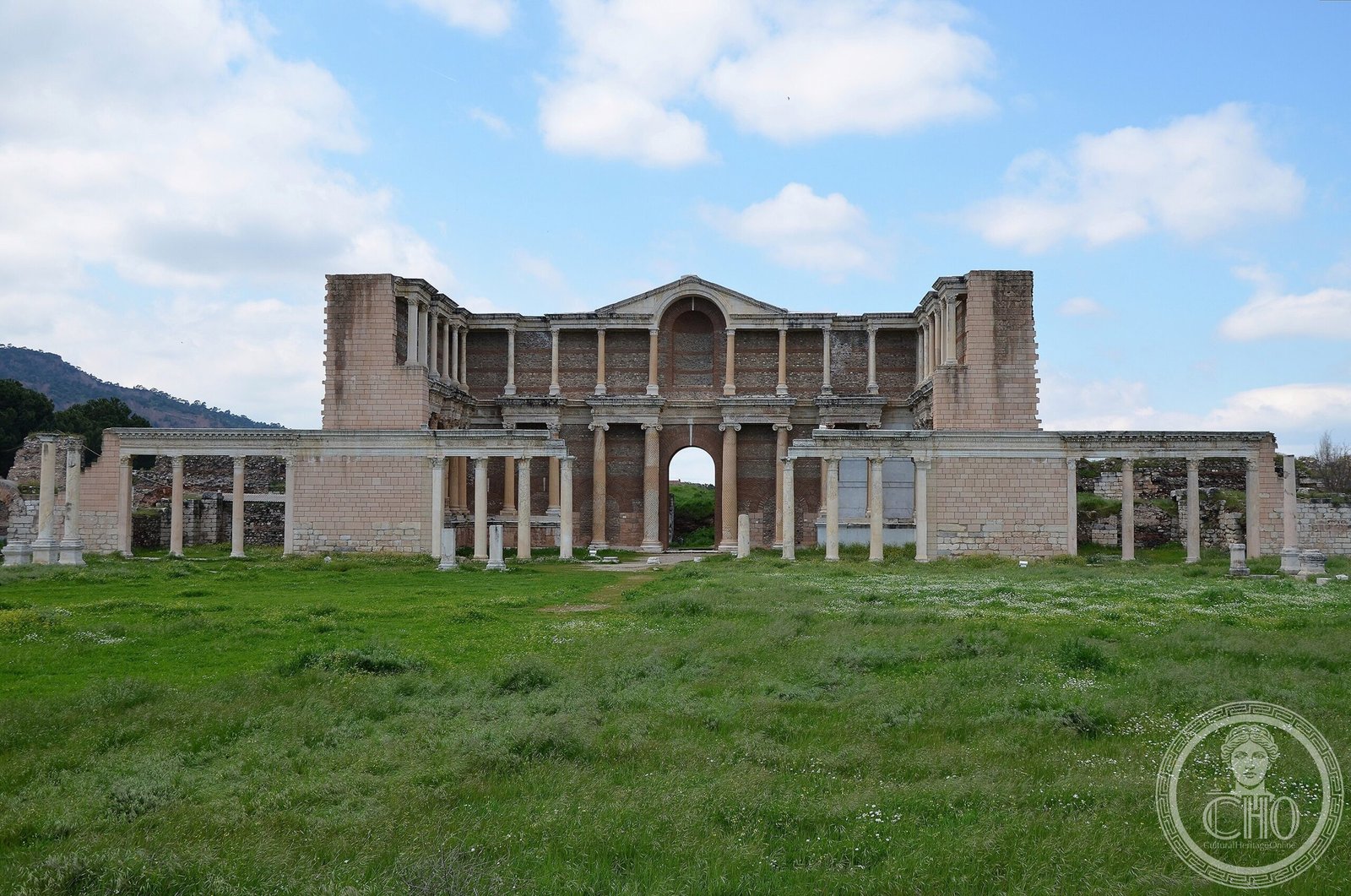
Once the glittering capital of the Lydian Empire, Sardis commanded the crossroads of ancient Asia Minor. Today its ruins reveal layers of conquest, adaptation, and cultural synthesis spanning from the Bronze Age through the Byzantine era.
At a glance
Sardis was the seat of Lydian power and later served as capital of the Persian satrapy of Lydia. Following successive conquests, it evolved into a major center of Hellenistic and Byzantine civilization. The site, now under active archaeological excavation, lies near the town of Sart in modern-day Turkey.
History
Sardis rose to prominence as the capital of the Lydian Empire, a civilization that controlled much of western Anatolia. After the empire’s collapse, the city was incorporated into the Persian satrapy of Lydia, becoming an administrative hub under the Achaemenid rule. Its strategic position allowed it to thrive through the Hellenistic period and into Byzantine times, when it remained culturally and economically significant. The city’s historical resonance extended into the early modern imagination—William Shakespeare referenced it as the campsite of Brutus and Cassius in Julius Caesar (1599).
What you see
The archaeological site preserves remains spanning multiple periods of occupation and construction. Visitors encounter structures and artifacts testifying to Lydian, Persian, Hellenistic, and Byzantine phases of habitation, offering a tangible narrative of conquest and cultural continuity.
Cultural significance
Sardis embodies the interconnected history of the ancient Mediterranean and Near East. As a major crossroads between east and west, it absorbed and synthesized influences from multiple civilizations. The city’s prominence in Lydian history, its role in the Persian Empire, and its later flourishing under Hellenistic and Byzantine rule make it essential to understanding the development of urban culture in antiquity.
Key facts
- Location: Manisa Province, Turkey, near the town of Sart
- Coordinates: 38.4883° N, 28.0403° E
- UNESCO World Heritage Site: Designated 2025
- Historical periods: Lydian, Persian, Hellenistic, Byzantine
Practical information & getting there
The site is located in western Turkey, accessible from the town of Sart in Manisa Province. Sardis functions as an active archaeological site with ongoing research and preservation work. For current visiting hours, conditions, and guided tours, consult local tourism resources or the site’s official channels.
Sources & resources
Find it on the map
See this place and what’s around it →📷 Become a Cultural Heritage Online photographer
Share your photos of places: they stay published under your name as the author. The more they're seen, the more you get noticed — and soon a contest will reward the most appreciated photos.
Log in or sign up free to add a photo