
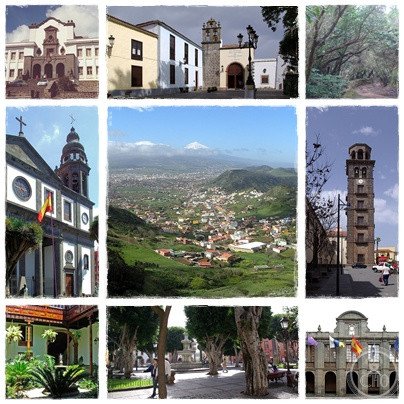
Former capital of the Canary Islands, La Laguna is a UNESCO-inscribed city whose colonial streets and religious monuments anchor the cultural identity of the archipelago.
At a glance
San Cristóbal de La Laguna is the third-most populous city in the Canary Islands and the second-largest on Tenerife. Its historical center, recognized by UNESCO in 1999, reflects centuries of Spanish colonial architecture and culture. The city forms a single urban agglomeration with neighboring Santa Cruz de Tenerife, combining ecclesiastical heritage with modern business enterprise.
History
La Laguna served as the capital of the Canary Islands before administrative functions shifted. Its founding and development during the 16th century established it as a religious and commercial hub. The city became home to notable historical figures: Amaro Pargo, a celebrated corsair of the Golden Age of Piracy, and José de Anchieta, the Catholic missionary who founded São Paulo and Rio de Janeiro in Brazil. Local legend preserves the tragic story of Catalina Lercaro, a 16th-century woman whose ghost is said to inhabit her family mansion, now a history museum.
What you see
The Cathedral of La Laguna dominates the city’s religious landscape as the Catholic cathedral of Tenerife and seat of its diocese. Colonial-era streets preserve the urban fabric of Spanish settlement in the Atlantic. The city contains the incorrupt body of Sor María de Jesús and houses the Christ of La Laguna, both venerated relics. Architecture reflects the transition from medieval Spanish forms to later colonial styles.
Cultural significance
La Laguna is acknowledged as the cultural capital of the Canary Islands. Its UNESCO World Heritage designation recognizes the historical center’s exceptional testimony to Spanish colonial urbanism and Atlantic expansion. The city’s religious institutions and artistic heritage continue to shape cultural identity across the archipelago.
Key facts
- Location: Northern Tenerife, Province of Santa Cruz de Tenerife, Canary Islands, Spain
- Coordinates: 28.48527778°N, 16.31666667°W
- UNESCO World Heritage Site: Yes (inscribed 1999)
- Status: Third-most populous city in the Canary Islands
Practical information & getting there
La Laguna lies adjacent to Santa Cruz de Tenerife, forming a continuous urban area. The city blends business-oriented development in central and southern zones with agricultural activity in the northeast. As a major cultural destination, it welcomes visitors to its cathedral, museums, and colonial architecture year-round.
Sources & resources
Find it on the map
See this place and what’s around it →📷 Become a Cultural Heritage Online photographer
Share your photos of places: they stay published under your name as the author. The more they're seen, the more you get noticed — and soon a contest will reward the most appreciated photos.
Log in or sign up free to add a photo