
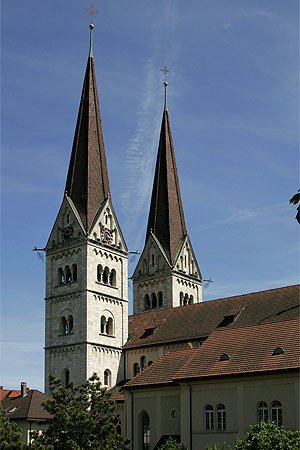
A masterwork of Swiss Neoromanesque architecture, Saint Martin’s Church stands as one of the country’s most significant religious buildings from the late historicist period.
At a glance
Saint Martin’s Church is a Roman Catholic place of worship in Olten, Switzerland. Its three-nave columned basilica design—executed without a transept but with three choir apses—exemplifies the sophisticated ecclesiastical architecture of nineteenth-century historicism.
History
The church was constructed during the late historicist period, when Switzerland and much of Europe experienced a revival of medieval architectural forms. Saint Martin’s Church emerged as a defining example of this movement in Swiss religious architecture.
What you see
The building presents a three-nave columned basilica plan, a classical arrangement that distributes interior space between a central nave and two flanking aisles supported by columns. Three choir apses at the eastern end provide liturgical focus without the formal transept wings typical of many medieval cathedrals. The Neoromanesque vocabulary—including rounded arches, stone columns, and ornamental detail—characterizes the exterior and interior alike.
Cultural significance
Saint Martin’s Church is considered the most significant Neoromanesque Greater Church of Switzerland from the late period of historicism. Its refined architectural program and execution mark it as a landmark of nineteenth-century ecclesiastical design in the Alpine region.
Key facts
- Country: Switzerland
- City: Olten
- Coordinates: 47.35102, 7.89867
- Type: Roman Catholic basilica church
Practical information & getting there
Saint Martin’s Church is located in Olten, a town in northern Switzerland accessible by rail and road. For visiting hours and further details, consult local tourism resources or the church’s official channels.
Sources & resources
Find it on the map
See this place and what’s around it →📷 Become a Cultural Heritage Online photographer
Share your photos of places: they stay published under your name as the author. The more they're seen, the more you get noticed — and soon a contest will reward the most appreciated photos.
Log in or sign up free to add a photoDo you manage this place?
This page is read by travellers and heritage enthusiasts who find it on Google. Keep it accurate — and make it work for you. Free for non-profit heritage institutions.