
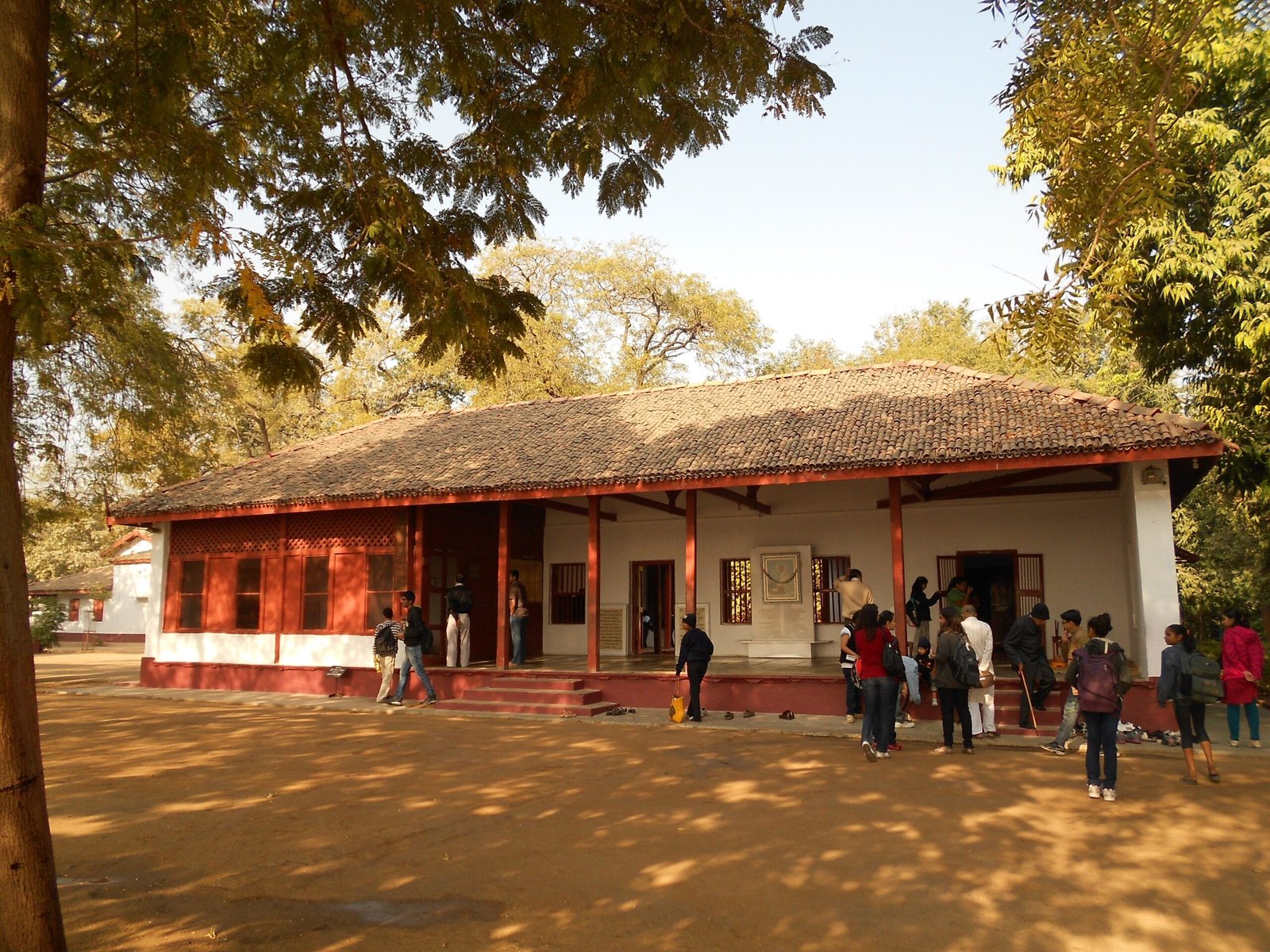
The riverside residence where Mahatma Gandhi lived and organized the Salt March, a pivotal moment in India’s struggle for independence.
At a glance
Sabarmati Ashram stands on the banks of the Sabarmati River in Gujarat, 4 miles from Ahmedabad’s town hall. It was one of two primary homes where Gandhi lived during the independence movement, the other being Sevagram in Maharashtra. Daily recitations of the Bhagavad Gita anchored the ashram’s spiritual practice.
History
Gandhi occupied Sabarmati Ashram for roughly twelve years, sharing the residence with his wife Kasturba and a community of followers including the philosopher Vinoba Bhave. The ashram functioned as both sanctuary and organizing center during his extended periods away from travel and imprisonment. On 12 March 1930, Gandhi departed from here to lead the Dandi March—known as the Salt Satyagraha—a watershed act of civil disobedience that galvanized the nationalist movement.
What you see
The ashram complex preserves the modest structures where Gandhi lived and taught. Its riverside setting along the Sabarmati remains central to the site’s contemplative character and historical significance.
Cultural significance
Sabarmati Ashram embodies the spiritual foundation of India’s independence struggle. The Salt March launched from this threshold became one of the twentieth century’s most consequential acts of nonviolent resistance, inspiring independence movements worldwide. The ashram represents Gandhi’s philosophy of self-sufficiency, communal living, and moral action rooted in daily spiritual discipline.
Key facts
- Country: India
- City: Ahmedabad, Gujarat
- Coordinates: 23.06°N, 72.58°E
- Status: National monument (designated by the Indian government)
Practical information & getting there
The ashram is accessible via Ashram Road in the Sabarmati suburb of Ahmedabad, approximately 4 miles from the city center. For visiting hours, current access details, and guided-tour information, consult local tourism resources or the ashram’s official channels.
Sources & resources
Find it on the map
See this place and what’s around it →📷 Become a Cultural Heritage Online photographer
Share your photos of places: they stay published under your name as the author. The more they're seen, the more you get noticed — and soon a contest will reward the most appreciated photos.
Log in or sign up free to add a photoIs this page about you?
This page is read by travellers and heritage enthusiasts who find it on Google. Tell us how you are connected to this place and we will take it from there.