
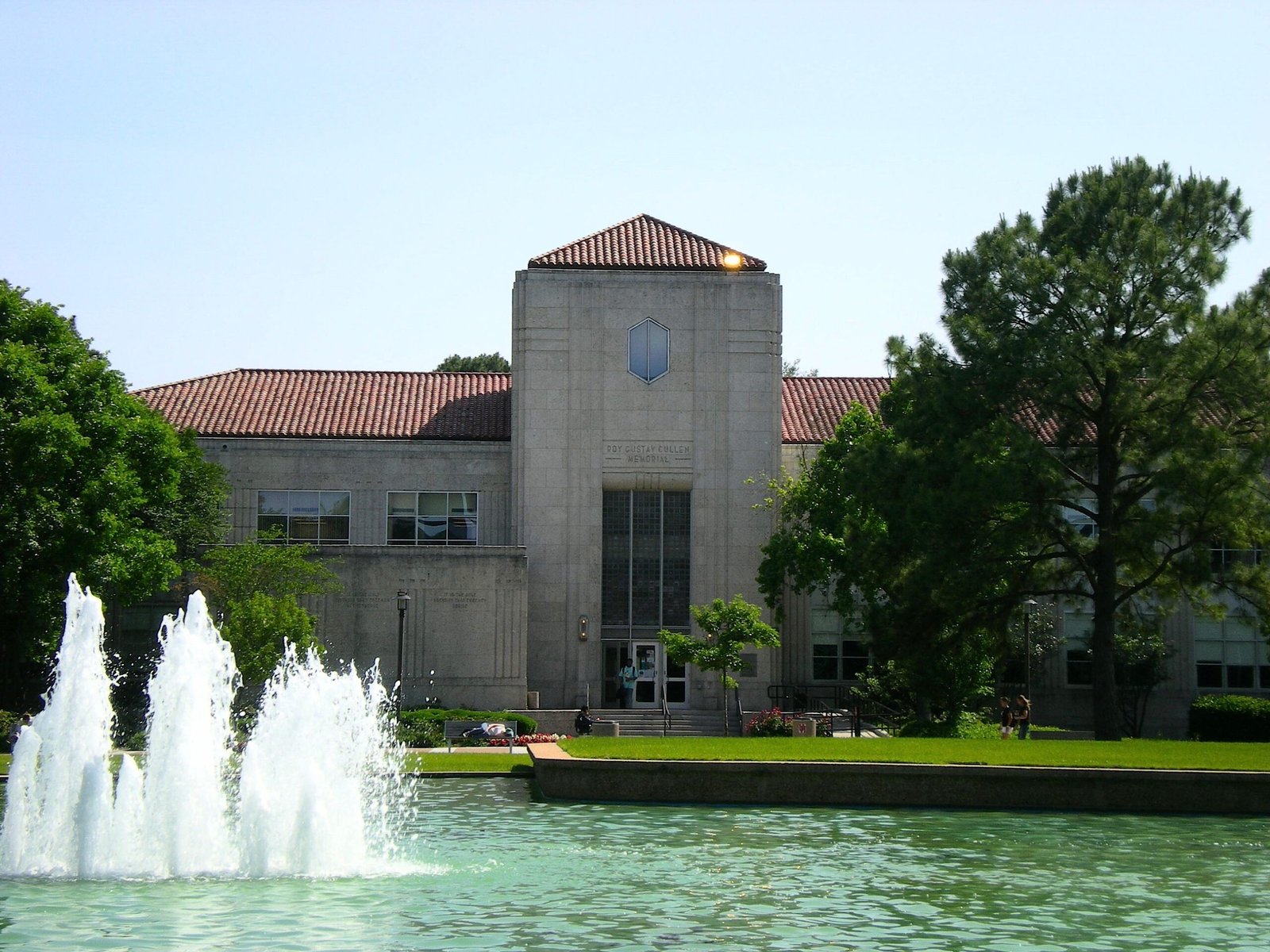
The oldest structure on the University of Houston campus, this pioneering building is believed to be the first air-conditioned higher-education facility in the United States.
At a glance
Completed in 1939, the Roy G. Cullen Building represents a landmark moment in American campus architecture—introducing mechanical air conditioning at a scale and date that preceded similar installations elsewhere in academic America.
History
Construction began in 1938 and concluded the following year. The building was dedicated as the Roy Gustav Cullen Memorial Building, honoring a significant benefactor. Its completion marked not only the establishment of a lasting presence on the university’s grounds but also a technological breakthrough that would eventually reshape institutional building standards across the nation.
What you see
As the oldest extant building on the present-day University of Houston campus, the structure embodies late 1930s institutional design. Its most remarkable feature—invisible to casual observation—is the air-conditioning system that made it a prototype for modern climate-controlled learning environments.
Cultural significance
This building holds dual importance: it anchors the university’s physical history and demonstrates the early adoption of climate-control technology in American higher education. Its pioneering status invites reflection on how mechanical systems have shaped the modern campus experience.
Key facts
- Country: United States
- City: Houston, Texas
- Coordinates: 29.72°N, 95.3448°W
- Completed: 1939
- Believed to be the first air-conditioned building on a U.S. college campus
Practical information & getting there
The Roy G. Cullen Building remains on the University of Houston campus in Houston, Texas. It is accessible as part of the university grounds; visitors should contact the university for current access policies and campus visiting hours.
Sources & resources
Find it on the map
See this place and what’s around it →📷 Become a Cultural Heritage Online photographer
Share your photos of places: they stay published under your name as the author. The more they're seen, the more you get noticed — and soon a contest will reward the most appreciated photos.
Log in or sign up free to add a photoIs this page about you?
This page is read by travellers and heritage enthusiasts who find it on Google. Tell us how you are connected to this place and we will take it from there.