
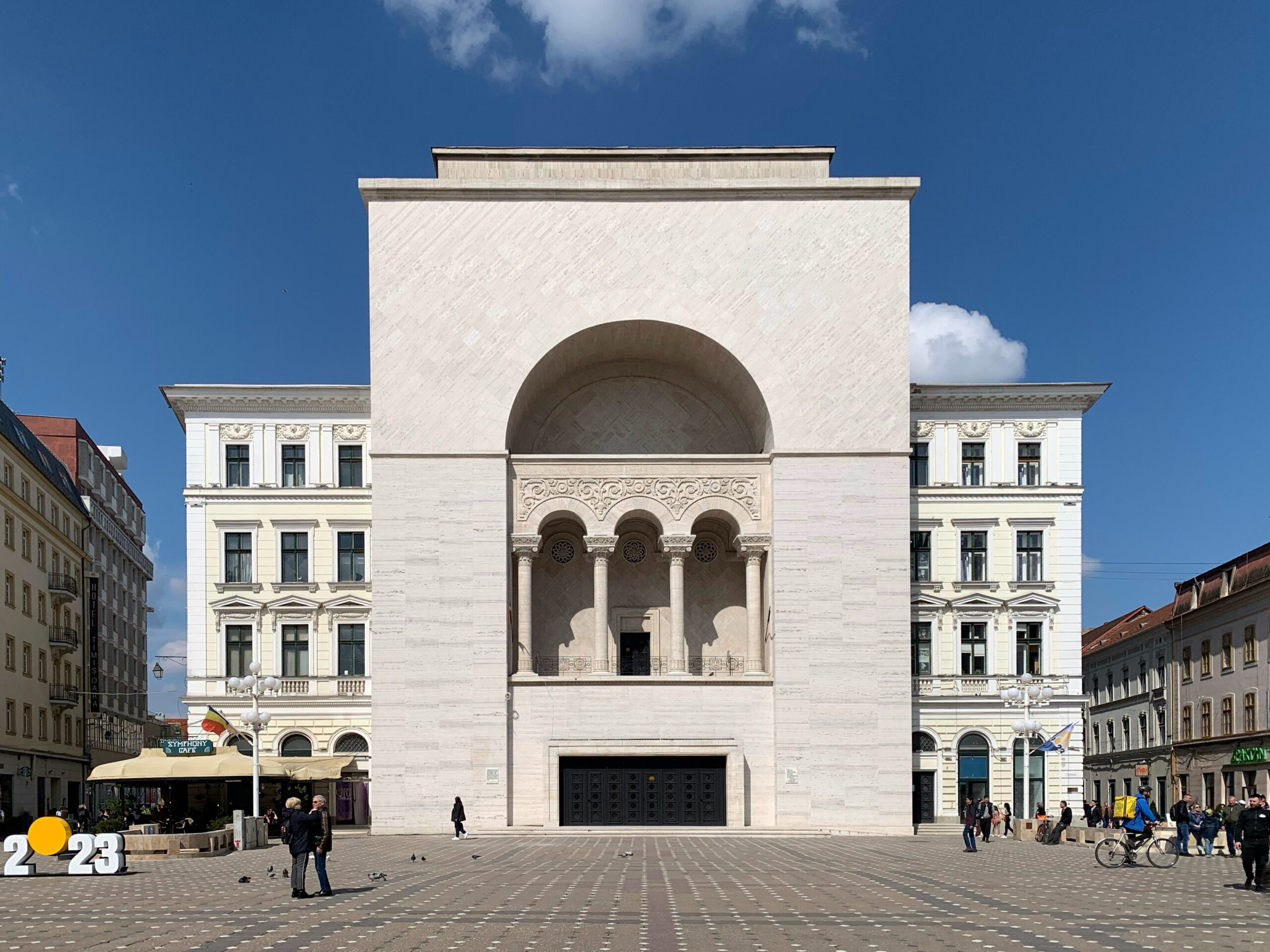
One of Romania’s four national opera companies, established by royal decree in 1946 and housed in a shared cultural building in Timișoara.
At a glance
The Romanian National Opera is a public institution subordinated to the Ministry of Culture. It presents opera and ballet performances, serving as a major cultural venue in western Romania.
History
Founded by royal decree no. 254 on 30 March 1946 under King Michael I, the opera emerged during Romania’s post-war reconstruction. Aca de Barbu served as its first director, establishing the institution’s artistic direction.
What you see
The opera occupies a shared building in Timișoara’s cultural district, which also houses three other major theatrical institutions: the Mihai Eminescu National Theatre, the Csiky Gergely Hungarian State Theatre, and the German State Theatre. This arrangement reflects the city’s multicultural heritage.
Cultural significance
As one of only four national opera companies in Romania, the institution holds considerable cultural weight. Its position within a building shared by three theatres representing Romanian, Hungarian, and German traditions underscores Timișoara’s role as a crossroads of Central European culture.
Key facts
- Established: 30 March 1946
- Founded by: Royal decree no. 254, King Michael I
- First director: Aca de Barbu
- Location: Timișoara, Romania
- Coordinates: 45.75°N, 21.23°E
- Status: Public institution under the Ministry of Culture
Practical information & getting there
The opera is located in central Timișoara. For current performance schedules, ticket information, and visiting hours, consult the institution’s official channels or local tourism resources.
Sources & resources
Find it on the map
See this place and what’s around it →📷 Become a Cultural Heritage Online photographer
Share your photos of places: they stay published under your name as the author. The more they're seen, the more you get noticed — and soon a contest will reward the most appreciated photos.
Log in or sign up free to add a photoIs this page about you?
This page is read by travellers and heritage enthusiasts who find it on Google. Tell us how you are connected to this place and we will take it from there.