
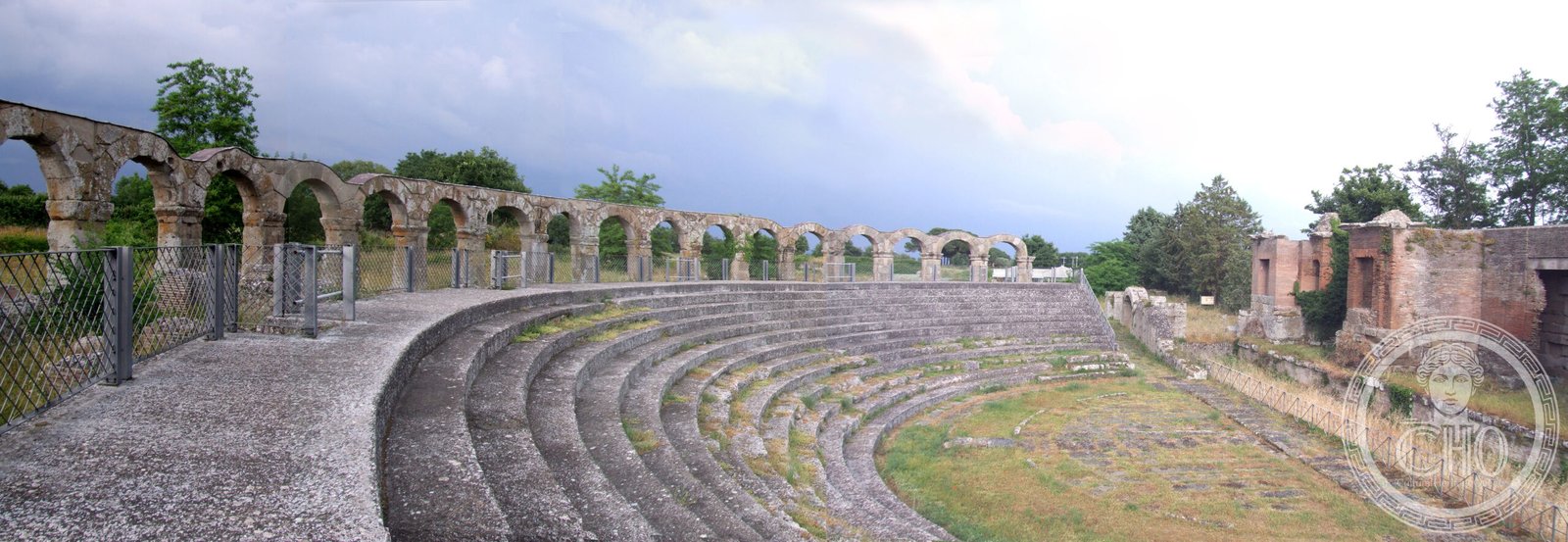
An ancient Roman theater, still in use for summer performances, stands among the monumental remains of Ferento, a prosperous municipality whose wealth derived from trade, agriculture, and the extraction of volcanic stone.
At a glance
The Roman Theater of Ferento remains a functioning venue for theatrical performances. Excavated primarily through the efforts of Sweden’s King Gustavo VI Adolfo and now managed by research campaigns from the University of Tuscia, the theater exemplifies the sophistication of Roman provincial life.
History
Ferento flourished as a Roman municipality built on commercial networks and natural resources. The city’s wealth stemmed from trade in goods moving between the Tyrrhenian coast and inland regions, supplemented by agriculture, livestock raising, and the extraction and processing of tufo and peperino—volcanic stone abundant in the surrounding landscape. Iron processing and trade particularly distinguished Ferento’s economy, with ore accessible in large quantities across the region.
The city attracted affluent Roman families seeking leisure destinations, elevating its prestige and importance. Archaeological work began in earnest under King Gustavo VI Adolfo of Sweden, whose dedication to excavation revealed significant Roman and medieval remains spanning centuries of occupation.
What you see
The theater itself survives as the site’s most prominent structure, its physical form testament to Roman engineering and aesthetic ambition. Marble statuary recovered during excavation—figures depicting characters from Greek-Roman tragedy and comedy that once adorned the theater’s front scene—has been relocated to the National Archaeological Museum of Viterbo, along with reconstructed building elements from Ferento’s urban fabric.
Cultural significance
Ferento demonstrates the sophistication of Roman life beyond Rome itself. The persistence of theatrical performance at this ancient venue connects contemporary audiences directly to Roman civic and cultural practices, bridging nearly two millennia. Related archaeological sites in the region, including Acquarossa (eighth to sixth centuries BC, excavated 1956–1978), extend understanding of human settlement and cultural continuity across pre-Roman and Roman periods.
Key facts
- Address: Str. Ferento, 2, 01100 Viterbo
- Coordinates: 42.4885888, 12.1321073
- Phone: +393472954851
- Website: https://www.archeotuscia.com/vieni-a-scoprire-ferento/
Practical information
The theater hosts summer performances. Significant finds are displayed at the Rocca Albornoz Etruscan National Museum and the National Archaeological Museum of Viterbo. Current excavations are managed by the University of Tuscia.
Getting there
The site is located in the Viterbo area of Lazio. Contact the venue or check the official website for current visiting hours and any access details.
Sources & resources
Find it on the map
See this place and what’s around it →📷 Become a Cultural Heritage Online photographer
Share your photos of places: they stay published under your name as the author. The more they're seen, the more you get noticed — and soon a contest will reward the most appreciated photos.
Log in or sign up free to add a photoIs this page about you?
This page is read by travellers and heritage enthusiasts who find it on Google. Tell us how you are connected to this place and we will take it from there.