
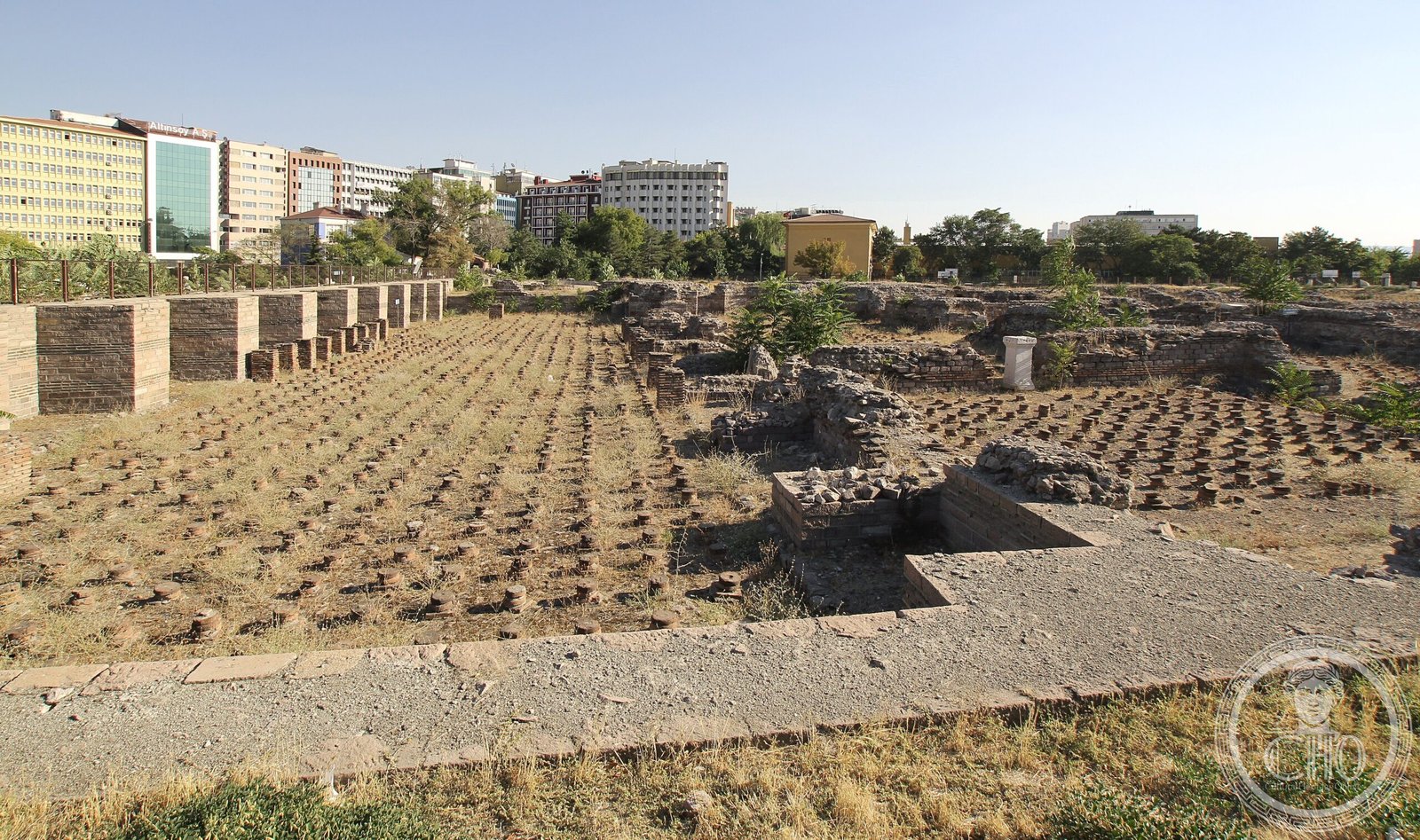
Beneath modern Ankara lie the fragmentary remains of a Roman bath complex, excavated in the mid-20th century and preserved as an open-air museum.
At a glance
The Roman Baths of Ankara stand as a window into the thermal culture of Roman Anatolia. Once a sophisticated public bathing facility, the complex was buried for centuries before systematic excavation revealed its layout and engineering. Today, visitors encounter the ruins as they were discovered—a tangible reminder of Rome’s reach into the heart of Asia Minor.
History
The bath complex dates to the Roman period, when Ankara (ancient Ancyra) served as a significant city in the Roman province of Galatia. Excavations conducted between 1937 and 1944 uncovered the substantial remains, bringing the structure back into public view after centuries underground. The site has since been preserved and opened to visitors as an open-air museum.
What you see
The ruins reveal the characteristic elements of Roman bath design: chambers arranged in sequence, hypocaust systems for heating, and structural foundations that speak to the engineering expertise of Roman builders. The fragmentary state of the remains allows visitors to read the site’s archaeological layers and construction methods.
Cultural significance
Public baths were central to Roman urban life, serving not only hygienic but social and recreational functions. The Ankara baths exemplify how Rome extended its civic infrastructure across its empire. The site contributes to our understanding of daily life in provincial Roman cities and the spread of Roman cultural practices.
Key facts
- Country: Turkey
- City: Ankara
- Coordinates: 39.9465°N, 32.853°E
- Excavated: 1937–1944
- Status: Open-air museum
Practical information & getting there
The Roman Baths are accessible as an open-air archaeological site in Ankara. For current opening hours, admission fees, and guided tour availability, contact local tourism information or check the site’s official details before your visit.
Sources & resources
Find it on the map
See this place and what’s around it →📷 Become a Cultural Heritage Online photographer
Share your photos of places: they stay published under your name as the author. The more they're seen, the more you get noticed — and soon a contest will reward the most appreciated photos.
Log in or sign up free to add a photoIs this page about you?
This page is read by travellers and heritage enthusiasts who find it on Google. Tell us how you are connected to this place and we will take it from there.