
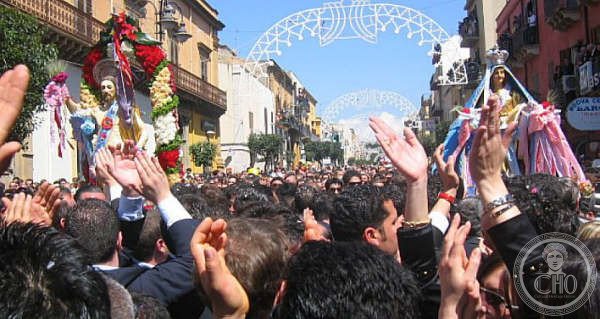
Ribera is a town in the province of Agrigento, south-western Sicily, founded in 1630 under the feudal lordship of the Spanish Dukes of Alcalá de los Gazules and known today as the “Città delle Arance” (City of Oranges) for its celebrated Washington navel orange production. Set between the Verdura and Magazzolo valleys, Ribera is a centre of Sicilian citrus culture and the birthplace of Francesco Crispi, the nineteenth-century Italian statesman who became Prime Minister of Italy.
At a glance
- Type
- Town and comune
- Period
- Founded 1630; medieval castle (Poggio Diana) predates foundation
- Style
- Baroque and 17th-century urban planning; agricultural heritage
- Location
- Province of Agrigento, Sicily, southern Italy
- Coordinates
- 37.5029° N, 13.2653° E
Overview
Ribera occupies a gently sloping site between the Verdura and Magazzolo river valleys in one of Sicily’s most productive agricultural zones, historically devoted to wheat and now celebrated internationally for its Washington navel oranges. The town was planned in a regular grid layout typical of seventeenth-century Sicilian new-town foundations, reflecting the rationalising ambitions of the Spanish feudal administration. Its nickname “Città delle Arance” reflects both the local economy and a strong civic identity built around the annual orange harvest festival.
History
The area around modern Ribera was controlled during the medieval period by the feudal county of Poggio Diana, centred on the castle of that name overlooking the valley. In 1630, Don Luigi Gaetani Moncada, Duke of Montalto, founded the town of Ribera on the surrounding plain, naming it after the River Ribera (from the Spanish term for riverbank) or, according to some sources, in honour of Spanish ancestors. The town grew steadily through the seventeenth and eighteenth centuries as an agricultural and commercial centre. In the nineteenth century Ribera gained national prominence as the birthplace of Francesco Crispi (1818–1901), who served twice as Prime Minister of Italy and was a leading figure of the post-Risorgimento era.
What you see
Ribera’s historic centre retains its seventeenth-century grid plan with a central piazza anchored by the mother church of the Annunziata, rebuilt in the eighteenth century. The town’s civic fabric reflects the modest prosperity of a Sicilian agricultural community, with limestone-built townhouses and narrow shaded streets characteristic of the interior Agrigento hinterland. The surrounding agricultural landscape in spring and early summer is dominated by the bright foliage of orange groves, with the ruined profile of Poggio Diana Castle visible on the hill above. The Casa Museo Francesco Crispi commemorates the statesman’s birthplace and legacy.
Cultural significance
Ribera’s identity as the “Città delle Arance” represents a successful model of agricultural heritage branding, with the Washington navel orange of Ribera holding protected designation of origin (IGP) status and the annual orange festival drawing visitors from across Italy. The town’s connection to Francesco Crispi gives it a significant place in the political history of unified Italy, while the medieval heritage of Poggio Diana Castle anchors it in the longer arc of Sicilian feudal culture. Ribera demonstrates how Sicilian communities have built civic identity on the interplay of historical legacy and agricultural excellence.
Practical information
- Address
- Ribera, Province of Agrigento, Sicily, Italy
- Key attractions
- Casa Museo Francesco Crispi; Chiesa Madre dell’Annunziata; Poggio Diana Castle ruins; annual orange festival (spring)
Getting there
Ribera is accessible by car from Agrigento (approximately 40 km east) via the SS115 state road, or from Sciacca (approximately 20 km west). The Ribera railway station on the Palermo–Porto Empedocle line connects the town to Palermo (approximately 2 hours by regional train). The nearest international airports are Palermo Falcone-Borsellino (PMO, approximately 110 km north-west) and Catania Fontanarossa (CTA, approximately 200 km east).
Sources & resources
See the place
Find it on the map
See this place and what’s around it →📷 Become a Cultural Heritage Online photographer
Share your photos of places: they stay published under your name as the author. The more they're seen, the more you get noticed — and soon a contest will reward the most appreciated photos.
Log in or sign up free to add a photo