

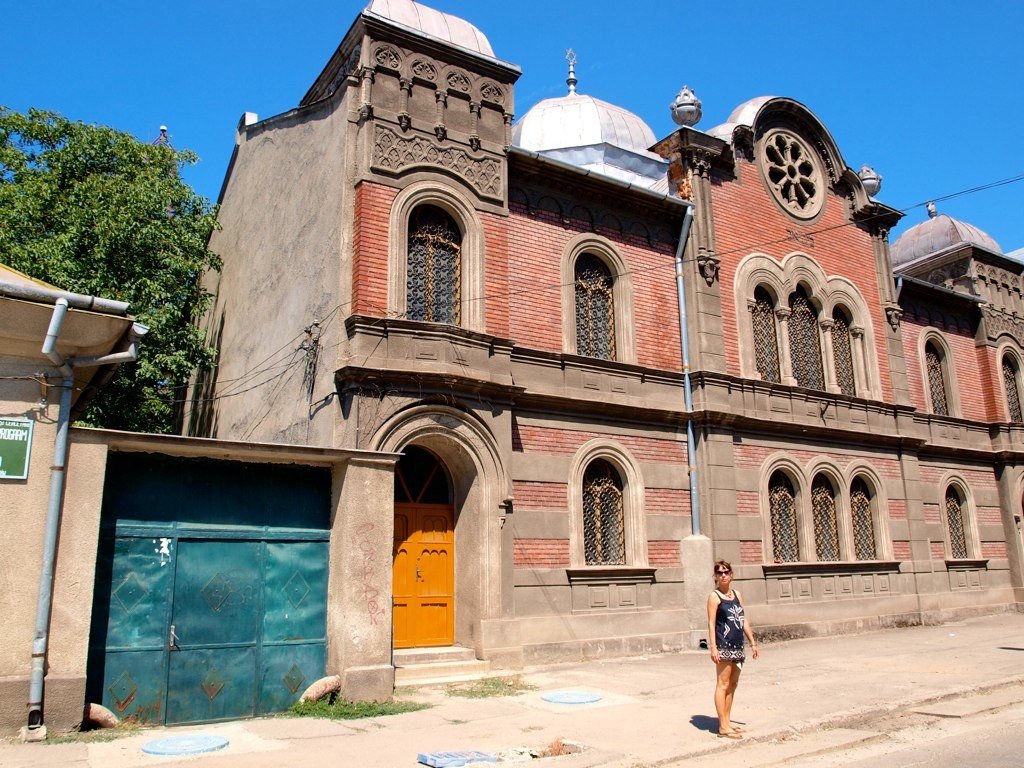
A Romanesque Revival synagogue completed in 1880, serving Reșitza’s Neolog Jewish congregation and recognized as a national historic monument.
At a glance
The Reșița Synagogue stands as a significant example of 19th-century Jewish religious architecture in Romania. Built in the Romanesque Revival style, it reflects the cultural identity and aspirations of the city’s Jewish community during the late Ottoman period.
History
The synagogue was completed in 1880, a period of relative stability and prosperity for Jewish communities across the Austro-Hungarian Empire. It served the Neolog congregation, representing the more progressive branch of Jewish religious practice in Central and Eastern Europe.
What you see
The building embodies Romanesque Revival principles, an architectural language that conveyed solidity and permanence. Located at 8 Mihai Viteazu Street, the structure would have featured characteristic elements of the style adapted for synagogue use.
Cultural significance
The synagogue represents an important chapter in Reșitza’s multicultural history. As a Neolog congregation’s house of worship, it symbolizes the theological modernization and integration efforts of European Jewry in the 19th century.
Key facts
- Country: Romania
- City: Reșița, Caraș-Severin County
- Completed: 1880
- Architectural style: Romanesque Revival
- Coordinates: 45.2928, 21.89875
- Status: Included on Romania’s National Register of Historic Monuments
Practical information & getting there
The synagogue is located in central Reșița at 8 Mihai Viteazu Street. Contact local tourism authorities in Reșița or Caraș-Severin County for current visiting arrangements and accessibility information.
Sources & resources
Find it on the map
See this place and what’s around it →📷 Become a Cultural Heritage Online photographer
Share your photos of places: they stay published under your name as the author. The more they're seen, the more you get noticed — and soon a contest will reward the most appreciated photos.
Log in or sign up free to add a photoIs this page about you?
This page is read by travellers and heritage enthusiasts who find it on Google. Tell us how you are connected to this place and we will take it from there.