
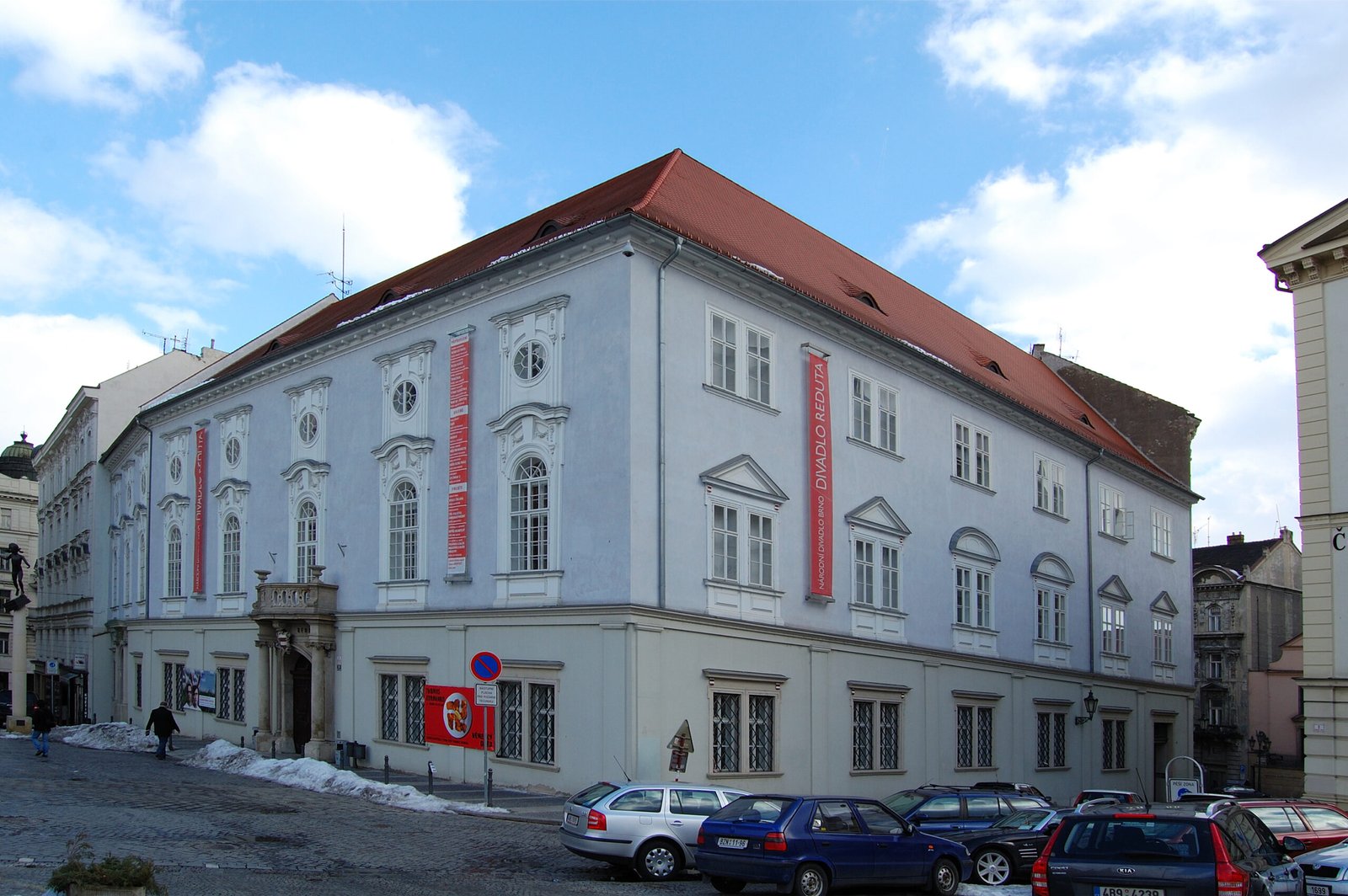
Central Europe’s oldest surviving theatre building, where Mozart once performed, stands on Brno’s historic market square.
At a glance
The Reduta Theatre occupies a place of distinction on Zelný trh, Brno’s oldest square, as the continent’s earliest extant theatre structure. Originally a Renaissance-era tavern theatre, it has endured nearly four centuries of cultural life and remains an active venue.
History
First documented in 1608, the building began as the Taverna (Tavern) Theatre during the Renaissance. The venue gained international prominence in 1767 when Wolfgang Amadeus Mozart and his sister performed a concert within its walls—a moment that anchors the theatre to European musical history. Today it operates as part of the National Theatre in Brno, continuing its role in the city’s cultural fabric.
What you see
The building’s Renaissance origins are evident in its character and position on Zelný trh, one of Brno’s most important urban spaces. Its longevity as a theatre structure speaks to successive renovations and adaptations across centuries of use.
Cultural significance
The Reduta Theatre holds dual importance: as the oldest theatre building still standing in Central Europe, and as a witness to the musical ambitions of the Mozart family during their travels. Its survival across centuries reflects the resilience of Brno’s cultural institutions and the square’s enduring role in civic life.
Key facts
- Location: Zelný trh, Brno, Czechia
- Coordinates: 49.19213056, 16.60960833
- First documented: 1608
- Notable visitor: Wolfgang Amadeus Mozart (1767)
- Status: Part of the National Theatre in Brno
Practical information & getting there
The Reduta Theatre is located at Zelný trh in central Brno. As an active theatre, performances and events take place regularly; check the National Theatre Brno’s programme for current offerings and ticketing information. The square itself is accessible to visitors year-round.
Sources & resources
Find it on the map
See this place and what’s around it →📷 Become a Cultural Heritage Online photographer
Share your photos of places: they stay published under your name as the author. The more they're seen, the more you get noticed — and soon a contest will reward the most appreciated photos.
Log in or sign up free to add a photoIs this page about you?
This page is read by travellers and heritage enthusiasts who find it on Google. Tell us how you are connected to this place and we will take it from there.