

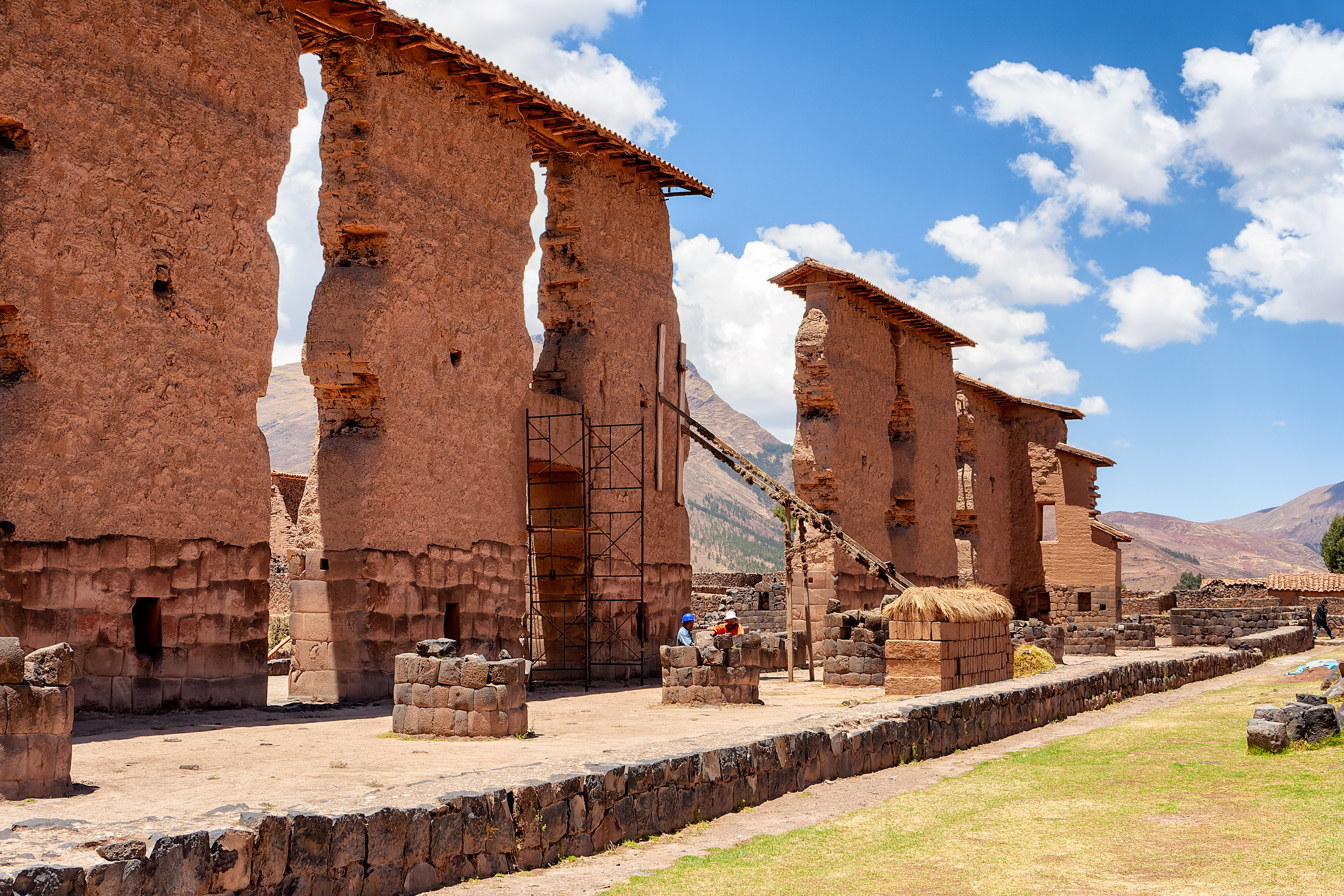
An Inca ceremonial complex in the Peruvian highlands, dominated by the monumental Temple of Wiracocha and set along the Vilcanota River at 3,480 meters elevation.
At a glance
Raqch’i stands as one of Peru’s most significant Inca religious sites, located 110 kilometers southeast of Cuzco in the Canchis Province. The Temple of Wiracocha forms its architectural centerpiece. The site commands views across high-altitude terrain where the Vilcanota River flows through a sacred valley corridor.
History
Raqch’i functioned as a major Inca ceremonial center and pilgrimage destination. The Temple of Wiracocha dominated the complex as its primary structure. Archaeological evidence indicates intensive ritual and administrative activity throughout the Inca period before Spanish contact disrupted the site’s ceremonial functions.
What you see
The Temple of Wiracocha comprises the site’s most impressive feature. Foundations, platform structures, and architectural remains reveal Inca stonework techniques and spatial organization. The landscape bears traces of auxiliary buildings, terraces, and infrastructure associated with major Inca ceremonial centers.
Cultural significance
Raqch’i represents a crucial nexus of Inca cosmological belief and political power. The Temple of Wiracocha venerated the creator deity, drawing pilgrims across the empire. The site’s elevation and position along the Vilcanota River embedded it within Inca sacred geography and the broader ritual landscape of the southern highlands.
Key facts
- Country: Peru
- Location: San Pedro District, Canchis Province, Cusco Region
- Elevation: 3,480 meters above sea level
- Distance from Cuzco: 110 kilometers
- Coordinates: –14.175°, –71.367°
- Primary structure: Temple of Wiracocha
- 2006 visitor count: 83,334
Practical information & getting there
The site is accessible from Cuzco via the main highway leading toward Lake Titicaca. Plan your visit during the dry season (May to September) for optimal weather conditions at high altitude. Early morning light best illuminates the architectural remains and surrounding landscape.
Sources & resources
Find it on the map
See this place and what’s around it →
📷 Become a Cultural Heritage Online photographer
Share your photos of places: they stay published under your name as the author. The more they're seen, the more you get noticed — and soon a contest will reward the most appreciated photos.
Log in or sign up free to add a photo