
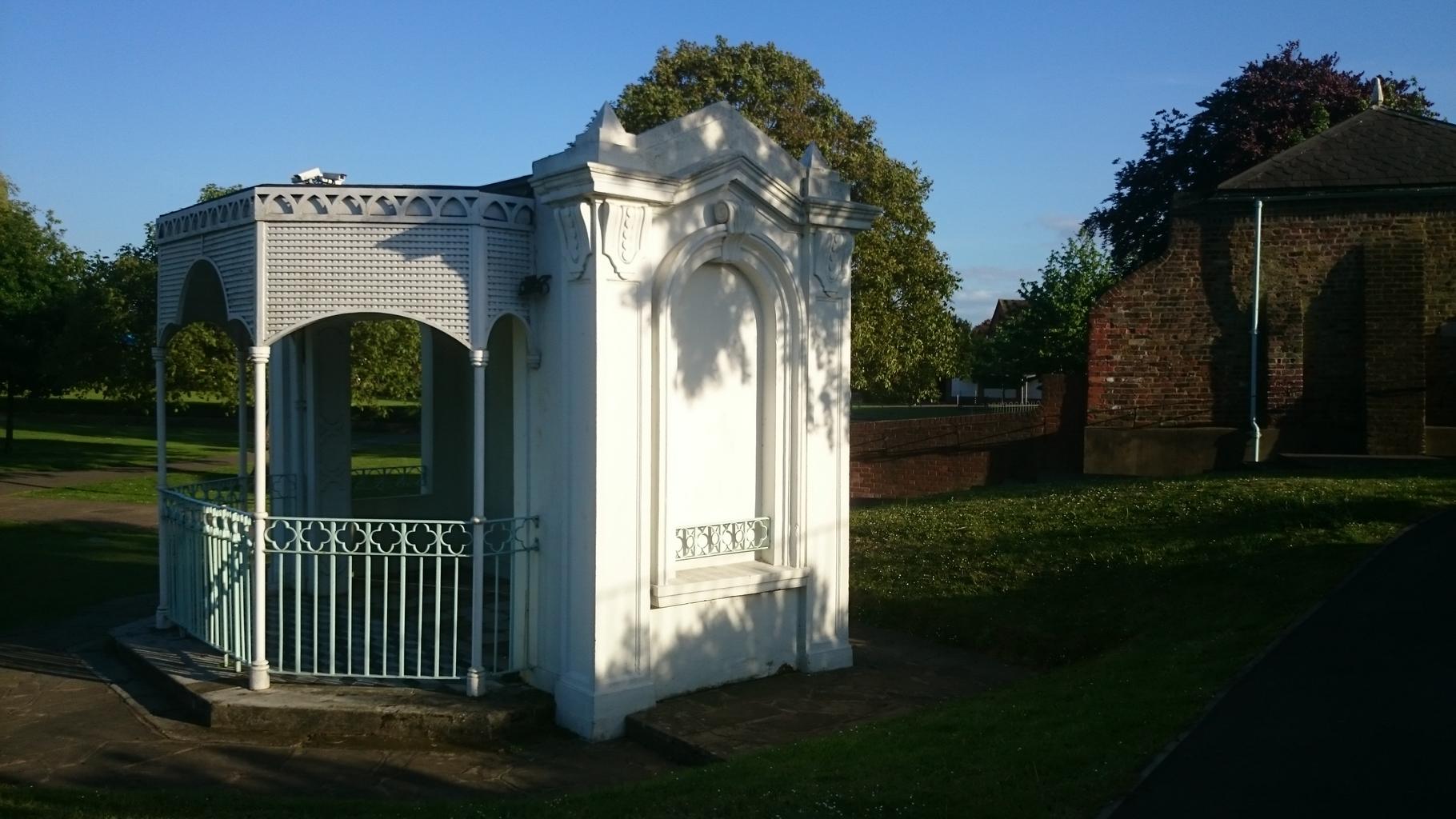
A Thames-side mansion that stood for three centuries before wartime destruction transformed its grounds into a public garden.
At a glance
Radnor House occupied a prime riverside location in Cross Deep, Strawberry Hill, just south of Twickenham centre. Built in the 17th century, it commanded views across the Thames and embodied the taste for Thames-side retreats that flourished during this period.
History
The house stood for more than three centuries on its Thames bank site. In 1940, during World War II, it was destroyed by bombing. Rather than rebuild, the site was eventually reclaimed as public space. Today the grounds form part of Radnor Gardens, preserving the memory of this vanished house through a transformed landscape.
What you see
Radnor House itself no longer exists, but the grounds it occupied remain. Visitors to Radnor Gardens walk where the 17th-century mansion once stood, making it a place to contemplate both architectural loss and landscape renewal—a palimpsest of Thames-side development.
Cultural significance
Radnor House represents a now-vanished chapter in Twickenham’s residential history, when wealthy Londoners built country retreats along the Thames. Its destruction exemplifies the impact of 20th-century warfare on England’s built heritage, yet its legacy persists in the public gardens that now occupy the site.
Key facts
- Country: United Kingdom
- City: Twickenham
- Period: 17th century
- Coordinates: 51.4406, -0.332
- Destroyed: 1940 (bomb damage)
- Current site: Radnor Gardens
Practical information & getting there
Radnor Gardens are accessible to the public on the banks of the Thames in Strawberry Hill. The site lies approximately 0.5 miles south of Twickenham town centre. No structures from the original house remain, but the gardens offer riverside walks and views across the water.
Sources & resources
Find it on the map
See this place and what’s around it →📷 Become a Cultural Heritage Online photographer
Share your photos of places: they stay published under your name as the author. The more they're seen, the more you get noticed — and soon a contest will reward the most appreciated photos.
Log in or sign up free to add a photoIs this page about you?
This page is read by travellers and heritage enthusiasts who find it on Google. Tell us how you are connected to this place and we will take it from there.