
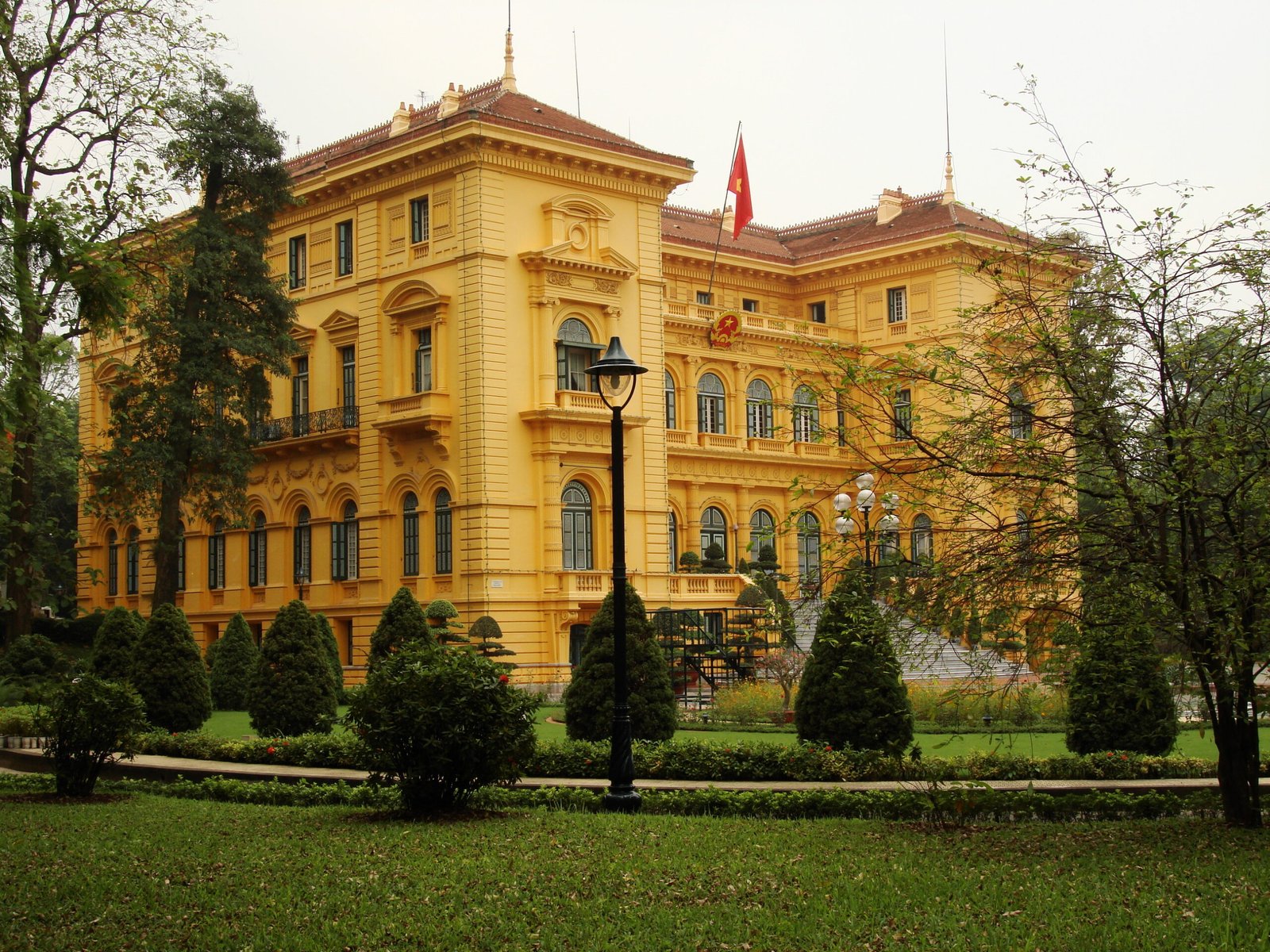
The official residence of Vietnam’s president, this colonial-era palace has served as a seat of state power since independence, hosting ceremonial functions and diplomatic events.
At a glance
The Presidential Palace stands as Hanoi’s most significant state building. Originally constructed as the Palace of the Governor-General of Indochina during French colonial rule, it was renamed following Vietnamese independence in 1954. Today it remains the formal residence of the president and hosts major state ceremonies.
History
Built during the French colonial period, the palace functioned as the seat of the Governor-General of Indochina. Following Vietnam’s independence in 1954, it was renamed the Presidential Palace and transformed into the official residence of the Vietnamese head of state. The building marks the transition from colonial to national governance.
What you see
The palace reflects architectural traditions of the French colonial era adapted for the Vietnamese climate and landscape. Its design combines European formal elements with practical considerations for tropical conditions. The complex includes ceremonial spaces designed for state functions and official receptions.
Cultural significance
The Presidential Palace embodies Vietnam’s journey from colonial territory to independent nation. It stands as a symbol of Vietnamese sovereignty and the continuity of state authority. The building bridges architectural heritage with contemporary political importance.
Key facts
- Country: Vietnam
- City: Hanoi
- Coordinates: 21.03888889, 105.83416667
- Current function: Official presidential residence and state ceremonial venue
- Historical name: Palace of the Governor-General of Indochina (pre-1954)
- Tonkin Palace serves as the headquarters of the Office of President
Practical information & getting there
The Presidential Palace is located in central Hanoi. As an active governmental seat, access is restricted to official functions and state ceremonies. Visitors interested in Vietnamese colonial and post-colonial architecture can view the exterior and explore the surrounding historic district.
Sources & resources
Find it on the map
See this place and what’s around it →📷 Become a Cultural Heritage Online photographer
Share your photos of places: they stay published under your name as the author. The more they're seen, the more you get noticed — and soon a contest will reward the most appreciated photos.
Log in or sign up free to add a photoIs this page about you?
This page is read by travellers and heritage enthusiasts who find it on Google. Tell us how you are connected to this place and we will take it from there.