
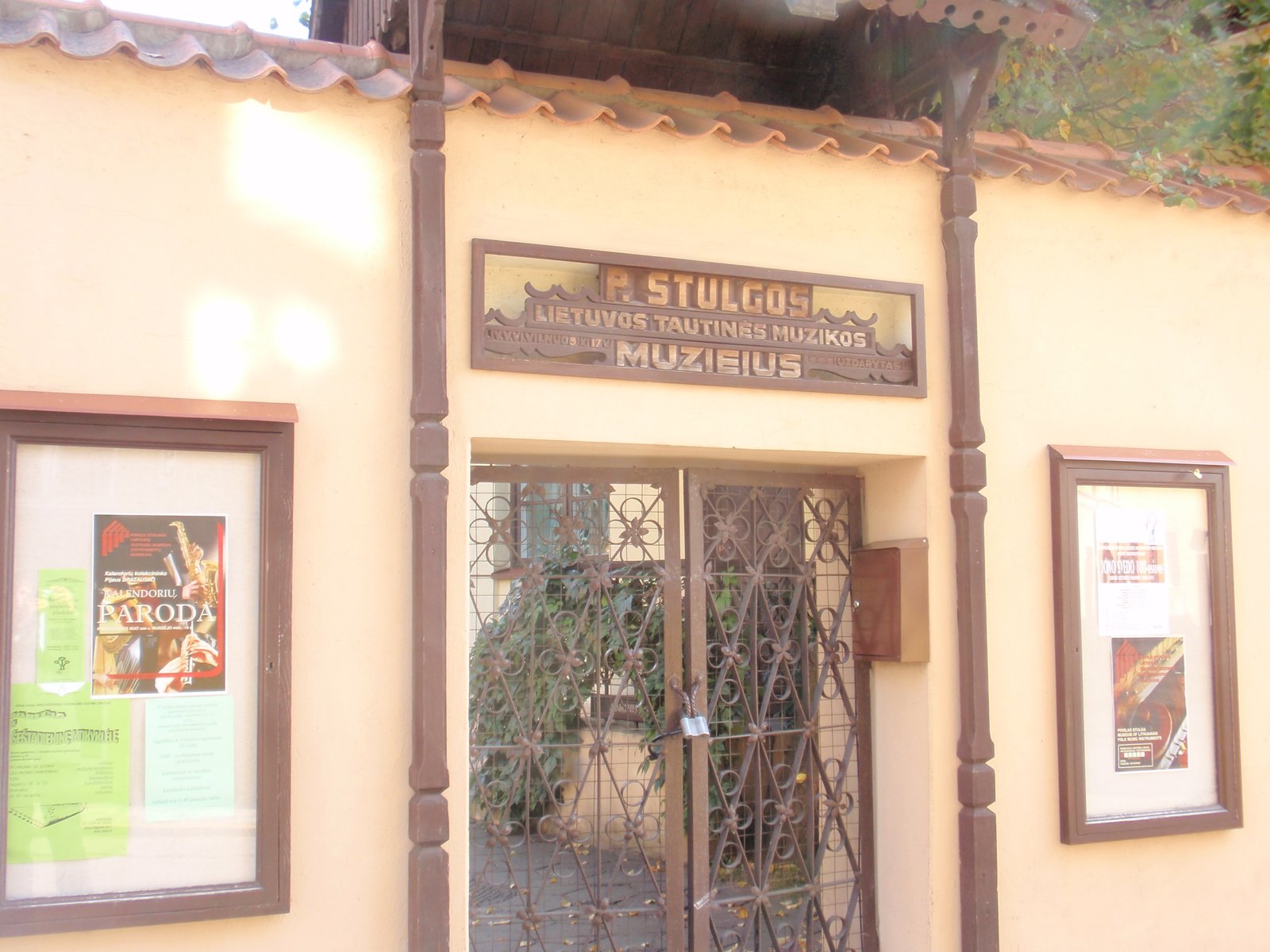
A repository of Lithuanian musical heritage, this museum preserves instruments, recordings, and documents spanning centuries of folk tradition.
At a glance
Housed in Kaunas’s Old Town, the Povilas Stulga Museum holds one of Lithuania’s most comprehensive collections of traditional musical instruments. The permanent collection encompasses both local and international pieces, complemented by archival recordings, books, photographs, and correspondence.
History
The museum was established in 1985, emerging from a commitment to document and preserve Lithuania’s distinctive musical heritage. Its founding reflected growing recognition of folk instruments as cultural artifacts worthy of systematic study and public access.
What you see
The collection features various versions of the kanklės, Lithuania’s ancient plucked string instrument, alongside harmoniums, reed instruments, and seven-string guitars. A remarkable bass constructed from a table demonstrates the inventiveness of folk instrument makers. Display materials include period photographs and documents contextualizing each instrument within its cultural moment.
Cultural significance
Lithuanian folk instruments represent centuries of musical tradition shaped by the country’s complex history and Baltic heritage. The kanklės in particular holds symbolic importance as a national instrument, appearing in literature and tradition since medieval times. This museum serves as a vital institution for understanding how ordinary people created and performed music across generations.
Key facts
- Country: Lithuania
- City: Kaunas
- Founded: 1985
- Location: Old Town
- Coordinates: 54.89555556, 23.89277778
Practical information & getting there
The museum is located in Kaunas’s historic Old Town district. For current opening hours, admission fees, and accessibility details, consult the museum directly or check its official documentation before visiting.
Sources & resources
Find it on the map
See this place and what’s around it →📷 Become a Cultural Heritage Online photographer
Share your photos of places: they stay published under your name as the author. The more they're seen, the more you get noticed — and soon a contest will reward the most appreciated photos.
Log in or sign up free to add a photoIs this page about you?
This page is read by travellers and heritage enthusiasts who find it on Google. Tell us how you are connected to this place and we will take it from there.