
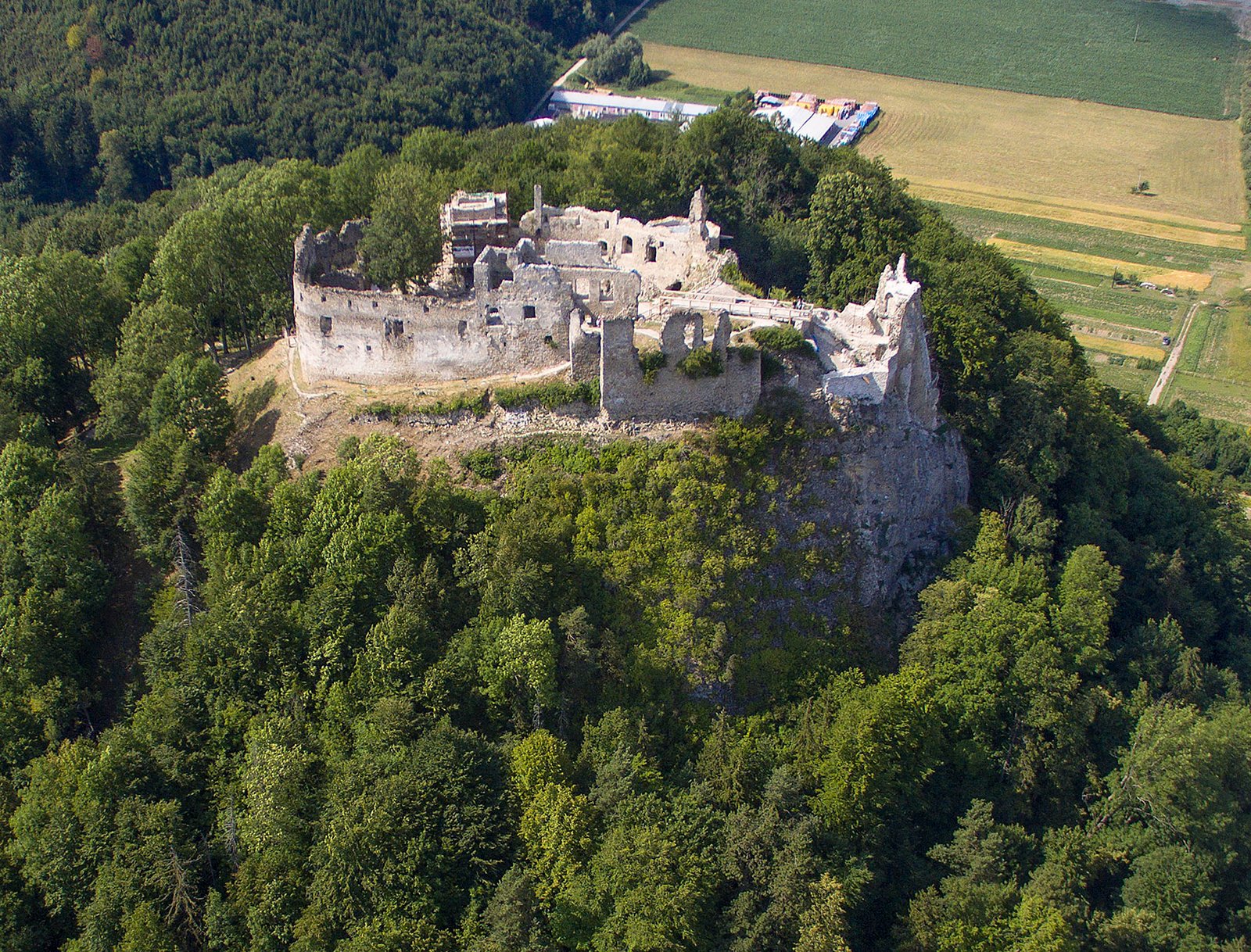
A ruined medieval castle perched on a cliff above the Váh river, Považský hrad commanded the valley below and housed the powerful Podmanitzky noble family at the height of its prominence.
At a glance
Považský hrad stands on the right bank of the Váh river near Považská Bystrica, occupying a dramatic cliff position 497 metres above sea level. The castle formed an essential visual anchor for the surrounding Považie and Upper Váh regions. At its peak, the fortress sheltered approximately 400 residents within its walls.
History
The castle served as one of the most strategically vital strongholds defending the Váh valley. It became a symbol of power for the Podmanitzky family, a significant Hungarian noble dynasty who made the castle their seat—a position reflected in its famous epithet as the “eagles nest” of their domain.
What you see
The castle occupies a cliff-top location, its ruins defining the silhouette of the landscape. The elevated position provided both defensive advantage and commanding views across the river valley below.
Cultural significance
Považský hrad embodies the medieval power structures that shaped Central Europe’s river valleys. Its association with the Podmanitzky family and its strategic role in protecting one of Slovakia’s major waterways underscores its importance in regional history and nobility.
Key facts
- Country: Slovakia
- Location: Near Považská Bystrica, right bank of the Váh river
- Elevation: 497 metres above sea level
- Capacity: Approximately 400 residents at its height
- Coordinates: 49.1455°N, 18.45795°E
Practical information & getting there
Považský hrad is accessible from Považská Bystrica. Visitors should prepare for elevated terrain and rugged cliff-side conditions. Contact local tourism offices in Považská Bystrica for current access information and guided tour availability.
Sources & resources
Find it on the map
See this place and what’s around it →📷 Become a Cultural Heritage Online photographer
Share your photos of places: they stay published under your name as the author. The more they're seen, the more you get noticed — and soon a contest will reward the most appreciated photos.
Log in or sign up free to add a photoIs this page about you?
This page is read by travellers and heritage enthusiasts who find it on Google. Tell us how you are connected to this place and we will take it from there.