
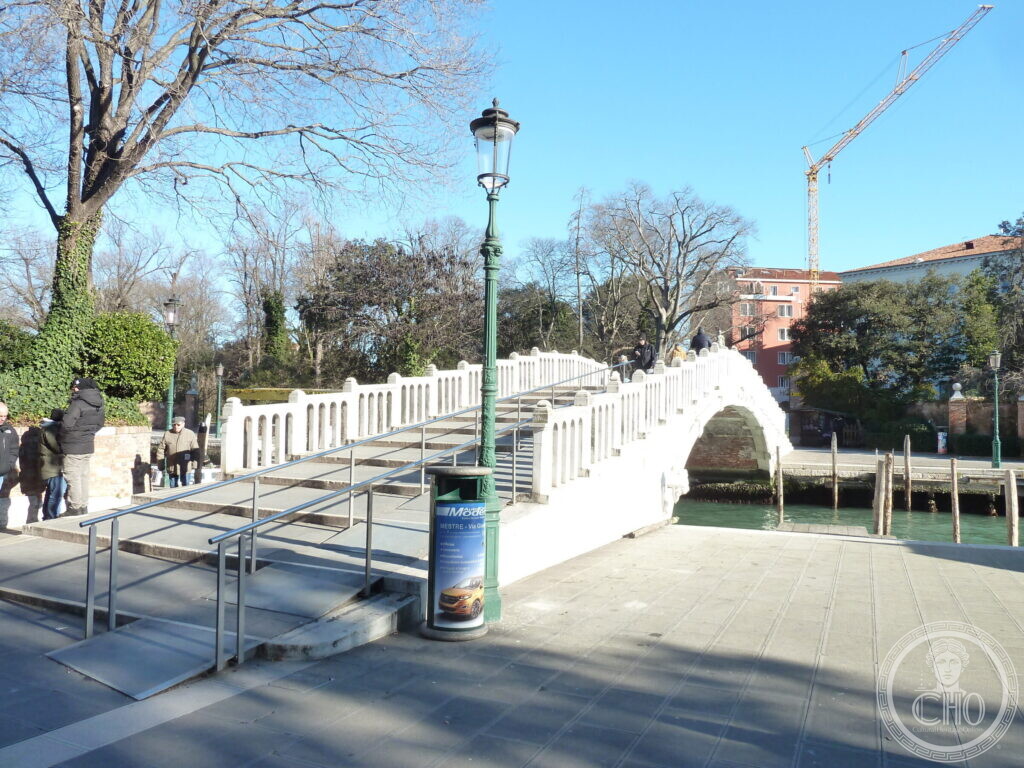
Venice, Veneto · 1933 · Bridge over the Rio Novo
At a glance
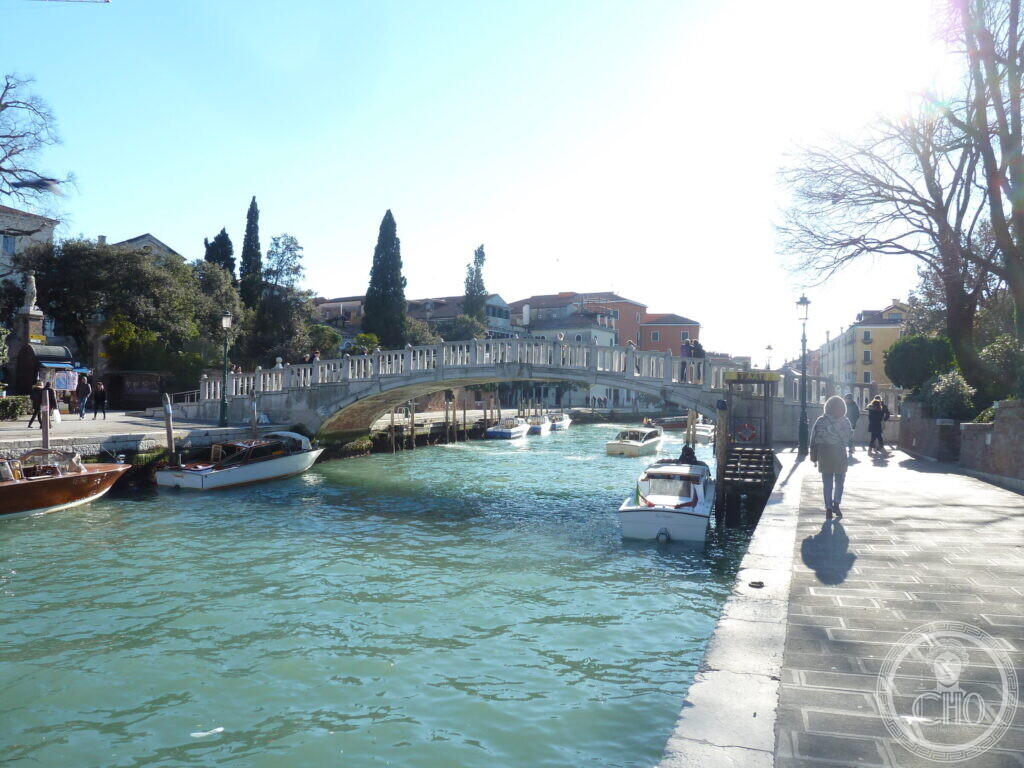
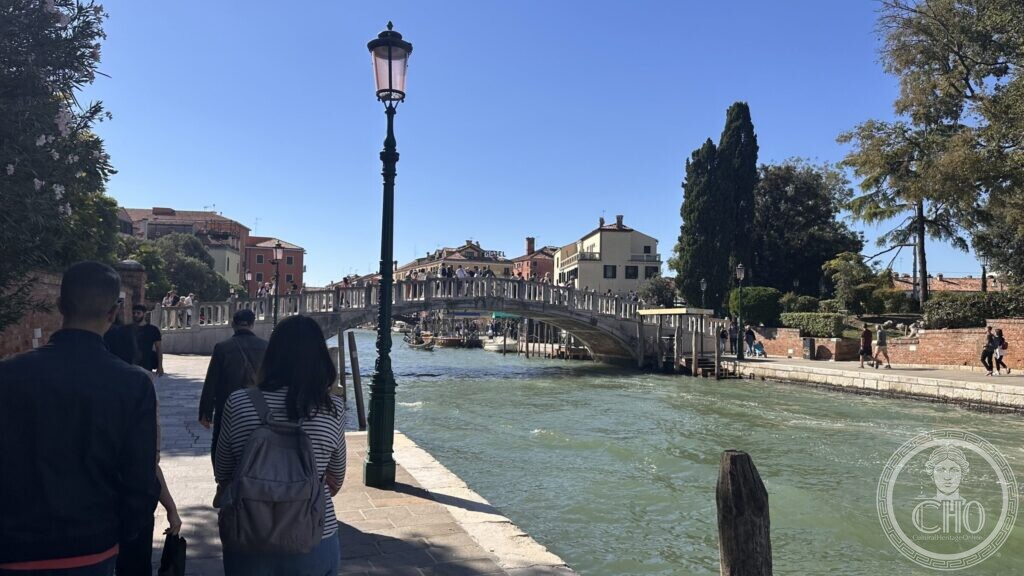
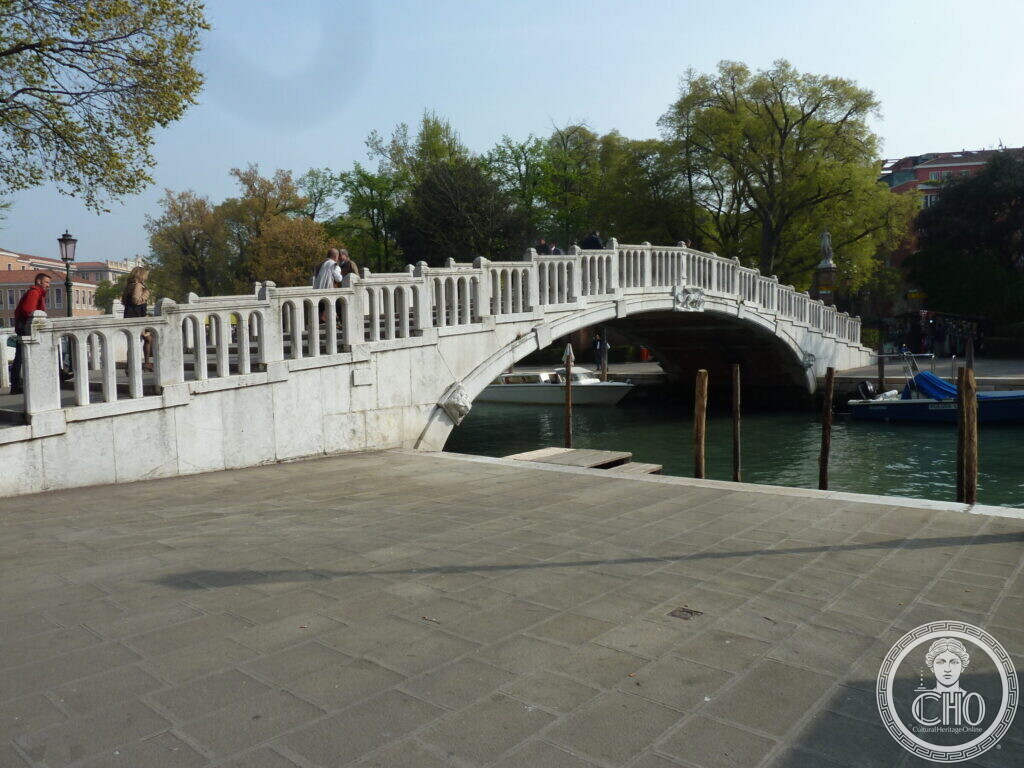
Also called the Ponte del Prefetto, this bridge crosses the Rio Novo where the new canal was cut through the gardens of the Palazzo Papadopoli. It looks like a stone bridge and it is not: under the Istrian-stone balustrade the structure is concrete, prestressed with cables — a technique barely out of the laboratory when Miozzi used it here.
Key facts
- Built: 1933, for the opening of the Rio Novo
- Engineer: Eugenio Miozzi, chief engineer to the city of Venice
- Structure: prestressed concrete, with a polycentric arch and cables in Muntz metal
- Balustrade: Istrian stone, with small columns
- Other name: Ponte del Prefetto
- Setting: the Papadopoli gardens, cut through by the new canal
- Coordinates: 45.4378708, 12.3201394
History
By 1930 Piazzale Roma had become the road terminus of Venice, and the way into the city by water — the long curve of the Grand Canal — was a bottleneck. The answer was to cut a new canal straight through the built fabric: the Rio Novo, excavated between 1931 and 1933 under Eugenio Miozzi, the city’s chief engineer, through the Papadopoli garden and a swathe of demolished warehouses, alleys and courtyards, to shorten the run from Piazzale Roma toward Ca’ Foscari and San Marco.
New water meant new crossings. Miozzi built five bridges over the Rio Novo — the Papadopoli, the Cereria, the Sbiaca, Santa Margherita and Ca’ Foscari — and rebuilt the Tre Ponti where the new canal met the old ones. They went up in a single campaign in 1933, and they are among the few pieces of twentieth-century infrastructure that Venice absorbed without argument.
What you see
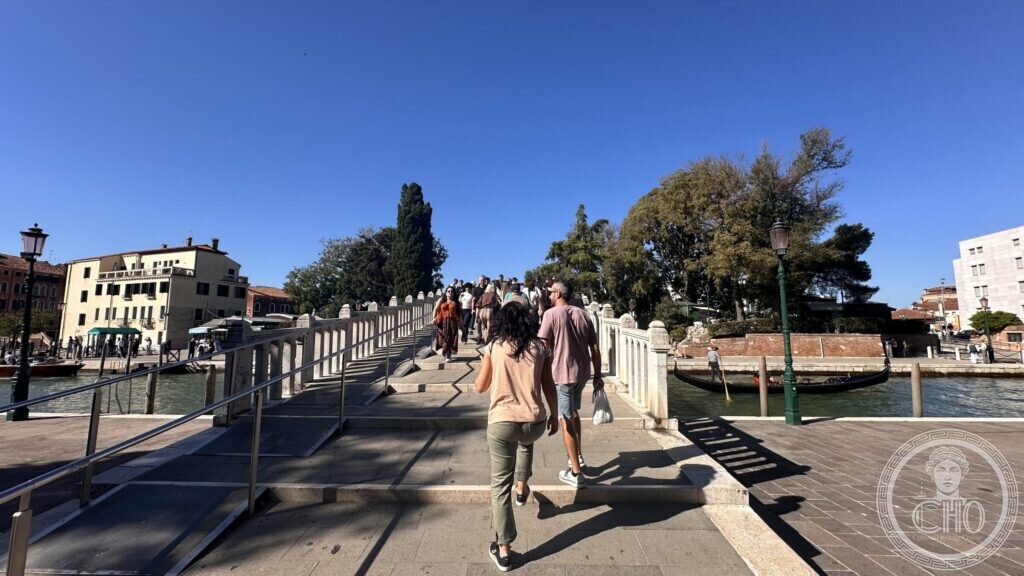
The bridge is a pale, shallow arch with a balustrade of small stone columns, and from a distance it belongs to the same family as every other bridge in Venice. Up close the surface gives it away: smooth and uniform, without the courses of brick and the stone bands that the older crossings show.
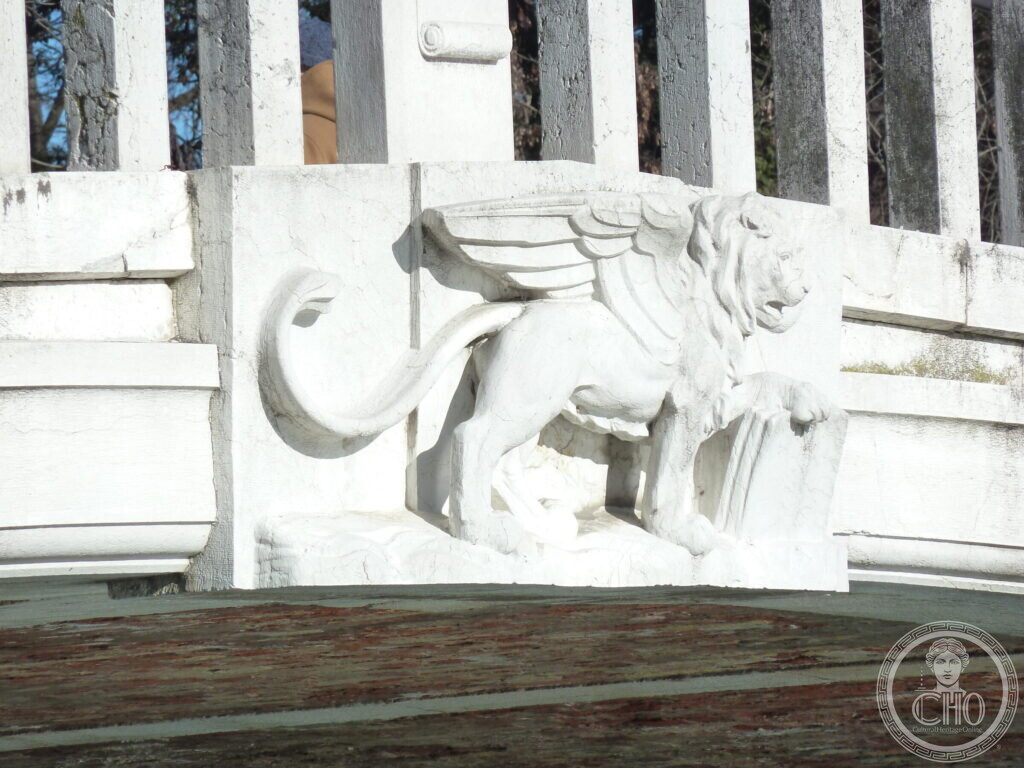
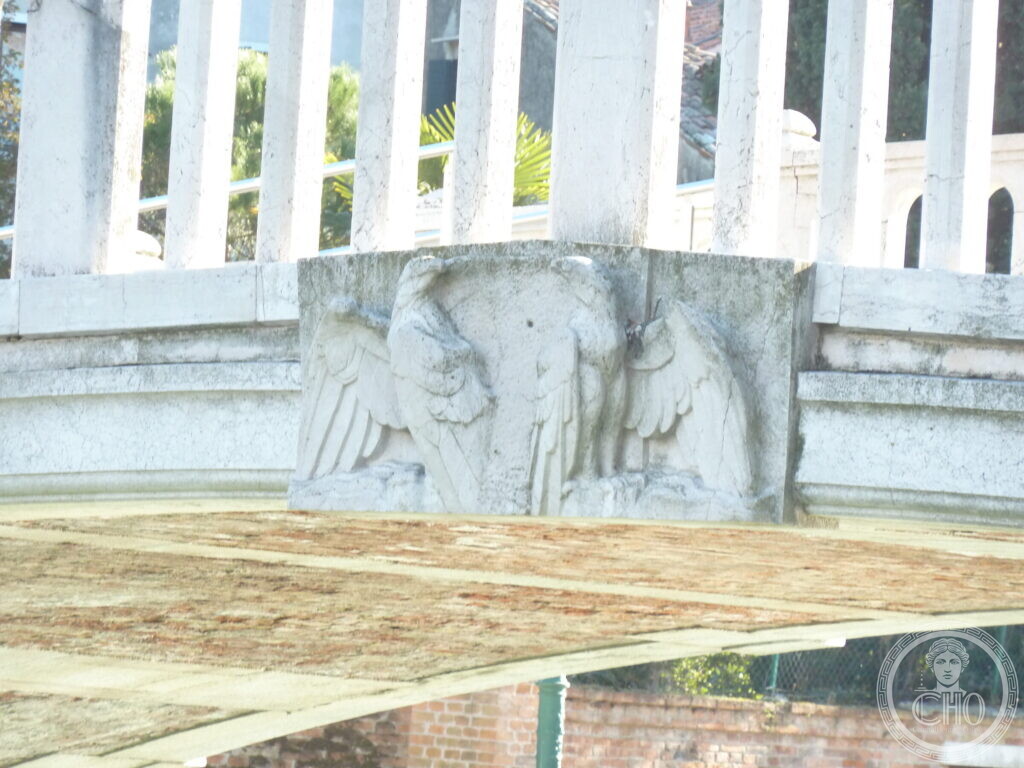
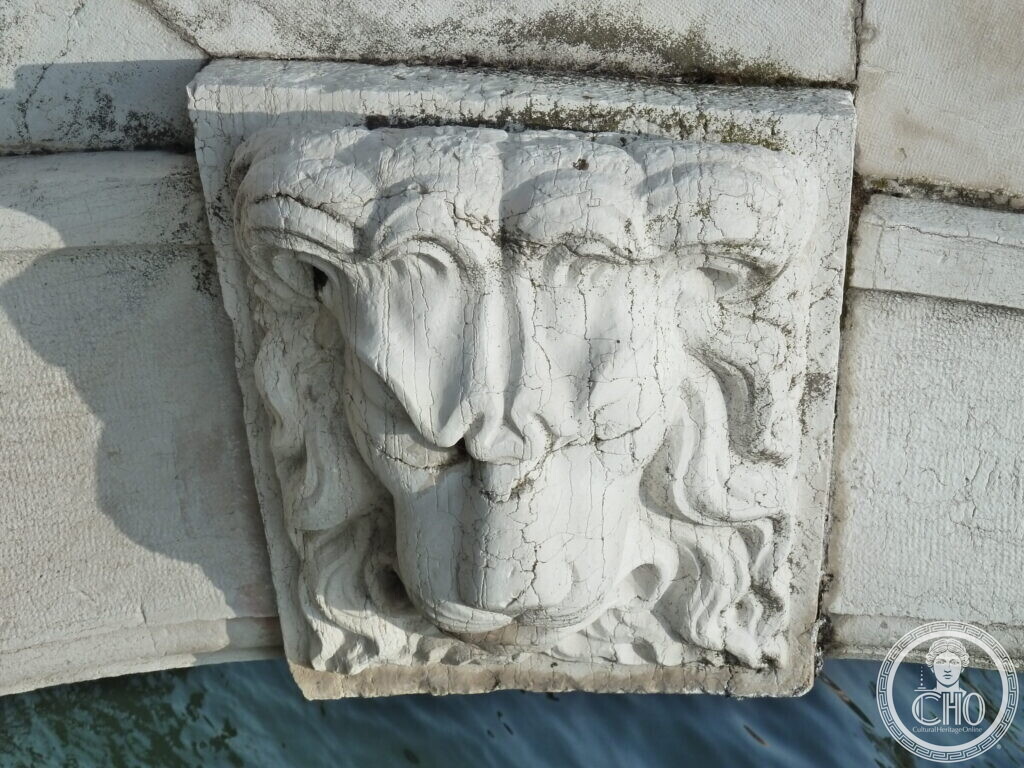
Two carved panels are set into the parapet. One is a lion of Saint Mark, winged, with a paw on the book — the emblem of the Republic, put on a bridge built in 1933. The other, on the far side, is worn almost smooth: a pair of winged figures, too eroded now to name with any confidence.
The bridge today

Practical information
- A public crossing, open at all hours and free.
- Steps on both sides; there is no ramp.
Getting there
The Rio Novo runs from Piazzale Roma toward Ca’ Foscari; all its bridges are within a few minutes’ walk of each other, and of the Piazzale Roma vaporetto stops.
Nearby
- Ponte del Pagan — a 1933 bridge on Venice’s Rio Novo
- Ponte de la Cereria — Miozzi’s Rio Novo, 1933
- Ponte degli Scalzi — Miozzi’s stone arch at the station
Sources
- Conoscere Venezia — Ponte del Prefetto o Papadopoli sul Rio Novo: dating, prestressed-concrete structure, balustrade
- Marascalchi Ingegneria — Ponti Rio Novo: polycentric arch and Muntz-metal prestressing cables
- OpenStreetMap — location
On the Heritage Days walk
Photographed on 26 and 27 September 2026, on the free walk led by Andrea Manzo for the Associazione Beni Culturali Online APS, during the European Heritage Days.
Record researched and written by Stefano Vigolo for Cultural Heritage Online, 2026.
Find it on the map
See this place and what’s around it →📷 Become a Cultural Heritage Online photographer
Share your photos of places: they stay published under your name as the author. The more they're seen, the more you get noticed — and soon a contest will reward the most appreciated photos.
Log in or sign up free to add a photoRequest to use these images
Each photograph is offered by the person who took it — the seller is the photographer named on the image; Cultural Heritage Online runs the payment and delivers the file on their behalf. Buying gives you the right to use the image in your own project — a website, an article, a presentation — with the file and a written licence. Read the Terms of Sale.
What you receive. The file as it is held in our archive: the photographer's own original, without the Cultural Heritage Online watermark, unretouched and not enlarged. This is a working archive built over many years by many people, so the files differ — some were taken recently, others years ago with the equipment of their time. Older pictures are usually smaller: a camera from fifteen or twenty years ago simply recorded fewer pixels than a phone does today, so the resolution is lower and the print comes out smaller. We say so rather than hide it. The size, weight, format and year of each one are printed below it, and the print size is given at 300 dpi. Nothing is upscaled to make a number look better. Where the picture on this page has been cropped for the layout, the file you receive is the full frame, which may be wider or taller than what you see here.
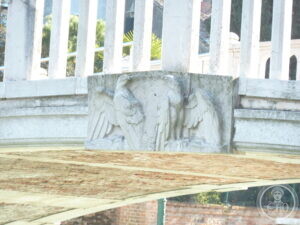
A worn relief on the far parapet
Sold by Photo: Stefano Vigolo
€3.00
4000 × 3000 px · JPG · 4.7 MB
prints 34 × 25 cm at 300 dpi · taken 2011
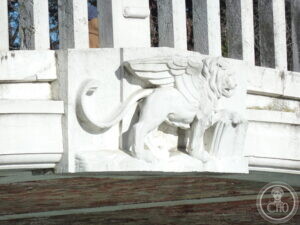
The lion of Saint Mark on the parapet
Sold by Photo: Stefano Vigolo
€3.00
4000 × 3000 px · JPG · 5.1 MB
prints 34 × 25 cm at 300 dpi · taken 2011
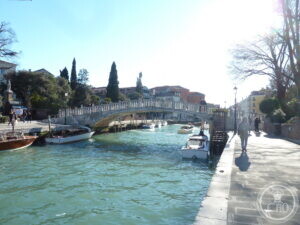
The bridge along the Rio Novo
Sold by Photo: Stefano Vigolo
€3.00
4000 × 3000 px · JPG · 4.6 MB
prints 34 × 25 cm at 300 dpi · taken 2011
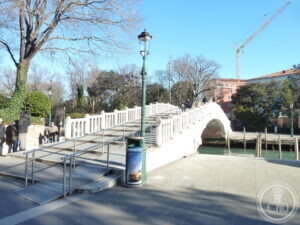
The bridge from the Papadopoli garden
Sold by Photo: Stefano Vigolo
€3.00
4000 × 3000 px · JPG · 5.0 MB
prints 34 × 25 cm at 300 dpi · taken 2011