
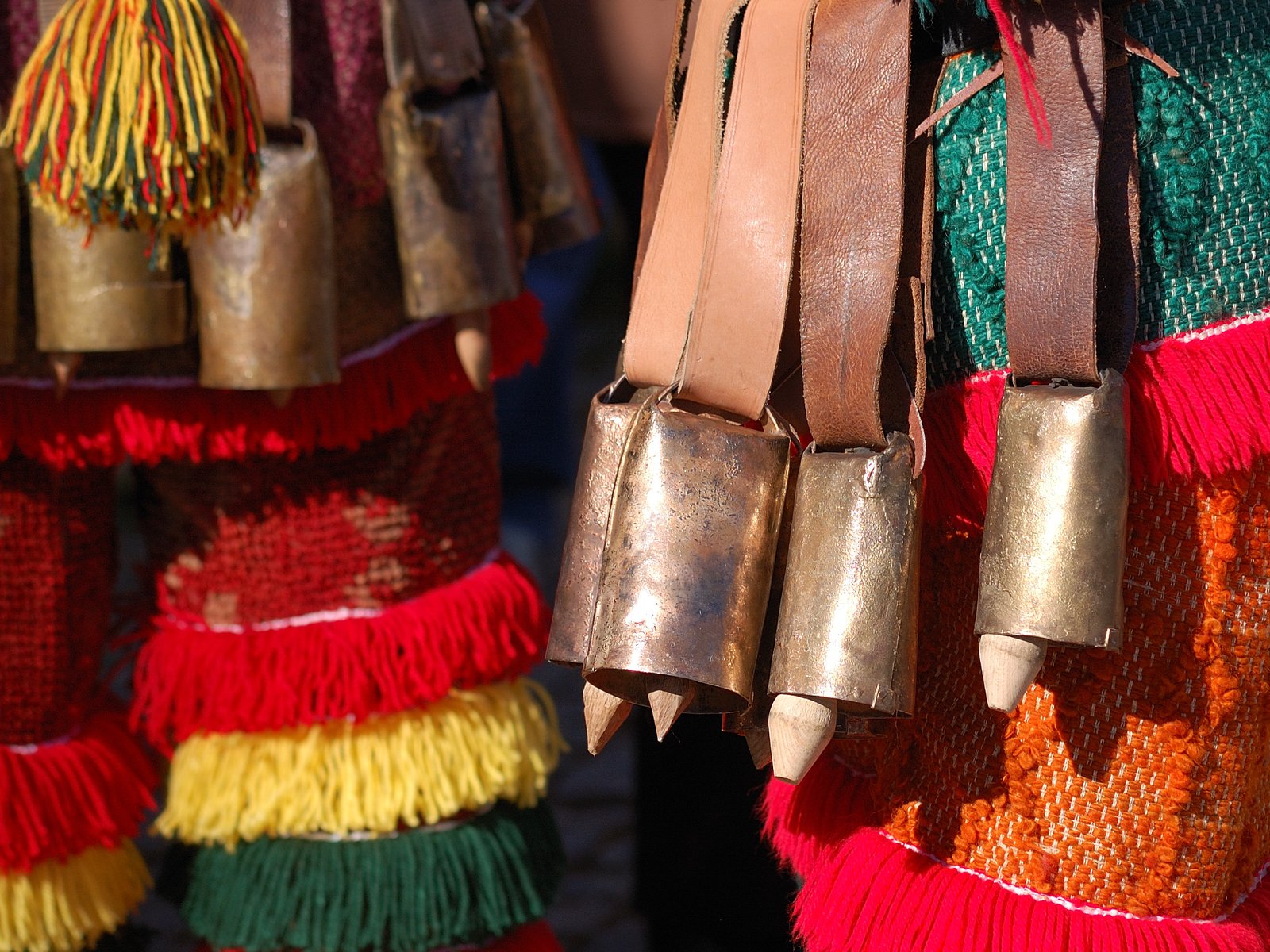
Each winter, the village of Podence transforms during Carnival when masked youths known as Caretos emerge to enact an ancient ritual of chaos, mischief, and collective memory.
At a glance
The Carnival of Podence centers on the Caretos—gangs of masked youths who roam the village during the Carnival festivities, terrorizing young girls and raiding cellars in a tradition that blends theatre, social transgression, and seasonal renewal. The masks themselves are iconic: carved wooden faces painted in bold colours, often grotesque or exaggerated. Caretos dress in ragged clothing and move through Podence in coordinated groups, their collective identity more important than individual recognition.
Origins and history
The Careto tradition belongs to a broader European Carnival heritage, though its precise origins remain rooted in local village practice. The ritual embodies archaic patterns found across pre-Christian European societies—masked figures, role reversal, and temporary liberation from social hierarchy. In Podence, the tradition has persisted as a cornerstone of community identity, passed down through generations and adapted to modern village life while retaining its essential structure of mischief and masquerade.
The tradition today
During Carnival season, masked Caretos conduct raids on village cellars, steal provisions, and engage in playful intimidation that inverts ordinary social rules. Young women are primary targets of their pranks; the boundary between threat and play remains deliberately ambiguous. The masks—carved locally—grant anonymity and collective power to the wearers, transforming individual young men into archetypal figures of chaos. Contemporary practice maintains ritual structure while accommodating modern village dynamics.
Cultural significance
The Carnival of Podence functions as social pressure valve and historical anchor. It preserves a distinctly Portuguese approach to Carnival that prioritizes community participation, masked anonymity, and explicit role reversal over spectacle. For Podence residents, the Caretos embody continuity with pre-modern village life, a time when seasonal rituals governed the community calendar. UNESCO recognition acknowledges the tradition as a living heritage practice of international significance.
Key facts
- Country: Portugal
- Anchor community: Podence (Macedo de Cavaleiros municipality, northern Portugal)
- Population (2011): 250
- UNESCO status: Representative List of the Intangible Cultural Heritage of Humanity (Winter festivities, Carnival of Podence)
- Core tradition: Careto masked youths conducting Carnival raids and social transgression rituals
Where to experience it
Podence is a small village in Macedo de Cavaleiros municipality in the Trás-os-Montes region of northeastern Portugal. You can reach it by car from Porto (approximately 90 km) or from the city of Bragança. To witness the Carnival of Podence, visit during Carnival season (typically February–March, depending on Easter). The festivities centre on the village itself; accommodation and meals are available in surrounding towns.
Sources & resources
- Podence (Macedo de Cavaleiros) on Wikipedia
- Cultural Heritage Online
- UNESCO Intangible Cultural Heritage: Winter festivities, Carnival of Podence
Find it on the map
See this place and what’s around it →📷 Become a Cultural Heritage Online photographer
Share your photos of places: they stay published under your name as the author. The more they're seen, the more you get noticed — and soon a contest will reward the most appreciated photos.
Log in or sign up free to add a photo