

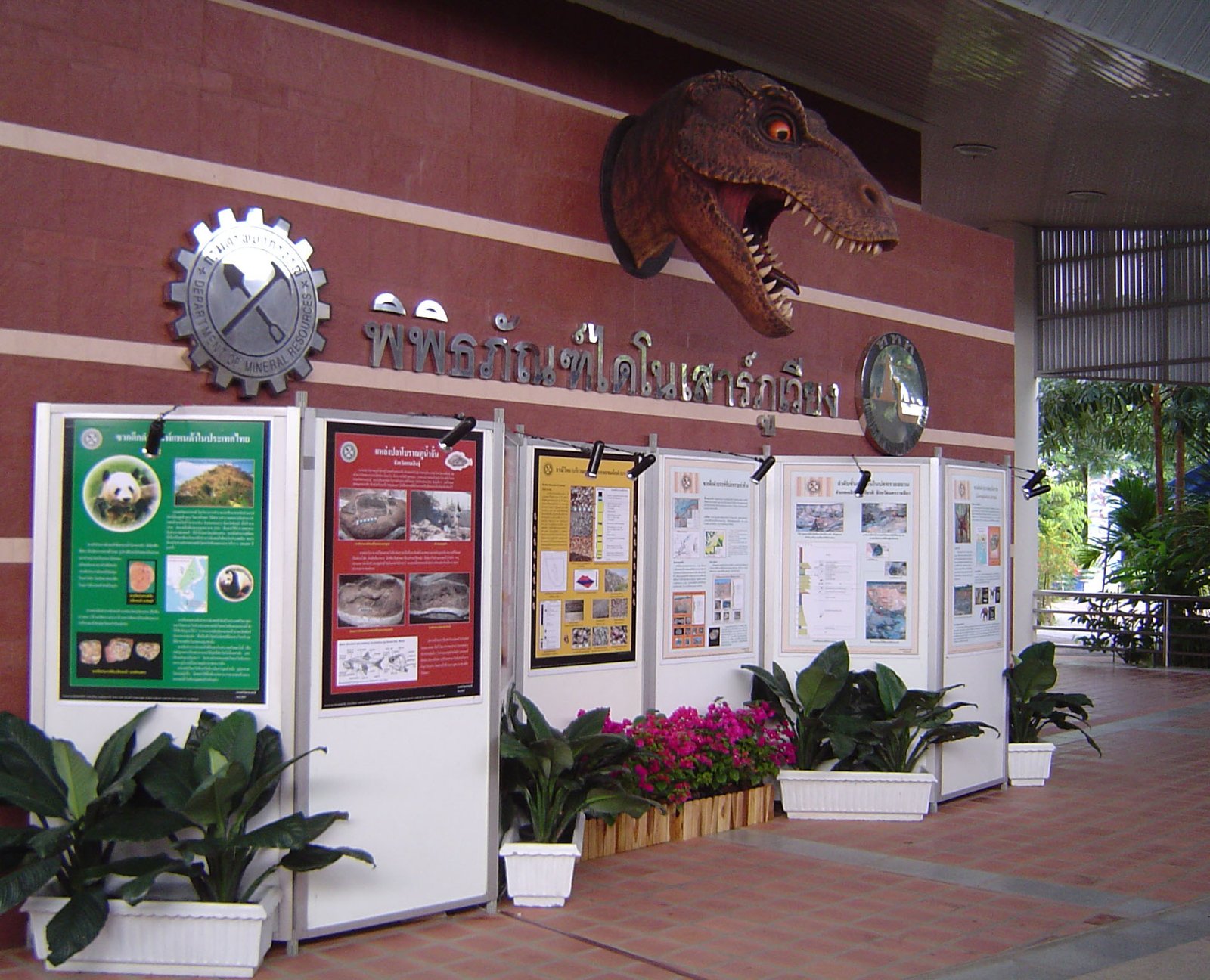
Thailand’s principal repository of fossilized remains, this geological museum opened in 2009 to showcase the prehistoric life embedded in the northeastern landscape.
At a glance
Phu Wiang Dinosaur Museum is a state-administered institution dedicated to displaying fossil collections from the region. The museum occupies 40 acres within the Khok Sanambin public area, reflecting Thailand’s commitment to paleontological education and heritage conservation.
History
The museum was constructed with funding from the Tourism Authority of Thailand and developed under the oversight of the Department of Mineral Resources. It opened to the public in 2009, establishing itself as a significant scientific and educational venue in northeastern Thailand.
What you see
The museum spans 40 acres (160,000 square meters) designed to accommodate extensive fossil exhibits. Its layout serves the dual purpose of scientific display and public engagement with paleontological discovery.
Cultural significance
The museum represents Thailand’s investment in geological heritage and public understanding of prehistoric life. It functions as an educational institution under the Department of Mineral Resources, Ministry of Natural Resources and Environment, contributing to both scientific knowledge and regional tourism.
Key facts
- Country: Thailand
- Location: Tambon Nai Muang, Wiang Kao district, Khon Kaen province
- Area: 40 acres (160,000 m²)
- Opened: 2009
- Coordinates: 16.67°N, 102.27°E
- Administration: Department of Mineral Resources, Ministry of Natural Resources and Environment
Practical information & getting there
The museum is situated in Khon Kaen province in northeastern Thailand’s Isan region. For current visiting hours, admission fees, and travel directions, consult the Tourism Authority of Thailand or contact the Department of Mineral Resources.
Sources & resources
Find it on the map
See this place and what’s around it →📷 Become a Cultural Heritage Online photographer
Share your photos of places: they stay published under your name as the author. The more they're seen, the more you get noticed — and soon a contest will reward the most appreciated photos.
Log in or sign up free to add a photoIs this page about you?
This page is read by travellers and heritage enthusiasts who find it on Google. Tell us how you are connected to this place and we will take it from there.