
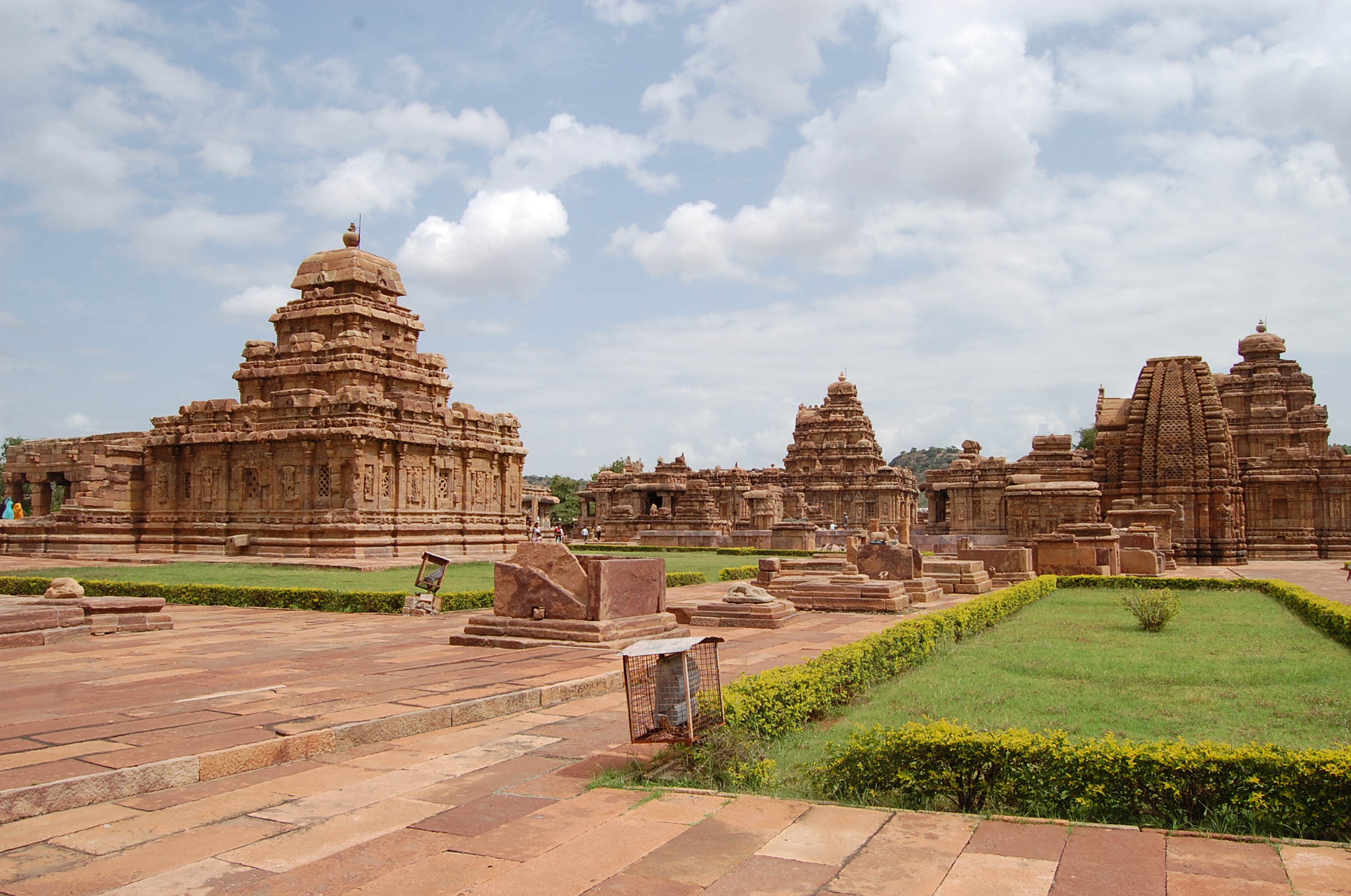
A UNESCO World Heritage Site of Hindu and Jain temples showcasing the architectural dialogue between North and South Indian styles during the Chalukya era.
At a glance
Pattadakal is a temple complex of seven structures dating to the 7th and 8th centuries, located on the west bank of the Malaprabha River in Karnataka’s Bagalkot district. Situated 23 kilometres from Badami and 9.7 kilometres from Aihole—both major Chalukya centres—the site is protected under Indian law and managed by the Archaeological Survey of India. UNESCO has praised it as “a harmonious blend of architectural forms from northern and southern India” and a pinnacle of “eclectic art.”
History
The temples were constructed during the Chalukya period, when the dynasty was at its architectural zenith. Hindu temples at the site are predominantly dedicated to Shiva, though Vaishnavism and Shaktism traditions are also represented. The single Jain temple honours a Jina. The site’s location on the Malaprabha River—a tributary of the Krishna—reflects the spiritual significance of north-flowing waters in Hindu tradition, known as Uttarvahini Ganga.
What you see
The Papanatha and Virupaksha temples showcase the most sophisticated design, their complex friezes fusing northern and southern architectural vocabularies in intricate detail. Stone reliefs across the Hindu temples depict scenes from the Ramayana, Mahabharata, and Bhagavata Purana, alongside narratives from the Panchatantra and Kirātārjunīya. The Virupaksha temple remains an active place of worship, connecting medieval craftsmanship to living devotion.
Cultural significance
Pattadakal stands as one of South India’s most important monuments, illustrating the creative synthesis of architectural traditions that characterised the Chalukya golden age. The temples bridge regional styles and theological schools, serving as a physical record of the period’s cosmopolitan spiritual and artistic vision. This eclecticism—preserved in stone—offers insight into medieval India’s cultural integration.
Key facts
- Country: India
- Location: Bagalkot district, Karnataka
- Coordinates: 15.95°N, 75.81°E
- UNESCO World Heritage Site: Yes
- Date: 7th–8th century CE
- Managed by: Archaeological Survey of India
Practical information & getting there
The site is accessible from Badami (23 km away) and Aihole (9.7 km away), both connected by road to Bagalkot district. As a protected monument, Pattadakal requires no entrance fee under ASI management. Visiting hours and current access details are best confirmed locally. The Malaprabha River adds natural beauty to the setting; seasonal water levels may affect approaches to the site.
Sources & resources
Find it on the map
See this place and what’s around it →📷 Become a Cultural Heritage Online photographer
Share your photos of places: they stay published under your name as the author. The more they're seen, the more you get noticed — and soon a contest will reward the most appreciated photos.
Log in or sign up free to add a photo