

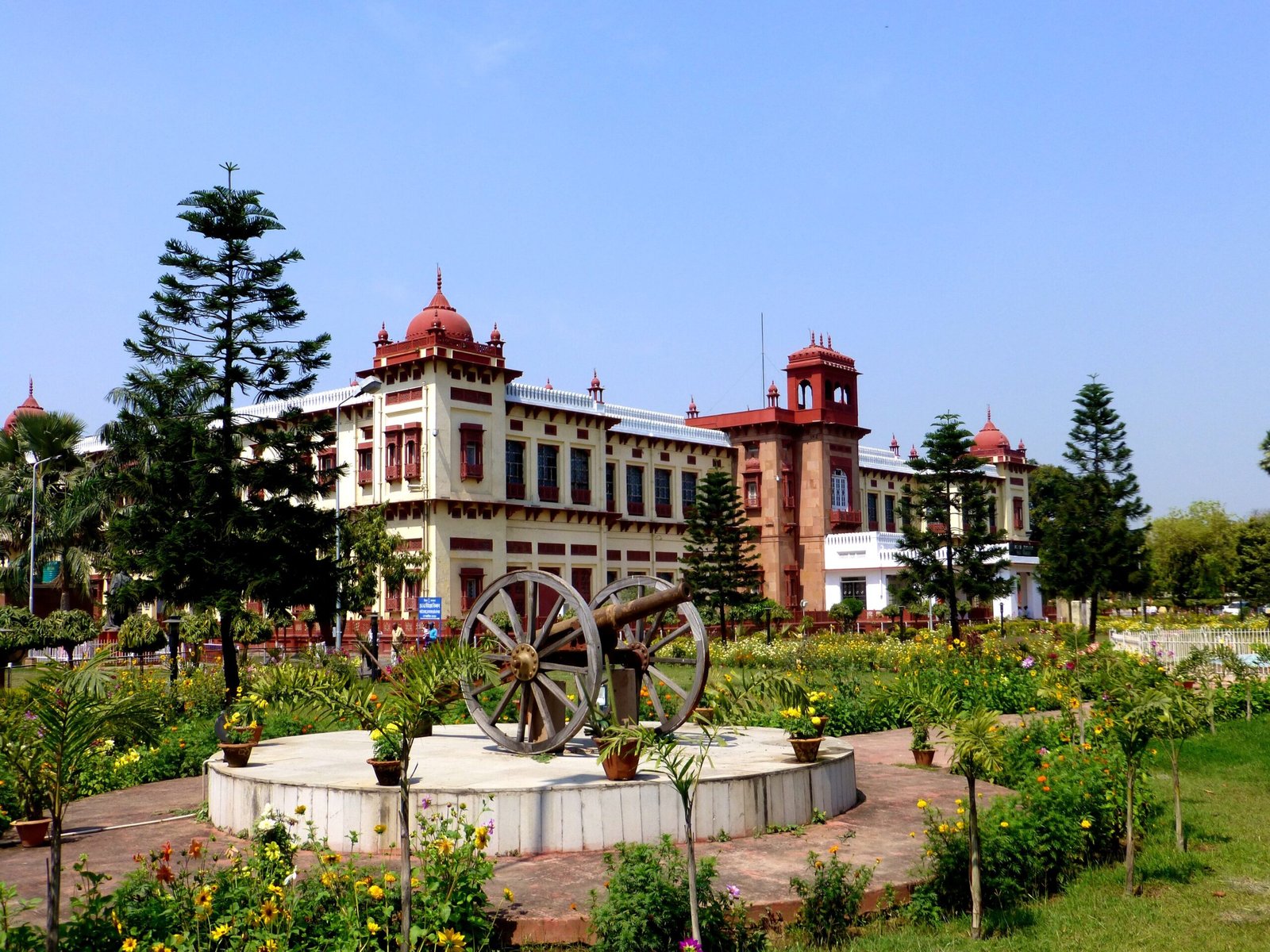
Bihar’s principal museum, founded during the British Raj to preserve artefacts from the region’s rich historical past, blending Mughal and Rajput architectural traditions.
At a glance
Patna Museum serves as the state museum of Bihar, housing material culture spanning from ancient India through 1764. Known locally as the Jadu Ghar, it represents a crucial repository of regional heritage and continues to support scholarly research.
History
The museum was established on 3 April 1917 during the British Raj, initially to house historical artefacts discovered in and around Patna. The Kashi Prasad Jayaswal Research Institute, which conducts scholarship in history and archaeology, was later established by the Bihar Government and operates from the museum site, deepening its role as a centre of learning.
What you see
The building itself exemplifies a synthesis of Mughal and Rajput architectural styles, reflecting the aesthetic traditions of northern India. Its design responds to the region’s layered cultural history.
Cultural significance
As Bihar’s principal museum, Patna Museum preserves material evidence of the state’s deep historical continuum. Its collections underscore the region’s importance from antiquity through the early modern period, while the attached research institute ensures ongoing scholarly engagement with the collections and broader questions of South Asian history.
Key facts
- Founded: 3 April 1917
- Location: Patna, Bihar, India
- Coordinates: 25.611, 85.144
- Architectural styles: Mughal and Rajput
- Local name: Jadu Ghar
- Associated institution: Kashi Prasad Jayaswal Research Institute
Practical information & getting there
Patna Museum is located in the city of Patna. For current visiting hours, admission details, and guided-tour availability, consult the Bihar Government’s official tourism resources or contact the museum directly.
Sources & resources
- Patna Museum – Wikipedia
- Cultural Heritage Online
Find it on the map
See this place and what’s around it →📷 Become a Cultural Heritage Online photographer
Share your photos of places: they stay published under your name as the author. The more they're seen, the more you get noticed — and soon a contest will reward the most appreciated photos.
Log in or sign up free to add a photoIs this page about you?
This page is read by travellers and heritage enthusiasts who find it on Google. Tell us how you are connected to this place and we will take it from there.